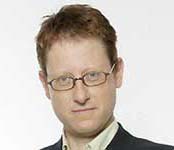
Jonathan Freedland returns with the series which looks for the past behind the present, and explores a moment in history which illuminates a contemporary debate.
Tuesday 3 March 2009 - House of Lords Reform Jonathan Freedland is joined by Billy Bragg at the Palace of Westminster to look at House of Lords reform now and in the 17th century, examining the story of Lord Howard, a corrupt peer who was sent to the Tower. Following the highly publicised cash-for-influence allegations - or 'Erminegate' - which are still under investigation Jonathan and guests debate what can be learnt from the experience of the 1640s when the Lords came under similarly intense scrutiny. Historical readings are provided by Tim Bentinck who plays David in the Archers and who also happens to be the 12th Earl of Portland. Tim Bentinck was one of the hereditary peers who was disqualified from sitting in the Lords following the reforms of 1999.
Guests Dr Jason Peacey, historian Tim Bentinck, actor Andrew Piece, Assistant Editor, Daily Telegraph Sir Christopher Kelly, Chairman, Committee on Standards in Public Life Baroness Ilora Finlay of Llandaff, cross-bench peer Billy Bragg, singer and poet.
Tuesday 24 February 2009 - Youth on youth murder In this week's Long View Jonathan Freedland looks at youth murder past and present. In 2007 11 year old Rhys Jones was shot dead by a teenager after football practice. His death raised many questions about the level of inner city violence amongst young people and how we are addressing the problems of drug and gang brutality. But Rhys' murder has a depressing precedent in Liverpool. On Christmas Eve 1883, the 13 year old, Michael Burns, witnessed a similar fight between gang members and unwittingly became the victim.
Guests John Archer, historian Ben Rossington, crime reporter Albert Kirby, former policeman Carol Cullington, playwright.
Tuesday 17 February 2009 - The Business of Football With the sporting headlines dominated by the hiring and firing of premiership managers, The Long View explores the uneasy relationship between football and big business. It's still a game, but it's also about economic survival as clubs are put on the market for multi-million sums, and words like brand and franchise get mixed up with the old language of passion and badge loyalty. The beautiful game seems to be moving into uncharted territory. But back in the 1890s, in the earliest days of the Football League, there was a club launched with a straightforward, unsentimental business plan and philosophy: New Brighton Tower.
It was a club intended to bring crowds to the famous New Brighton attraction on the Wirral during the winter months. The resort, the biggest in Europe, had opened in 1894 and as well as a tower taller than the one up the coast at Blackpool and a ballroom and circus arena the envy of the world, it also boasted a multi-purpose athletics, cycle and football stadium that could hold eighty thousand spectators.
Jonathan and his guests tell the story of New Brighton Tower's initial clash with the football authorities, as they sought to buy in the best talent in the country, their struggles to make their way up the League, and their response to set-backs on the field.
Guests Robert Elstone, Chief Executive of Everton FC David Johnson, former England, Liverpool and Everton player Dr Rogan Taylor, Director of the Football Industry Group at Liverpool University Tom Saultt, historian John Keith, broadcaster.
Tuesday 10 February 2009 - Combating a Credit Crunch As interest rates are set at the all time low of 1% by the Bank of England and with Britain officially entering a recession, Jonathan Freedland takes The Long View of combating a credit crunch. In 1694 the economy was in turmoil, with desperate need for new sources of revenue. The scheme that was chosen to bring in funds was the Bank of England, founded with the explicit intention to lend to the government at a reasonable rate and to keep interest rates in check. Jonathan looks at the early days of the Bank of England, asking what lessons we can learn from the financial crisis of the 1690s?
Guests Will Hutton, Executive Vice Chair of The Work Foundation Professor Willem Buiter, London School of Economics and member of the Monetary Policy Committee 1997 - 2000 Dr Anne Murphy, Economic Historian, University of Exeter Justin Urquhart Stewart, Director of Seven Investment Manager Philip Fox, actor.
Jonathan Freedland is an award-winning journalist and broadcaster. A weekly columnist for the Guardian and the London Evening Standard, he is the author of Bring Home the Revolution, an acclaimed analysis of modern America, and a family memoir, Jacob's Gift. Under the pseudonym Sam Bourne he has published two thrillers: The Righteous Men and The Last Testament. Read a full profile of Jonathan Freedland.