| | | THE LATEST PROGRAMME | | | |
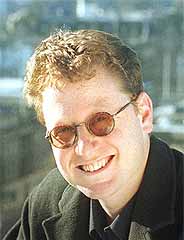
| | Jonathan Freedland looks for the past behind the present. Each week, The Long View, recorded on location throughout the British Isles, takes an issue from the current affairs agenda and finds a parallel in our past.
Have you got a good subject for a future programme? Click here to make your suggestion. | | | 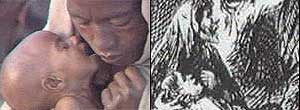
Famine today has mirrored the Irish Famine of the 1840's. | | The crops fail, and the poor go hungry. The next year they fail again. Starvation sets in. It's then that governments and aid organisations have to move fast - and they do. But at some point government policy changes and the result is apocalyptic famine. This, though, is not a report from the developing world but from the British Isles in Victorian times.
In 1845 Edward Twistleton was dispatched from London to a provincial city of the British Isles. He was a senior civil servant charged with the day to day over seeing of provision for the poor of Ireland. His offices were in The Custom House in Dublin.
In 1845 the potato crop failed. And it failed again the next. Edward Twistleton found himself dealing first with food shortages, then with famine.
Twistleton implemented various relief strategies on behalf of the British Government , some of which are still employed by aid agencies today. At first they favoured 'public works'; the hungry were given a wage to buy food for participating in road building and other community projects.
| | | On Location | | 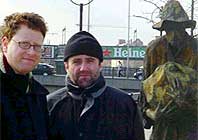 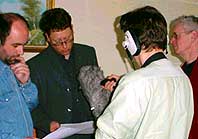 | | Left-hand picture:Jonathan Freedland and Lorcan Cranitch.
Right-hand picture: Lorcan Cranitch, Jonathan Freedland and Cormac O'Grada during a recording.
| | 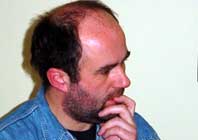 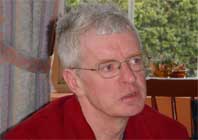 | | Left-hand picture: Lorcan Cranitch.
Right-hand picture:Cormac O'Grada
| | But by early 1847 it became clear that this scheme wasn't providing enough food for the hungry. At this point Twistleton's team set up soup kitchens throughout Ireland which were administered so effectively that at its peak no less than 3 million cooked meals were distributed each day.
Yet by world standards the Irish famine is one of the worst on records, not because the government failed to provide humanitarian aid, but because they stopped.
Guests
Jonathan Freedland takes the Long View of humanitarian aid in Dublin with: Cormac O'Grada. Professor of Economics at University College Dublin.
John O'Shea, Director of the charity Goal.
Mary Sutton, Deputy Director of Trocaire.
Lorcan Cranitch, the TV star of Ballykissangel and McReady and Daughter. |
| | |






 Listen to - Introduction