| | | THE LATEST PROGRAMME | | | |
| | Jonathan Freedland looks for the past behind the present. Each week, The Long View, recorded on location throughout the British Isles, takes an issue from the current affairs agenda and finds a parallel in our past.
Have you got a good subject for a future programme? Click here to make your suggestion. | | | 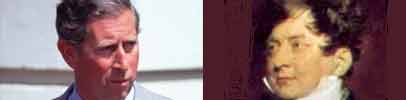
The role of the heir to the throne, focussing on the Prince Regent, later George 1V. |
 Sources used for readings in the programme Sources used for readings in the programme
The Prince of Wales causes a stir in public opinion because of his private life and also in the way he involves himself in politics.
It is 1795 and the Prince Regent, later George 1V, is very much in the news.
He agreed to marriage with Caroline of Brunswick because he needed the King's goodwill. George quickly regretted his marriage to Caroline and sought out again his old lover Mrs Fitzherbert. They were reconciled for several years and although he finally abandoned her again for another woman she was regarded as the love of his life.
Caroline won public affection - something the Prince never really came by - and when, early on as their marriage had just broken down, she attended the opera, she was applauded and acknowledged the audience - to the Prince's great annoyance.
In 1796 growing unrest in Ireland - including a bid by the United Irishmen to achieve an uprising assisted by a French invasion. The French sent a fleet but bad weather dispersed the ships. George wrote to Pitt suggesting that repealing restrictions on Catholics and making him, the Prince Regent, the Lord Lieutenant of Ireland, might go some way to easing the trouble. (We have a reading of this.) Pitt, unsurprisingly, turned it down, but as Saul David says, "It was a brilliantly argued document which, had it been implemented, might well have prevented the rebellion that began the following year."
| | | On Location | | 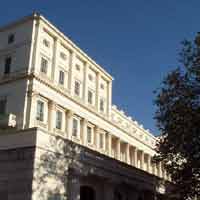 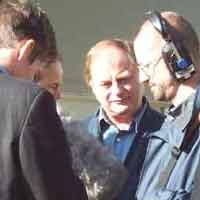 | | Left-hand picture:Carlton House Terrace, site of the Prince Regent's London home
Right-hand picture: Anthony Holden, facing camera.
| | 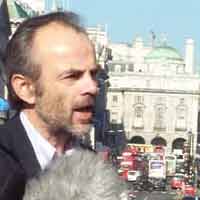 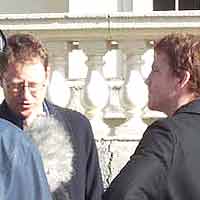 | | Left-hand picture:Charles Secrett, Friends of the Earth
Right-hand picture:Jonathan Freedland with the actor William Houston.
| | 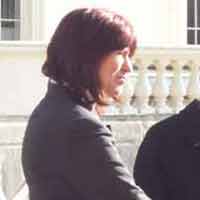  | | Left-hand picture:Janet Street-Porter
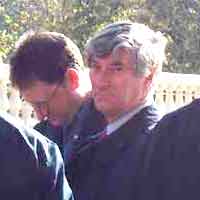
Right-hand picture:Victor Bogdanor
| | For years the Prince of Wales had been making promises to the Whigs, which evolved into the Liberal Party in the 19th century, that he would favour their party when he replaced his Tory father. However, this did not happen, and he quickly became an ultra Tory supporting the policies of Lord Liverpool and his government.
In his youth the Prince of Wales agreed with his friend Charles Fox about the unfairness of the laws that discriminated against Roman Catholics and Protestant Nonconformists. Once in power George changed his views and became a strong opponent of Catholic Emancipation. He also abandoned his support for those Whigs who were arguing for parliamentary reform.
Contributors
Historian - Saul David,
Actor - William Housten,
Journalist and writer, Anthony Holden,
Historian - Vernon Bogdanor,
Charles Secrett, Director of Friends of the Earth, Journalist - Janet Street-Porter
Further Reading
Prince of Pleasure, by Saul David. Abacus. |
| | |






 Listen to introduction