'Women wey dey use dangerous 'skin-lightening products' dey risk dia health'
Wia dis foto come from, AFP
- Author, Swaminathan Natarajan
- Role, BBC World Service
"I look very bad on my wedding day. I ugly well-well," na so Shiroma Pereira (no be her real name) tok with plenty emotion for her voice.
She dey live near di Sri Lankan capital Colombo. Like so many odas for South Asia, she decide to lighten her skin ahead of her big day last year. She bin dey hope to get beautiful, radiant skin.
''Two months before di wedding, I go salon and dem give me one cream to whiten my skin. After I use di cream for one week, my face come bleach," she tell BBC Sinhala.
"I bin wan lighten my skin but I end up with burnt skin."
Dark patches
Instead make she dey focus on di guest lists and shopping plans for her wedding, di 31-year-old come dey spend time and money ontop treatment.
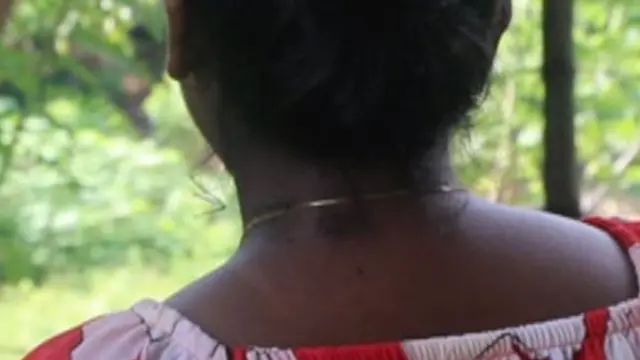
"I get white rashes wey later turn to dark patches."
The whitening cream she get from di salon no join di list of authorised beauty products for Sri Lanka. Dem bin import am legally and na black market dey sell am.
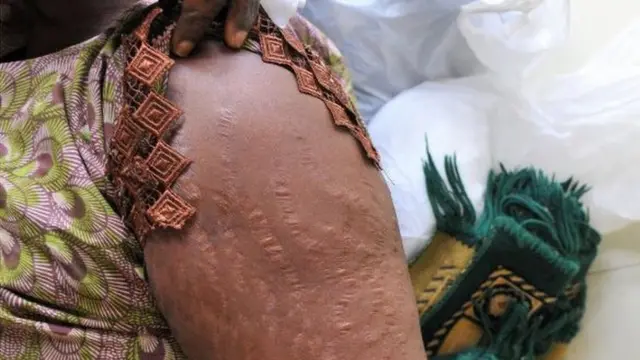
Di scars still dey Pereira neck, even after one year of treatment.


End of Di one wey oda users dey read well well
Market
But dis palava no dey limited to Sri Lanka. Millions of people - mostly women - for Asia and Africa dey take extreme measure to lighten dia complexion.
Sabi pipo estimate say di global skin-lightening industry worth $4.8bn for 2017 and dem dey project say e go double to $8.9bn by 2027.

Wia dis foto come from, Getty Images
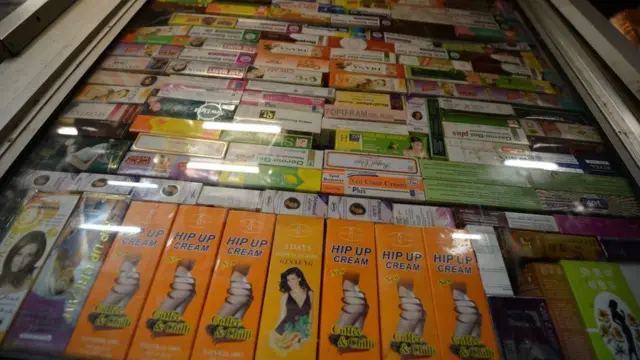
E include products like soaps, creams, scrubs, tablets and even injections wey dem design to slow down di production of melanin pigments, and dem dey very popular.
According to the World Health Organization, four out of 10 women for Africa dey use skin-lightening products.
For Africa, Nigeria top di list with 77% of women wey dey use skin lightening products. Followed by Togo 59 % and South Africa 35%.
For Asia, 61% of Indian women and 40% of Chinese women dey use dem.
Na Global challenge
Last year, authorities for Ghana warn pregnant women, make dem no take one skin-lightening pill wey contain one antioxidant glutathione.
Wia dis foto come from, Getty Images
Women for Ghana bin dey take di medicine with di hope say e go lighten di skin of dia unborn babies inside dia womb.
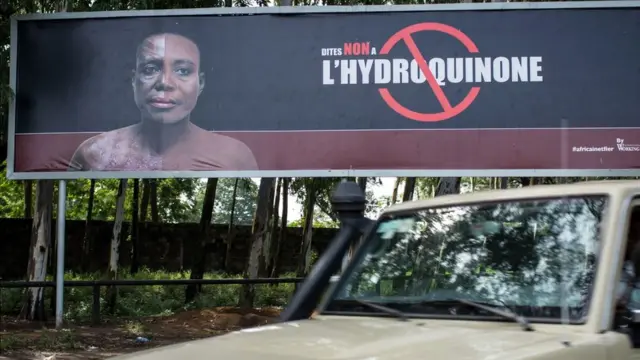
South Africa get some of di toughest laws against skin lighteners. Gambia, Ivory Coast and early dis year Rwanda all ban skin-lightening products wey contain hydroquinone, wey dey reduce melanin production, but wey fit also cause permanent skin damage.
Melanin na brown/black pigment wey dey give skin e colour.
Wia dis foto come from, Getty Images
It also says some skin-lightening products have medical value.
"Some whitening creams may be helpful, but they have to be prescribed and closely monitored by a dermatologist, otherwise they can be dangerous," says Anton Alexandroff, spokesperson for the foundation.
Effectiveness
Di British Skin Foundation tok say, "pesin fit use products with hydroquinone safely under di supervision of consultant dermatologist to treat areas wey get skin problem with good results."
But the foundation insist say "safe recognised method to lighten your entire skin no dey ". Na so tok-tok pesin for di foundation Anton Alexandroff tok.
"Evidence no dey say di cream wey you get ova di counter fit help. E fit get di opposite effect. E fit make di skin unnaturally white or even make am darker, and di skin fit lose e natural qualities," Alexandroff warn.
But doctors dey prescribe skin-lightening products to treat certain conditions like melasma, common skin condition for adults wia brown or greyish patches of pigmentation dey develop, usually ontop di face. E dey more common for women, particularly during pregnancy.

Side effects
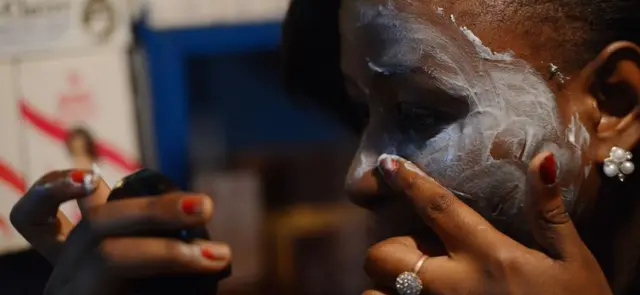
Most women dey buy and use cosmetic skin-lightening products without any medical supervision or guidelines, and dem fit get serious side effects, like:
Wia dis foto come from, Getty Images
Skin irritation and inflammation
Burning or stinging sensation
Itchy and flaky skin
(Source - NHS UK)

Wia dis foto come from, AFP
Mercury
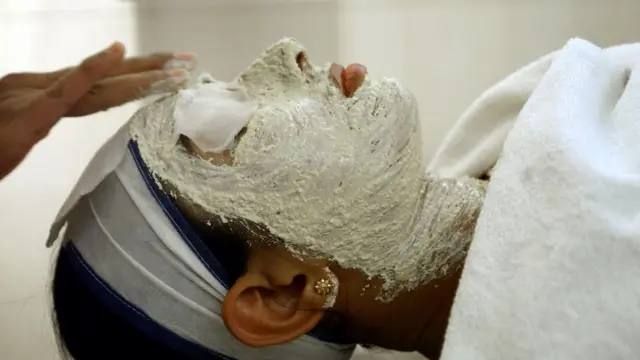
According to WHO, "Skin-lightening products wey contain Mercury no bam for di health,."
Dem see say dem still dey produce products wey contain Mercury China, Dominican Republic, Lebanon, Mexico, Pakistan, the Philippines, Thailand, and di USA".
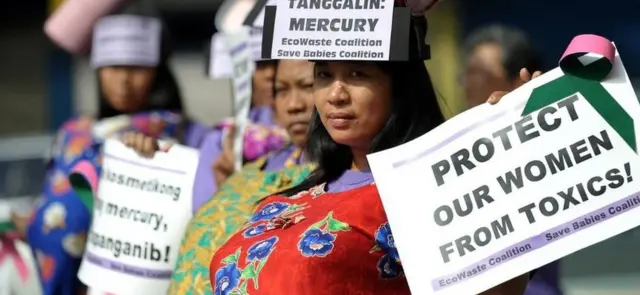
EU and many African kontries don ban skincare products wey contain di metal. US, Canada, Philippines and few oda kontries dey allow very small levels of mercury.
Health
"Mercury na poison," Alexandroff tok, and e fit cause plenti health problems.
Di main effect of mercury wey dey inside skin lightening soaps and creams na:
Wia dis foto come from, Getty Images
- Kidney damage
- Skin rashes, skin discoloration and scarring
- Reduced ability to resist bacterial and fungal infections
- Anxiety, depression or psychosis and peripheral neuropathy
(Source: WHO)
Prejudice
Sabi pipo say society dey encourage pipo to risk tins for beauty at di cost of dia health.
Wia dis foto come from, Getty Images
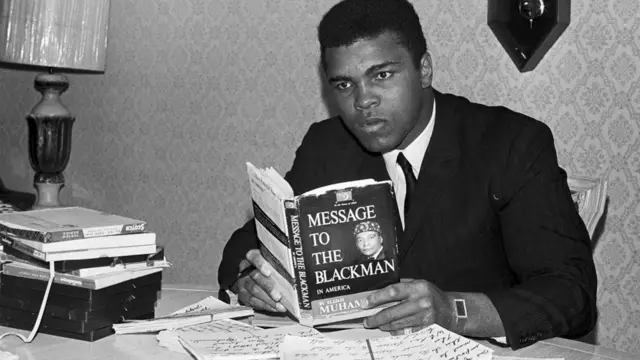
Boxing superstar Muhammad Ali wey fight against many social barriers bin question di long-held beliefs wen im deliver one sermon for one apostolic church for 1983.
"Why e be say all di angels na white? Why black angels no dey?"
Dem also accuse di entertainment industry too say dem dey promote one particular body type and skin colour, dis dey make millions of women dey insecure.
Many grass root level campaigns don dey inger to fight di mata.
'Dark is beautiful' na one of dat kain initiative wey dey encourage Indian women to bone skin whiteners.

Wia dis foto come from, Getty Images