New West African super highway go fit bring military regimes back into Ecowas?
Wia dis foto come from, AFP
- Author, Paul Melly
- Role, Africa analyst
- Published
- Read am in 6 mins
West African leaders dey prepare for important meeting on Sunday for Abuja, Nigeria capital wia dem go focus on how di departure of Mali, Burkina Faso and Niger from dia 15 member bodi Ecowas affect dem.
Na just few reason say di military leaders from di three kontris go wan pause or make u-turn from dia decision.
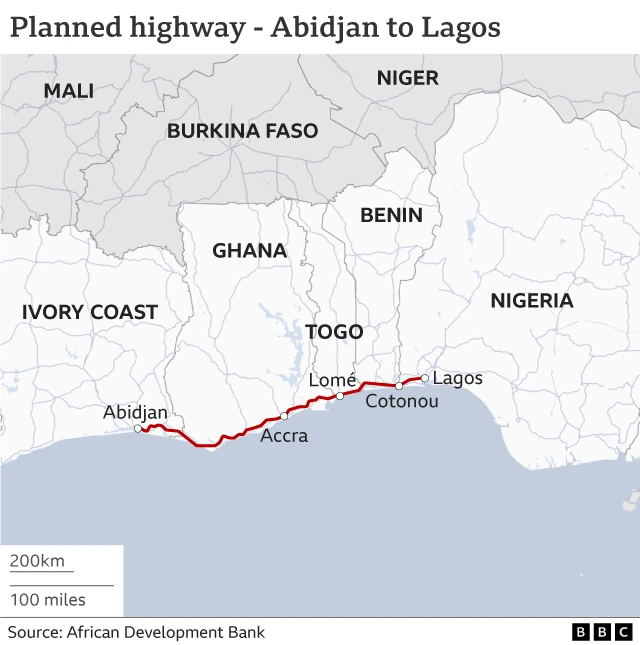
Even wit dis blow to regional unity, West Africa still dey prepare to start work for one 1,028km (689 miles) highway from Ivory Coast main city Abidjan - enta Ghana, Togo and Benin - to Nigeria biggest city Lagos.
Construction suppose start for 2026 and pledge for $15.6bn (£12.3bn) don dey ground from group of funders and investors.
Just di same way wey Western Europe match Soviet-led communist bloc wit a "Common Market" wey later turn to di trading powerhouse e be today, di European Union (EU) so Ecowas fit find say as dem dey ginger for prosperity and growth fit be di beta and to di military coups and nationalism wey don sweep through di region since 2020.
Di plan to build modern transport corridor along di West African coast don dey approved eight years ago. Dis na long bifor di coups wey scata civilian rule for Mali, Burkina Faso and Niger.
Dem even commission preparatory studies wey di African Development Bank bin lead.
But wen dem present dis tins last month, di timing no fit beta pass to ginger di self-confidence of Ecowas (Economic Community of West African States) wey don crack.
End of Di one wey oda users dey read well well
Traditional diplomacy abi sanctions even threat of military intervention for Niger no make di juntas to run elections and restore civilian rule wey be di Ecowas governance rules.
Di regimes declare say dem go comot di 15 member bloc.
Dem don follow dat one as dem shun efforts of di remaining members to make dem to stay even though di Ecowas envoy, Senegal new young President Bassirou Diomaye Faye wey share dia nationalistic outlook still dey try.
Until dis crisis, Ecowas na di most cohesive and politically integrated regional group for Africa. Dem bin get creditable record of crisis management and even for di deployment of peacekeepers for troubled member states.
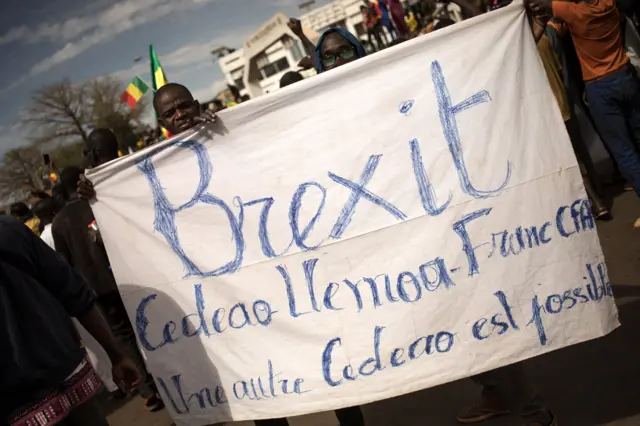
As Mali, Burkina Faso and Niger dey comot, di bloc go lose 76 million out of dia 446 million pipo and ova half of dia total geographical land area as dem go lose plenti tracts of di Sahara. Dis na big blow to dia prestige and self belief.
Wia dis foto come from, AFP
Di shock of di fact say di three kontris dey comot fit ginger di pipo wey dey push for tougher governance and democracy rules.
Meanwhile, dis ambitious coastal transport corridor project, wey dem bin start for economic development fit also get political purpose too.
E fit demonstrate say di remaining member kontris fit work togeda and boost di trade growth and investment attraction come di coastal urban West Africa, wey alreadi be di most prosperous part of id big region.
And just like di EU wealth bin prove to be ogbonge attraction for former communist states, e be like di rising prosperity of Ecowas fit attract di kontris wey don comot to join di bloc again.
Construction of di proposed four-to-six lane road fit create up to 70,000 jobs as dem dey optimistic say di road go complete by 2032.
And di plan na to get enof land along di route wey go later get new railway line, wey go link di big port cities along di Gulf of Guinea. Di rail routes now dey inland but no rail line dey along di coast.
Di road go connect many of di biggest cities for West Africa wey include Abidjan, wit 8.3 million pipo, Accra (4 million), Lomé (2 million), Cotonou (2.6 million) and Lagos wey dey estimated to get 20 million or even more.
Plenti of di cities na key gateway ports for flow of trade in and out of di region.
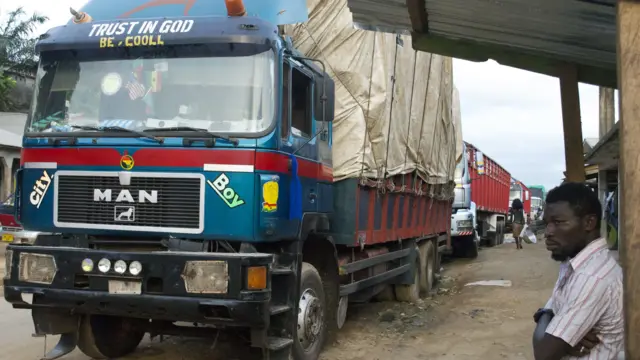
Alreadi di official kasala and risks for petty corruption wey don dey worry drivers wey dey go from one kontri to di next don dey reduce.
Fo many border crossings, dem now dey use di modern one-stop frontier posts wia officials from di two kontris go work side by side to check passports and transit documents.
Unlike bifor wia plenti huts go dey wia drivers and passengers go queue for plenti counters as one set of border police and customs afta anoda go dey go through all di formalities.
And now di proposed highway and rail line dey promise to make di flow and trade to dey even faster between di coastal economies wey go boost competition and integration and transform di region attraction for investors, like how di EU transform trade and development across di European continent.
And dat process of economic and administrative integration go las-las get ogbonge political results.
E bin act as powerful lure for kontris wey no dey inside di bloc to improve economic governance, strengthen democracy and tackle corruption so dat dem too go fit qualify to join.
Maybe Ecowas go fit run dis kain parole and make di states wey no wan gree to join back, most especially if flagship projects like di transport corridor ginger beta growth.
Bicos Mali, Niger and Burkina Faso no only face ogbonge development and security wahala, but dem also dey landlocked. Wey mean say dem dey heavily dependant on dia coastal neighbours through transport, trade and labour migration.
Plenti amount of trade, weda na formal or informal dey flow across borders.
Livestock from di three kontris for di Sahel dey exported to feed city dwellers for Dakar, Abidjan and Lagos.
Onions and potatoes wey Niger dry climate dey grow na necessity by households for di coast while Ivorian, Ghanaian and Nigerian manufactured goods dey exported for di opposite direction.
Millions of Burkinabès and Malians don settle for Ivory Coast and na dem make up di workforce for dia cocoa plantations.
And dis na as di coup leaders no dey pull out of di West African CFA franc, wey be di eight kontri single currency wey France dey back. Dis currency dey block competitiveness but na solid defence against inflation and money instability.
But di deep ties wey Sahel nations and coastal West Africa get no reach to prevent military regimes for Mali Burkina Faso and Niger to announce dia withdrawal form Ecowas.
Beef towards di bloc wey dem see as bullying and arrogant, don get political dividends don ginger dia popularity for home. And Morocco dey tok say dem fit open anoda trade route to dia Atlantic ports wey fit widen dia options.
But if di remaining Ecowas kontris fit boost dia drive for prosperity, by reducing trade barriers and moving forward wit ogbonge projects like di coastal highway and rail like, den dem fit heal today political bruises and mistrusts and bring back di Sahel states to a reunifies West African regional identity.
Paul Melly na consulting fellow wit di Africa Programme for Chatham House for London.