Rafah - wia Palestinians dey hide wey Israel dey threaten to carry out ground attack
Very bad tin go happun for southern Gazan city of Rafah if Israel carry out dia large-scale military operation, na so United Nations (UN) warn .
Israeli Prime Minister Benjamin Netanyahu order di military to prepare to carry civilians comot from Rafah ahead of more offensive against Hamas.
Israel carry out air strikes on di city overnight on 11 February, wey kill at least 67 pipo according to di Hamas-run health ministry. Israel say di "aerial coverage and a wave of strikes" na to follow raid, wey free two hostages.
Israel argue say Rafah na di last remaining stronghold for Hamas fighters, but di UN say more dan half of Gaza population don run comot from dia and na im be di key location for aid operations.
As many for di international community dey warn against Rafah offensive, make we look at di city, di pipo wey dey live dia and dia history.
Wia Rafah dey?
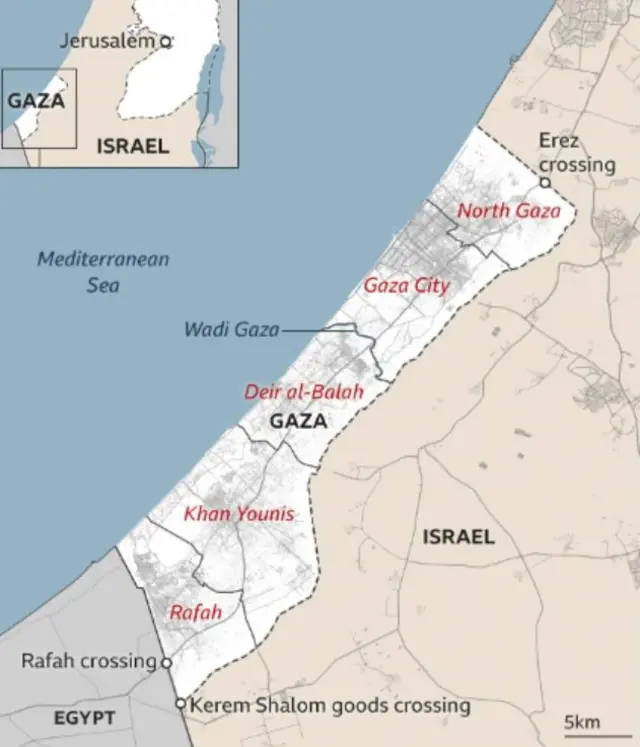
Rafah na di most southerly city for Gaza. Di Rafah Governorate get borders wit Egypt and Israel - di city itself dey on di Gaza-Egypt border.
Di population currently dey estimated at 1.5 million Palestinians - dat na five times more, bifor Israel begin dia strikes on di Strip.
Di Rafah area na about 60 sq km, roughly di size of di borough of Manhattan for New York.


End of Di one wey oda users dey read well well
Di only border crossing between di Gaza Strip and Egypt dey located in Rafah, and dem don use am for decades to get aid into Gaza. Before di war, hundreds of trucks use dis route to enta di Gaza Strip on a daily basis.
In di past, dozens of smuggling tunnels bin dey under di border, wey dem dey use to go around di Israeli-Egyptian blockade wey bin stop di flow of goods into Gaza. Dis come make Rafah important location in terms of trade and di economy.
E no dey clear how many tunnels remain, though di Egyptian army say dem don end di smuggling and destroy di tunnels in recent years.
Di History of Rafah
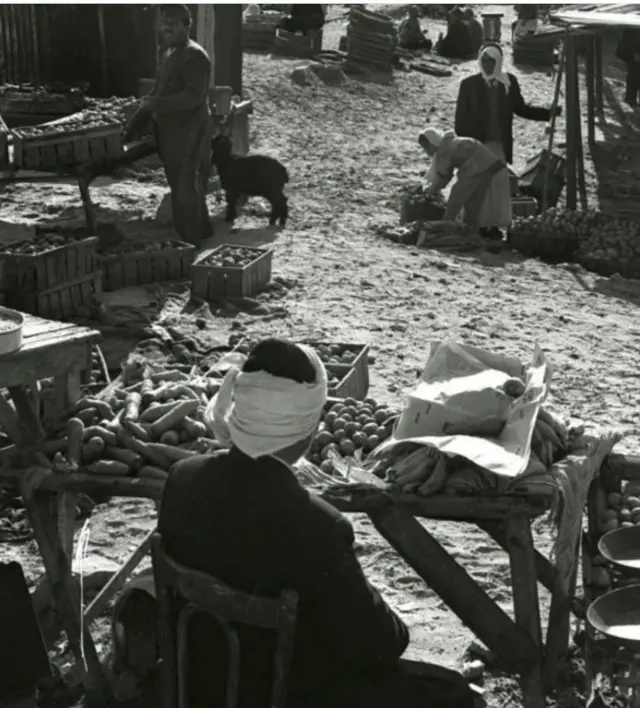
Rafah na one of Gaza ancient historical cities and e don dey conquered by Pharaohs, Assyrians, Greeks, and Romans.
E come under British rule from 1917 until 1948, wen dem declare di state of Israel.
A war wit Arab nations follow, and wen di fighting end, Rafah, togeda wit di rest of di Gaza Strip, come dey controlled by Egypt.
Den, for di 1967 war - known as di Six Day War - Israel take control of di city as dem occupy both Gaza and Egypt Sinai peninsula, as well as di West Bank, Golan Heights and East Jerusalem.
Later, in 1979, Egypt and Israel come agree for peace treaty, under which dem return Sinai back to Egypt. Rafah come dey divided, wit some part in Egypt and some part in Israeli-occupied Gaza. Barb wire border run through di city, separating families.
Like several oda parts of Gaza, Rafah na home to thousands of Palestinian refugees wey don run comot or dey forced away from dia homes during di 1948 war, and dia descendants.
How e be like for dia now?
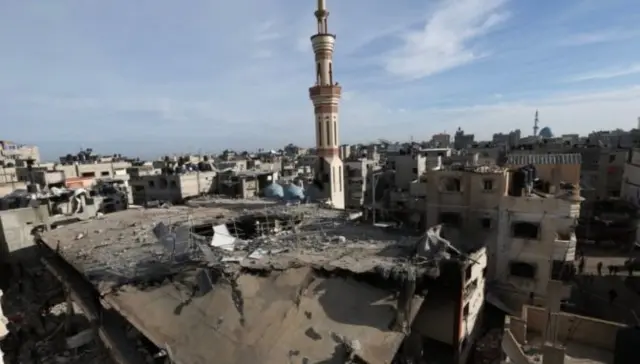
Di UN say more dan half of Gaza population dey inside Rafah, and Martin Griffiths, di UN relief co-ordinator describe di living conditions as "abysmal".
"Dem lack di basic necessities to survive, as hunger, disease and death dey waya dem well-well," e tok.
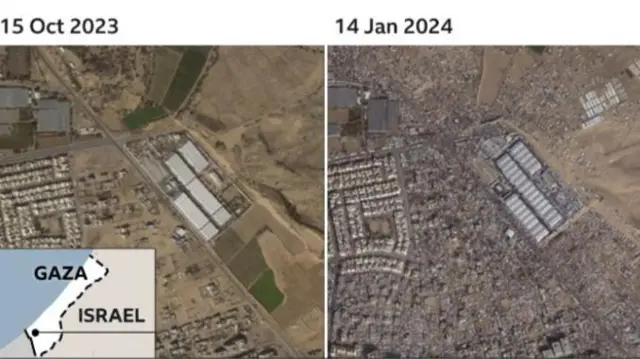
Displaced pipo dey live on di streets, and in schools and tents. Analysis of satellite images by di BBC (as e dey above) show di large increase in di number of tents for Rafah since di war start.
Many pipo here, like Abu Rushdi Abu Daqin, don run comot from di fighting in di north afta di Israeli army tell dem to move south.
"We don suffer," Abu Daqin tell di BBC. "I comot from Gaza City go Hamad and den come go to Khan Younis, from Khan Younis to Rafah. But for how long?" e ask afta e hear about Israel threat of a ground offensive.
Many displaced pipo for Rafah tell di BBC say dem prefer to stay in di western part of di city near di Mediterranean Sea, for fear of exposure to "invasion" from di eastern side, close to di border wit Israel.
Na only a few hospitals dey open including Rafah Central Hospital, Kuwait Specialised Hospital, and Martyr Abu Youssef Al-Najjar Hospital, and all of dem lack basic medical supplies and dem dey battle wit power shortages.
As Israeli Prime Minister Netanyahu dey give warning of a ground offensive for Rafah, despite international condemnation, most pipo for Rafah dey ask di same question as Abu Daqin: "All Gazans dey here. Wia we wan go?"
Israel say dem dey look for ways to minimise harm to civilians for dia operation, wey dem launch in response to di 7 October Hamas attacks wia 1,200 pipo bin dey killed and around 250 dey hostage.