Wetin di TikTok trend about mascara mean?
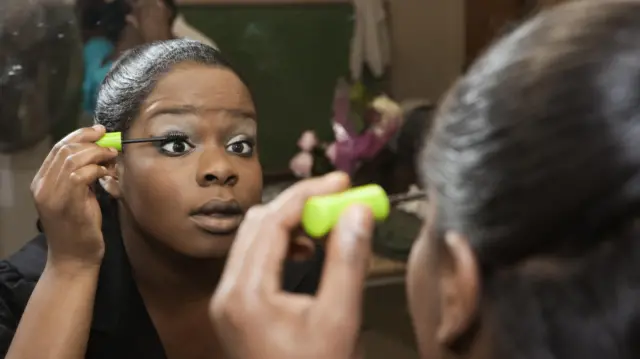
Wia dis foto come from, Getty Images
You be TikTok fan? Chances dey say you go don see plenti pipo dey tok about mascara recently - but dis tok no be about make-up.
Pipo don dey use di word to tok about relationships in a way wey avoid TikTok censorship filters.
Since di #mascara trend originate less than two weeks ago, e don gada more than 100 million views.
Di secret code start to dey confuse pipo, then take anoda turn wey make actress Julia Fox enta small trouble. But wetin e mean?
How e start
For di beginning di mascara trend was fairly okay.
End of Di one wey oda users dey read well well
Users go post videos - usually with di song Constellations, by Duster - and tok about dia experiences, good and bad, with partners.
One pesin tok say e don get im mascara since e dey 14, and "nothing like dis one dey anywhere else".
Some dey so lucky in love.
Anoda pesin tok say e no know if dem go "ever trust any oda mascara" afta di one wey im bin get "make my lashes completely fall apart".
How di mata dey go now?
Like so many trends, soon di word come grow more sexual.
Mascara, and di mascara wand, soon become code words for certain body part. Some pipo even discuss dia wand sizes, or how long dia mascara last.
Then later e enta di discussions of sexual assault and trauma, frame in a way wey only those "wey know" go understand.
More than few pipo complain say e dey more than a little confusing.
Dis confusion come land actress and model Julia Fox for hot water last week wen she reply to one video wey use dis alternative meaning.
Di user post say dem try my mascara "without my consent".
Julia come respond: "Idk why but I no feel bad for u lol".
Pipo dey quick to call her out for di comment.
She apologise immediately she notice her mistake, and say she bin think say dem dey tok about make-up.
You dey speak Algo?
Code words dey common for TikTok, and dem dey use words like grape - rape - and unalive - suicide - constantly.
All of dem na response to di app ban on sexually explicit language and content, wey fit make am hard to tok about sensitive topics.
One Washington Post reporter, Taylor Lorenz, name dis language wey develop out of tight regulations "Algospeak" - algorithm speak.
Code wordsno be new thing online. E get one time wen most pipo no know wetin OMG, LOL or IKR mean.
And if you dey "in di know", no to much room for confusion.
As one user write: "As much as I hate terms like 'unalive' no mistake dey about wetin di term mean.
If you say SA, I either know e mean sexual assault or I fit Google and find am."
But dem point out one specific problem with di #mascaratrend.
"If I Google mascara, all I go get na actual mascara because make-up companies dey pay big money for first-page ad space."
Wetin experts tok?
Trauma expert Danny Greeves think say TikTok na poor medium to share traumatic experiences appropriately.
Danny say code words dey present "challenge" because dem dey reference a topic indirectly and take away dia "emotional significance".
"Topics wey go usually command empathy, understanding and sensitivity go become less important.
"Wen dat happun - like with mascara trend - deeply painful and traumatic events like sexual assault dey minimise."
Educational and child psychologist Dr Amanda Furness no dey too convinced, and say di developing language fit allow young pipo to discuss experiences more openly.
"But e dey give confusing message and dey open to misinterpretation," she tok.
For her view, "di most helpful place to start na to make sure say young pipo feel comfortable and safe talking about dia experiences and bodies for universally understood way".
And she remind everyone to remember dat wen you share on social media, you no go fit control where di information go end up.