Di pipo wey 'dance themselves to death'
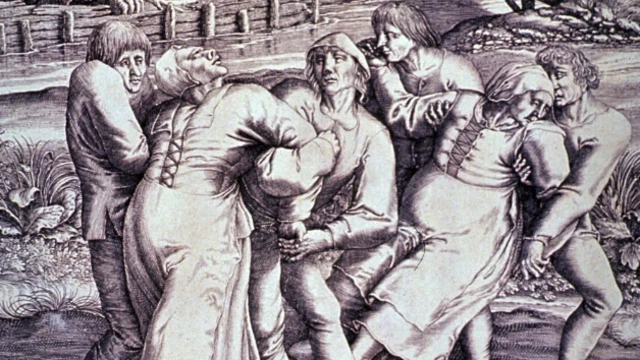
Wia dis foto come from, Alamy
For 1518, some citizens of French city of Strasbourg reportedly dance for days sake of wetin dem call dance plague - and di result dey fatal.
Na strange event wey continue to surprise artists and writers, Rosalind Jana write.
Like all good plague stories, dis one start wit omens. One star dey across di sky. Fields dey flooded. Extreme heat follow extreme cold, and one very strong hunger also follow dem
For one hot summer day for July 1518, one woman wey dem dey call Frau Troffea enta one square for Strasbourg and start to dance. At first, pipo wey around am only watch am, dem begin dey curious wit dis kind public display.
Dem watch dis woman wey no fit stop to dey dance. She dance for almost one week, she fall down sometimes sake of say she tire, but she no dey worry about oda warning signs wey her bodi get: pain, hunger, shame. Music no dey. Her heart keep di tempo as e work hard to make di motion continue.
E don too late by di time dem take am away. Odas don join am. By August, hundreds of pipo don dey do di same. Like dis first woman, dis new set of pipo no fit explain diasef.
Dem dance as if dem force dem, blood don full dia feet and dia limbs don begin twitch.
A poem from one modern chronicle describe "women and men wey dance and hop.../ For public market, for alleys and streets,/ Day and night" until di "sickness" finally stop.



End of Di one wey oda users dey read well well
One writer describe dancers wey dem carry go St Vitus's shrine outside di city where dem "dem give dem small crosses and red shoes".
Anoda writer tok say anoda arrangement to make di dancers submit wit "pesins... wey dem appoint to dance wit dem for payment, to di music of drums and pipes". Dis one no help. "All dis tin no help and many dance diasef to death."
In di 400 or so years since di Strasbourg "dance plague" happun, pipo don come up wit many theories to explain wetin really happun. Na event wey grip us till today, and e don make pipo to dey tok am again and e also inspire artists and creatives to also tok about dis strange happenings.
Dem release two major works wey dem theme around dance plague for May: pop star Florence + The Machine's album Dance Fever, and bestselling author Kiran Millwood Hargrave's The Dance Tree.
Both of dem use di idea of choreomania (as dem later call di strange event) to create highly immersive works wey meditate on constraint and rapture.
Though e don become di most famous example, Strasbourg no be di only "dance plague" wey hit Europe during di medieval and early modern era.
Dem record many examples of uncontrolled or threatening dances for Germany, France, and oda parts of di Holy Roman Empire.
For earlier centuries, dem interpret dis events as divine punishment or demonic intervention from priests.
Two decades before di summer of 1518, one cleric for Strasbourg wey dem dey call Sebastian Brant write for im satirical allegory The Ship of Fools "wey dance and sin na one in kind," and blame Satan for all dis "giddy dancing gayly done".
Several years afta di incident for Strasbourg, di physician begin one series of treatises on choreomania including The Diseases That Deprive Man of His Reason, such as St. Vitus's Dance, Falling Sickness, Melancholy, and Insanity, and Their Correct Treatment.
Paracelsus, wey dey popularly known for im pioneering work on chemistry in medicine, argue say dis phenomenon probably dey more earthly dan divine. E syggest say pesin "laughing veins" fit provoke a "ticklish feeling" wey go rise from dia limbs to dia head, and e go block judgment and provoke extreme motion until di frenzied blood dey calmed.
Dis one no be to absent sin entirely. Pipo wey dey dey afflicted wit di dance pass, according to Paracelsus, include "ashewo and dishonest pesin wey take pleasure for guitar and lute playing... wey satisfy dia pleasure, bodily pleasure, imagination and fancy".
Im elaborations on possible causes no dey out of date. E argue say "imagination dey more likely as di cause dan God or di devil.
Paracelsus say di imagination "no just dey fly out of di house into anoda... but e dey swiftly pass from one City and Kontri into anoda, so dat by di imagination of one pesin only, di Pestilence fit come into some whole City or Kontri."
Dis interpretation align well well wit di current theories about di psychogenic illness, wey feverish political and social circumstances dey cause.
For a while, speculation weda ergot - a mould wey dem dey find for rye stalks fit bring powerful hallucinations and convulsions - fit dey responsible, but dem don dismiss am.
John Waller, di author of di popular non-fiction book on di subject A Time to Dance, A Time to Die: The Extraordinary Story of the Dancing Plague of 1518, say choreomania na "psychic epidemic" wey be like odas around di world wey involve bodily responses such as laughing or fainting.
Modern choreomania
Ultimately, di story of a strange summer for Strasbourg na just story. surreal. Mass dancing of some form dey documented for at least six different modern chronicles, the dancers' motions reportedly continue for weeks. Dem name Frau Troffea as pesin wey start am in several of dem.
Beyond dat, details begin to dey different. Dem give many starting dates. Dem emphasise different method of dealing wit di phenomenon. Like many oda historical events, dem draw portraits from fragments.
Wia dis foto come from, Alamy
Regardless of di actual facts, di tale continue to grip our imagination: a lone figure wey cause a mass movement; a dance wey dey so captivating, so consuming, wey go beyond pesin will and physical limitation, sometimes wit deadly consequences.
Na dis kind event capture some of us wey continue to write about am today, conjured details about di damage wey di dance do to toes or di tick and pump of Frau Troffea heart full our prose
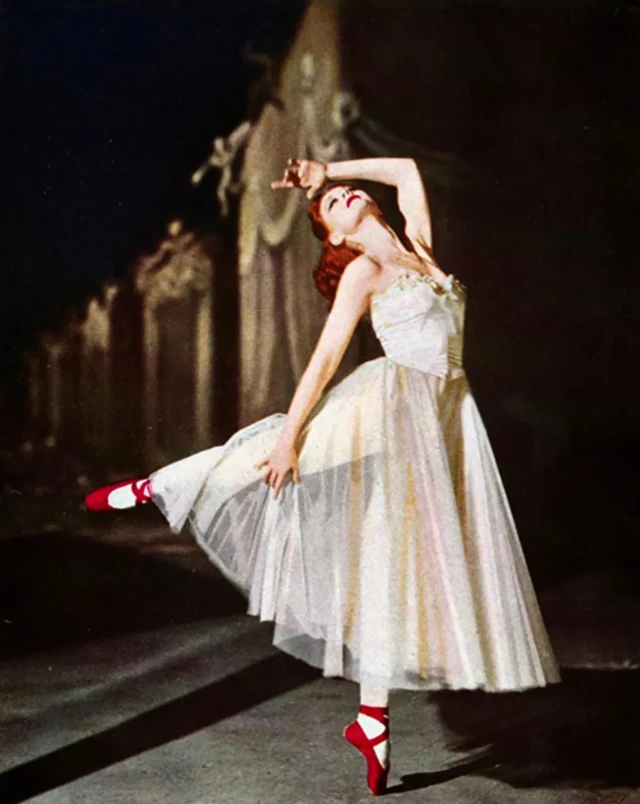
Uncontrollable dance get bewitching effect on pipo wey tink about am. One gass tink of di popular Hans Christian Andersen fairy tale The Red Shoes, wit im cursed scarlet leather slippers wey condemn dia owners into a dance wey be torture so tey she find executioner to cut her own feet.
Na horrible tale and pipo love am. Although im moral implications dey relatively straightforward (good old dose of punishment for vanity: di pesin wey wear di shoes go through dis kind wahala sake of such beautiful shoes enta her eye in di first place, im darker suggestions of possession and many movements don inspire many works including a Powell and Pressburger film, a Kate Bush album, and several ballets.
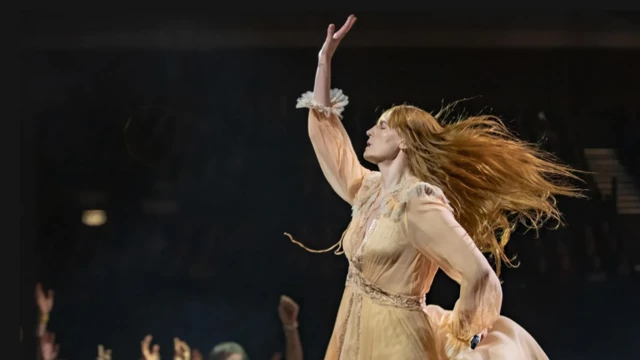
Dis summer, di dance plague return wit seriousness. Florence + The Machine's fifth album Dance Fever, wey dem release for 13 May, takes im cues from di unstoppable impulses of choreomania.
Di accompanying release notes outline frontwoman Florence Welch interest for dis volatile meeting point between energetic motion and moral panic, as well as touching on di subject obvious resonance for one album recorded during di Covid-19 pandemic, wen "di whirl of movement and togetherness" bin dey missed and anticipated.
A dance plague na suitable theme for pesin wey won explore uncertainty and change. Di opening lines of di song Choreomania wey dem write before di pandemic dey prophetic: "And I dey freak out in di middle of di street/ Wit di complete conviction of pesin wey neva experience anytin bad."
E also dey suitable for a singer wey dey consistently occupied by di body as a tool of expression. Music videos for di album singles King and Heaven is Here feature di same group of dancers wey move dia bodi around Welch, nothing stop dia motion as dem stamp dia feet and dash dia skirts.
Meanwhile, di latest novel from author Kiran Millwood Hargave, The Dance Tree, look at di events of di 1518 Strasbourg incident through di lives of women wey e affect.
In Millwood Hargrave's version, di dancing plague na a female-only affliction: e begin wit Frau Troffea, moving "as if na two devilish ropes dey draw am through her limbs", and e dey build to overwhelming crush of "pulsing bodies" wey disrupt and disturb everything around dem.
Dem write di story in third pesin, and dem dey see di story through di eyes of Lisbet, a pregnant beekeeper wey dey hardened to loss and wey dey try understand di mysteries of di family she marry into.
She be onlooker and no be participant. But as di dance change di nature of di city, e change di woman too. Revelations kon unfold. Desires kon come to a head.
Dem support dis narrative wit brief portraits of di women who join di dance: women who lose dia fadas, dia sons, or their minds; women wey don sabi passion, who don dey denied of am; women wey remain bystanders until dem no fit resist the promise of freedom wey dey found in di centre of crowd wey dey move dia bodi.
Ecstasy and anger
E no dey possible say make di dance plague no regain popularity now. Many pandemics wey come before now attract interest from many pipo, and some na Black Death and di Spanish Flu.
We don look into am no be becos we won compare but to reassure oursef say all epidemics dey eventually come to an end
Sometin wey dem class as a plague where di contagion no be sickness but movement dey always dey attractive.
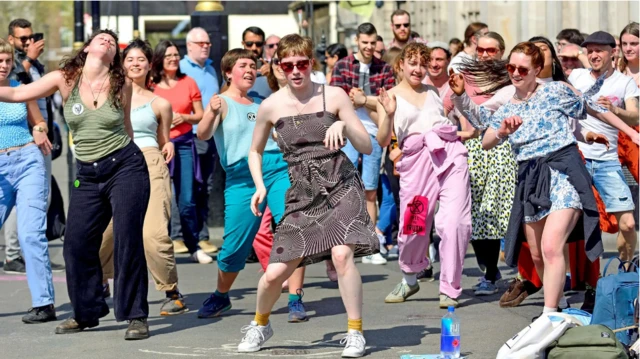
As Welch tok, one of di tins wey lost during lockdown na di cooperation of dancing: dat lovely feeling say pesin dey wit hundreds of oda pipo, music carry everybodi and e command dia muscles and turn strangers into fellow travellers wey experience bound togeda.
Wia dis foto come from, Alamy
Na infectious preoccupation. In July 2020, Jonathan Glazer bin debut a 10-minute film titled Strasbourg 1518 (BBC Films/ Artangel) wey feature solo performers wey dance until dem drop.
Dis year, as theatre don come back in full swing, productions including The Maladies at London's Almeida Theatre, Dance to the Bone at Cardiff's Sherman Theatre, and Mette Ingvartsen's The Dancing Public (wey bin dey on tour across Europe) all recall di events for Strasbourg as dem use dem to frame meditations on oppression, disconnection and mass movement.
Di sensory appeal of dis phenomenon no dey entirely coronavirus specific. E speaks to oda modern concerns.
"I think di more our lives dey pressured, and regimented, and time managed… di more we get dis need to produce and be efficient, and di more our public spaces dey cordoned and policed… di more di fantasy, di dream, di urge for letting loose [grow] strong," Kélina Gotman tok.
Gotman na di author of Choreomania: Dance and Disorder. Gotman book, wey dey largely concerned wit di pathologisation of choreomania, dey less interested in di origins of any bouts of dancing dan e dey in how dis moments bin dey written about, interpreted, and used to justify different ideologies.
Letting loose na idea wey dey central to both Dance Fever and The Dance Tree. "Sometin soaring and hopeful dey: an abandonment," Millwood Hargrave write in di latter of di growing crowd.
The dance plague as e exist in her book na situation of disorder, but also na enraptured refuge.
"I bin won look at di feeling to dey swept up in sometin wey dey so incredible and transcendent and weird," she tell me. "Ultimately, na complete collective ecstasy."
Dis idea of dance as ecstatic space find parallels in Dance Fever. "But I hear di music, I feel di beat/ And for a moment, wen I dey dance, I dey free," Welch sing in Free, her voice strike a note of vulnerability briefly before e roar once more.
Transcendence in all im guises na frequent theme for Welch lyrics, weda she dey explore youthful attempts to escape herself (via drinking, drug taking, denying herself food) or meditating on di fullness of love wey dey overwhelming.
Often, she sef reache a pitch of rapture, her songs no only speak of abandonment but dem encourage am in dia rhythms and crescendos. "I dey free," she sing again and again until we feel am too.
Freedom no be state to be taken for granted. In The Dance Tree, explicit points dey to be made about di autonomy of women – "female rage and female desire" na how Millwood Hargrave bin characterise di novel central preoccupation – and di power wey dey found to become object of fear.
No be all di time dancing dey dey pretty. E fit dey ugly, scary, sweaty, full of jerking limbs and grimaced expressions.
Na very literal way to assert autonomy. Look, e say, you no fit stop me from moving.
Wia dis foto come from, Alamy
Dancing go against di grain for di religious settings of The Dance Tree wey dey claustrophobic in setting.
Paracelsus remind us say e dey too pleasurable to be anytin apart from suspect. "Dance get huge role for so many cultures outside our own, particularly for Indian culture," Millwood Hargrave tok.
"In terms of faith and movement… dem just dey absolutely perfect bedfellows, sake of say di purest expression of devotion dey bodi." But within religious institutions wey demand quiet piety, such gestures become dangerous.
"Na really interesting to me say dis women fit neva dey encouraged to move...." Millwood tok.
"For every oda way church dey so theatrical in di place and time of di book: dis beautiful buildings, scent, incense, di beeswax, di clothes, all of dem na camp and theatre. But once you dey inside dia, you dey still and silent... Na theatre, without di heat, without di actual bodily connection between pipo."
A dance plague for every age
Events of mass disorder don always captivate artists. Sometin wey dey fundamentally fascinating dey inside moment where di social fabric break, convention wey events wey you no fit explain replace.
In dis case of choreomania, wetin emerge no be only sense of entrancement or self-destruction (another popular artistic theme), but physical protest. Currently, di idea of a dance plague registers no only as sometin wey odd, but sometin wey liberate.
As scary as an unstoppable dance fit be, e dey attractive. Wetin fit happen if we allow ourselves to dey properly carried away? Wetin fit dey achieved with dat feeling if oda pipo wey dey move around us also do am.
Dis one no be di case always. As Gotman explore for her book, once upon a time a dancing plague – no mata how dem conceive am – na sometin to view wit suspicion. Inside her research on 19th-Century approaches to choreomania, she discover an alarmed attitude wey dem wrap up inside colonial thought and fear of being different.
"Real articulation of a version of modernity dey, as being different to wetin pipo understand as more feminine, more animal, more wild, and, untamed," she tell me about di medical historical writings wey she discover for di Victorian era.
"One racist and gender-based discussion bin dey take shape."
At dat point, wen contextualising of new perceived instances of choreomania dey take place, di medieval period na convenient frame to understand am.
"Dem compare di medieval to di African, largely as dis kind of backward, non-European, pre-modern [period]," she explain.
Di very concept of "dance mania" na useful political tool, wey allow cross-comparison wit – and dismissal of – protests and practises wey involve any element of physical movement.
Gotman give di example of puppet ruler King Radama II, wey take control of Madagascar for 1861. When im pipo show dia displeasure, "exercising their right to protest against dis kingdoms [wey] sell of dia lands to di Europeans," as dem depose di king, e dey easy for colonial missionaries to dismiss dis actions as just anoda example of choreomania, and dem transmit a political protest into mere examples of madness.
Now di current mood don shift. Na femininity of a dancing plague make am interesting. Na historic object and symbol for today artist or tinker.
Simple idea dey di centre. One group of pipo start to dance and dem no fit stop. At di centre is a simple idea. A group of people start to dance and can't stop. But why di dance, and wetin dem won achieve na still question wey pipo fit ask again and again, wit different answers depending on wetin dem dey find. Madness. Hunger. Protest. Freedom. Pleasure. Ecstasy. In di imagination, however, di dancers feet remain for motion forever, as dem move to dia own rhythm wey no dey mysterious.