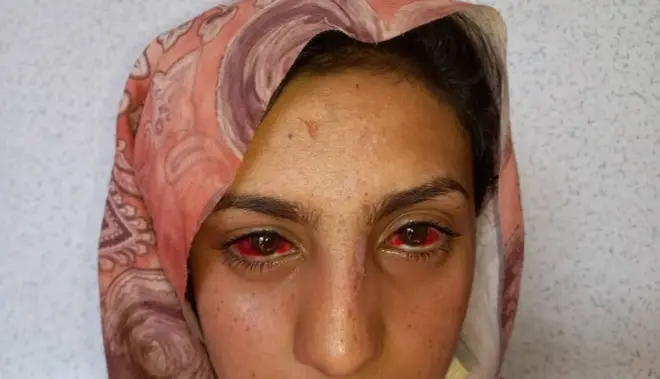
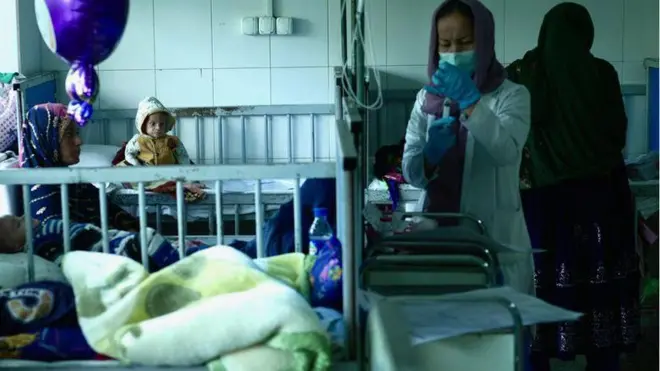
Kontri wey changes to dia laws dey force divorced women back into unwanted marriages
- Author, Mamoon Durrani
- Role, BBC Afghan Service
- Author, Kawoon Khamoosh
- Role, BBC World Service
- Reporting from, Reporting from Kabul
- Published
- Read am in 6 mins
Three years since di Taliban return to power, dia overhaul of Afghanistan legal system dey get serious impact on pipo lives.
Di Taliban say dia hardline judges no just dey uphold di current laws, dem also dey work overtime to reach into di past and overturn previous rulings. For one massive undertaking, dem dey offer free appeals to di general public.
Dis don lead to a rise of tens of thousands of old court cases wey dey retried under di Taliban own Sharia (Islamic law) and women in particular dey feel di effect.
Di Taliban don dey invalidate some divorces wey bin dey granted under di old regime and dis dey force women back into unwanted marriages, and female judges dey excluded from di legal system: ‘Women no dey qualified or able to judge becos for our sharia principles, di judiciary work require pipo wit high intelligence.'
Summoned back to court
Ten days after di Taliban return to power, 20-year-old Bibi Nazdana bin dey help her mother for kitchen, wen her father return home.
Clearly distressed, she move closer to hear wetin her father dey tok to her older brother.
"Wen I hear my name my heart begin pound and I burst into tears," na so Nazdana tok.
Di Taliban court for her home province of Uruzgan dey reopen her case. Dem dey summon her back to defend her divorce against a man wey she neva wish to marry.




End of Di one wey oda users dey read well well
Wen Nazdana bin dey just seven years old, her father bin agree say she go marry wen she reach adolescent age in order to settle a family dispute. Known as a 'bad marriage,' di practice dey seek to turn a family 'enemy' into a 'friend.'
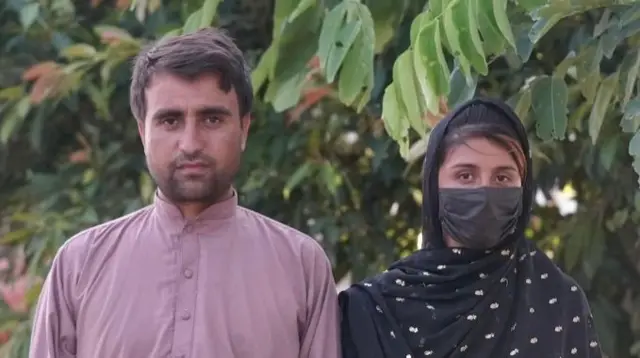
As Nazdana turn15 years, Hekmatullah come to take 'im wife' home. But Nazdana file for separation straight away, eventually winning back her freedom.
"I repeatedly tell di court say I no dey willing to marry am," Nazdana tok.
"After nearly two years of fighting, I finally win di case. Di court congratulate me and say, 'You dey separated now and free to marry whomever you want.'"
In celebration, dem hold a gathering for her village, and hand out food to friends and neighbours for di local mosque.
But a year later, di Taliban take over power and quickly introduce one strict interpretation of Sharia (Islamic law) across di kontri.
Her former husband, wey be newly signed up member of di Taliban, make a request to di court to cancel di decision wey dem make under di previous goment. Dis time, Nazdana dey excluded from di proceedings as per di Sharia (Islamic law).
"For di court di Taliban tell me say make I no return to court becos e dey against Sharia. Dem say na my brother go represent me instead," Nazdana tok.
"Dem tell us say if we no comply," as Shams, Nazdana 28-year-old brother tok, "dem go hand my sister ova to am (Hekmatullah) by force."
Despite how Shams plead wit di judge say di new ruling go put im sister life in grave danger, di court overturn di previous ruling and decree say make Nazdana return to her former husband, Hekmatullah, immediately.
Nazdana appeal di decision to buy herself time to run comot for di kontri. Along wit her brother, she run comot from her hometown and escape to a neighbouring kontri.
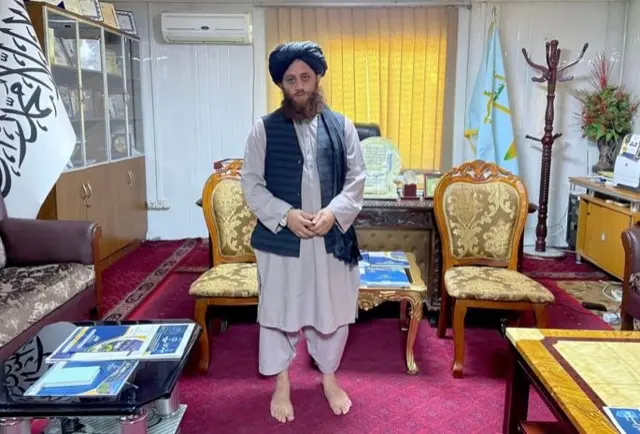
Di judge for Uruzgan no gree tok to di media, however we manage to visit di Taliban Supreme Court for capital Kabul to seek answers.
"Our judges study di case from all angles and rule in favour of Hekmatullah," na so Abdulwahid Haqani, media officer for di Supreme Court tok.
"Di previous corrupt administration decision to cancel Hekmatullah and Nazdana marriage dey against di Sharia and rules of marriage. Becos at di time of di court hearing, Hekmatullah bin no dey present."
We try to get comment from Hekmatullah but we no fit reach am.
Nazdana trial na just one of around 355,000 cases wey di Taliban goment claim say dem don settle since dem take ova power for August 2021. Di Taliban say most of di files na criminal cases - an estimated 40% na disputes ova land and a further 30% na family issues including divorce.
Di BBC no fit verify di figures wey di Taliban goment provide.
Women in di justice system
Wen di Taliban return to power, dem promise to do away wit di corruption of di past and deliver ‘justice.’ Dem systematically remove all judges and declare say women dey unfit to participate in di judicial system.
"Women no dey qualified or able to judge becos for our sharia principles, di judiciary work require pipo wit high intelligence," Abdulrahim Rashid tok - Im be Director of Foreign Relations and Communications for di Taliban Supreme Court.
Former Afghan Supreme Court Judge Fawzia Amini na one of di female judges removed by di Taliban. She say women like Bibi Nazdana suppose to dey protected under di law.
"If a woman divorce her husband and di court documents dey available as evidence, den e dey final. Legal verdicts no fit change becos a regime change," Amini tok.
Amini also say removing female judges dey stop any new legal protection for women.
“We play important role. For example, di Elimination of Violence against Women law for 2009 na one our achievements. We also work on di regulation of shelters for women, orphan guardianship and di anti-human tracking law, to name a few.”
Afta more dan a decade of working at di top of di Afghan legal system, Judge Amini dey forced to run comot for di kontri. Wen di Taliban take power, she say she begin receive death threats from di veri men she bin don previously convict.
"Our civil code dey more dan half a century old. We don dey practise am since even bifor di Taliban bin dey founded," Amini tok. "All civil and penal codes, including dose for divorce, dey adapted from di Quran."
Now, di Taliban say Afghanistan former rulers simply no dey Islamic enough.
Sharia
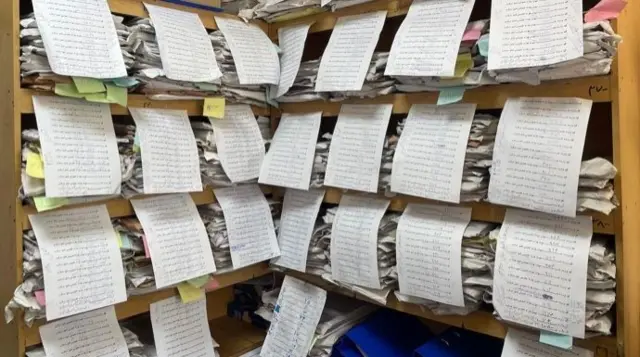
For di Taliban Supreme Court, dem show us a room wia dem keep piles of court cases on shelves - a tiny office space wia staff members both from di previous goment and di ones newly appointed by di Taliban dey share desks.
Dem tell us say most of di cases bin dey overseen during di previous regime and di new judiciary reopen dem afta dem make fresh appeals.
"Di former courts make decisions based on a penal and civil code. But now all decisions dey based on Sharia [Islamic law]." Abdulrahim Rashid tok.
Di Taliban largely rely on Hanafi Fiqh (jurisprudence) religious law wey date back to di 8th century and e dey practised across Islamic world throughout places like di Ottoman empire and up until today in different Islamic kontris.
"I no deserve freedom as a woman?"
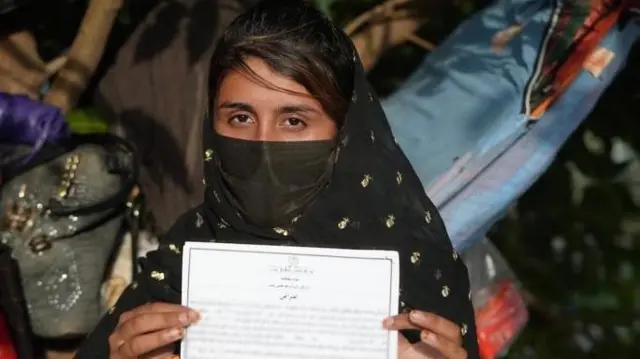
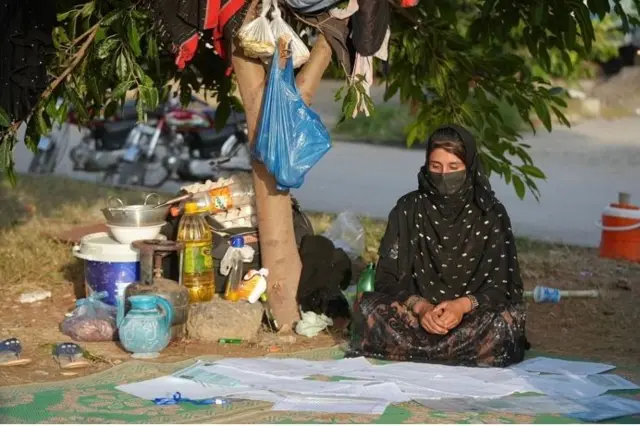
Since her escape to a neighbouring kontri, Nazdana don spend a year sheltering under a tree, for one small section of pavement in between two busy roads. She sidon wit a bundle of tightly bound documents - her only proof of her identity as a single free woman.
"I don knock on many doors asking for help, including di UN, but no one don hear my voice. Wia di support dey? I no deserve freedom as a woman?”