Iran install cameras to find women wey no wear hijab
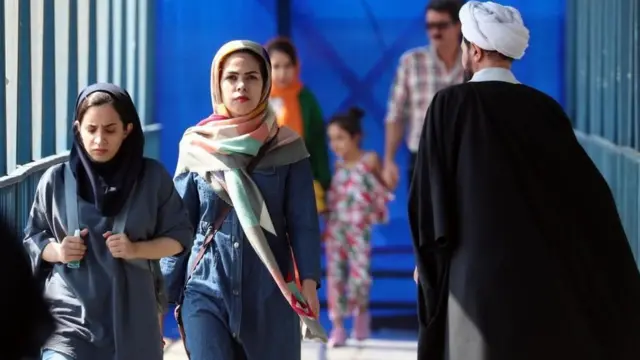
Wia dis foto come from, EPA
Iranian authorities don begin install cameras for public places to identify women wey no use hijab, di police don announce.
Identified women go receive text about di consequences of not covering dia hair wit a hijab, police tok.
According to di police, dis go help prevent "resistance against di hijab law".
Protests bin spark last year sake of di death of one young Kudish woman Mahsa Amini, for police custom afta police arrest her on top accuse say she allegedly violate di hijab rule.
Since Ms Amini death, growing number of women don dey abandon dia veils, particularly for larger cities, despite di risk of arrest.
One police statement wey di state-run Islamic Republic News Agency publish say di system don use one so-called "smart" cameras plus oda tools to identify and send "documents and warning messages to di violators of di hijab law".
Women dey legally required to cover dia hair wit hijab (headscarf) since di 1979 Islamic Revolution install a strict interpretation of religious law. Women wey violate di law dey fines or arrest.
Saturday police statement describe di veil as "one of di civilizational foundations of di Iranian nation" and urge business owners to uphold di rules through "diligent inspections".




End of Di one wey oda users dey read well well
Public attacks on unveiled women dey common.
Last week, one video wey show as one man dey throw yoghurt on two unveiled women bin go viral on social media. Dem later arrest di women under di hijab law, plus di man too.
Thousands of protesters for Iran don chop arrest and dem don execute four December, but hardliners don continue to insist say dem gatz do more to enforce di law.
Last Saturday, Iranian President Ebrahim Raisi tok am again say Iranian women must wear di hijab as a "religious necessity".
Iran judiciary chief Gholamhossein Mohseni-Ejei, however, bin sama warning on Friday say widespread crackdown fit no be di best way to encourage women to follow di rules.
"Cultural problems must be resolved by cultural means... If we wan solve such problems by arresting and imprisoning, di costs go increase and we no go see di desired effectiveness," e tok.