How man find hope for anoda pesin poo wey doctors put inside im bodi
Wia dis foto come from, Rick Dallaway/Getty Images
- Author, Suneth Perera
- Role, BBC World Service
- Read am in 7 mins
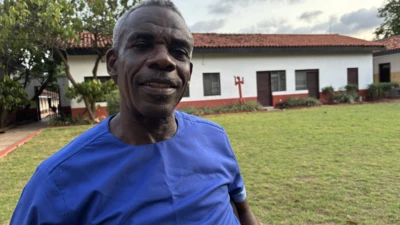
"Di whole idea of poo transplant na a veri strange one," na wetin Rick Dallaway tok as im dey reflect on di moment wey dem bin first invite am to join one clinical trial wey involve poo-poo wey dem donate.
Di 50-year-old bin just finish two months programme of poo transplant wey dem dey do weekly for di University of Birmingham for England.
Dis na wit di hopes of managing di symptoms of one rare chronic liver disease wey be Primary Sclerosing Cholangitis (PSC).
“No be just one piece of poo-poo,” im laugh, as im explain di process of di transplant “Na poo-poo wey dem don treat, e dey inside lab.”
At di moment, di rare condition of Rick no get cure except for an end-stage liver transplant.
E dey affect six to seven in 100,000 pipo for di UK, and e dey also shorten life expectancy by about 17 to 20 years.
Dem bin diagnose Rick condition eight years ago wen im bin dey 42 years.
"I bin feel anxious, veri worried about di future,” im remember. “E be like pesin wey dey fall from cliff.”
Wetin be poo transplant?
Wia dis foto come from, MTC/University of Birmingham
Dem dey use Faecal Microbiota Transplant (FMT), wey dem sabi as stool or poo transplant for plenti kontris for patients wey get gut diseases, mostly as part of clinical trials.
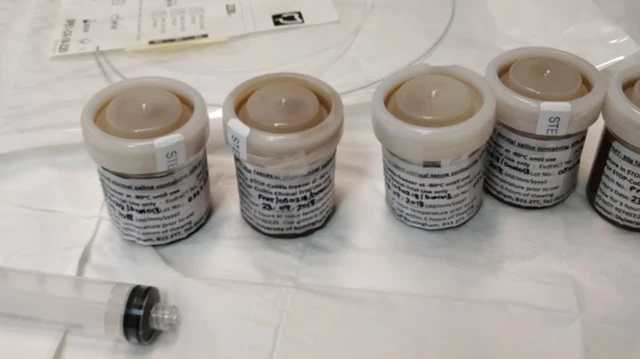
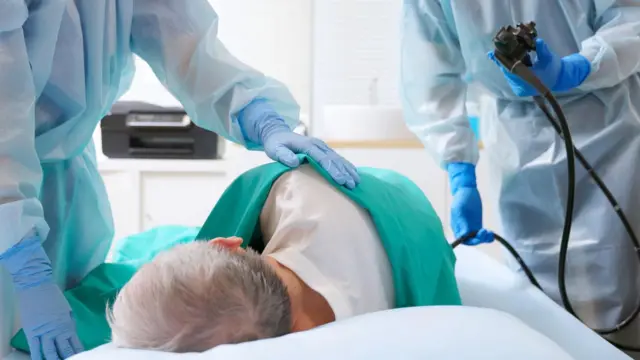
Dem go screen healthy stool donors and collect dia gut bacteria from dia samples, dem go transplant am into di patient intestines, usually thru colonoscopy, enema, or nasogastric tube.
Rick pass thru di treatment on a trial basis for PSC, but na for only one condition dem dey formally recommend am for di UK at di moment, according to di kontri National Institute for Health and Care Excellence (NICE) guidelines.
Patients wey get severe Clostridium difficile (C. diff) infection fit access di treatment thru di UK National Health Service (NHS).
Clostridium difficile (C. diff) na harmful bacteria wey fit cause diarrhoea, and e dey affect pipo wey don use antibiotics for veri long periods.
One 50ml liquid FMT sample dey cost NHS £1300 ($1684) – wey experts say dey less dan di cost of repeated antibiotics and hospital treatment. For some conditions, na only one time dem need to give di patient FMT.
Some facilities dey also give oral capsules wey dem make from di healthy bacteria wey dey inside human poo-poo.
Di faecal matter
Pipo wey need new liver, kidney or heart fit wait for months or even years to find donor wey go suit dem.
But no be di same tin wit dis much-needed organs, human stool dey available well well – even though di idea say na anoda pesin poo-poo fit make some pipo feel uncomfortable.
But Rick trust science even though e dey odd – and im wife and friends bin support im journey.
"Notin like embarrassment or shock,” Rick tok. “'If chance dey say e go work, why not?' Na di reaction I bin get from friends and family.”
Poo banks
Wia dis foto come from, MTC/University of Birmingham
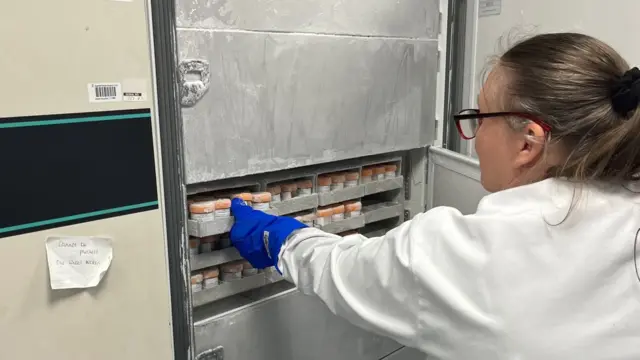
Di Microbiome Treatment Centre (MTC) for di University of Birmingham na di first ever UK third-party FMT service, wey dey supply stool samples to clinicians to safely treat hundreds of patients for C. diff infections, and to conduct research trials.
For di facility, donors go pass thru tight screening process, wey include a detailed medical history, lifestyle assessment, and tests for pathogens for dia blood and stool.
Afta dem don check dem well-well , dem go store di healthy stool samples for up to 12 months inside -80°C freezer. Wen any patient need faecal transplant, dem go melt di poo wey dey frozen and filtered and put am into a syringe.
"E dey difficult for kontris wey no get stool banks but really, di recommendation no to use frozen FMT so dat e go give you time to screen di poo donors properly." Professor Tariq Iqbal, director of di Microbiome Treatment Centre, tell di BBC.
Dem dey cover di expenses of di donorswit £200 inside any gift card of dia choice wen dia 10-day donation period don complete and e dey successful.
Wetin be di role of FMT for PSC
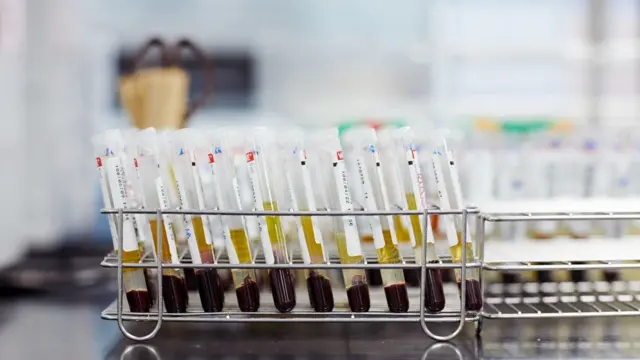
Experts warn say 70 to 80% of patients wey get di same condition as Rick, PSC, go also develop inflammatory bowel disease (IBD), na di term wey dem dey use describe long-term inflammatory conditions Crohn's disease and ulcerative colitis, wey fit cause serious stomach pain and diarrhoea.
Dr Palak Trivedi, di consultant hepatologist and gastroenterologist wey dey in charge of Rick’s trial, say scientists no know why pipo dey develop PSC, or why e dey connected to IBD.
"Wetin we dey try to do na to transfer healthy gut microbiota composition stool into di bowel of patients wey get PSC and see how e go affect dia liver disease," di associate professor explain.
Wia dis foto come from, Getty Images
Guidelines for faecal transplants
At di moment, faecal transplants no be di first treatment option wey dem dey give for any condition, Dr Horace Williams, wey be Imperial College London gastroenterologist wey don contribute to formal guidelines on FMT tok.
Dr Williams emphasize say di NHS dey only give FMT for severe Clostridium difficile (C. diff) infections, and no be for oda conditions - im suggest say make patients wey dey hope to get di treatment for oda reasons join clinical trials, di way Rick do.
Dr Benjamin Mullish, wey be Imperial College London gastroenterologist and principal author of British Society of Gastroenterology (BSG) guidelines on FMT, tell di BBC say many pipo dey practice DIY [Do it Yousef] FMT - e fit dey incredibly dangerous.
Medical bioethicist Dr Harriet Etheredge of di Steve Biko Centre for Bioethics for di University of di Witwatersrand (Wits), South Africa, points out say witout experienced practitioners and clear guidelines, FMT fit dey harmful, “especially for poorer kontris wia healthcare resources dey stretched".
Di treatment don even caused deaths for some rare cases.
Poo from a relative or poo from a stranger?
Apart from di US and Europe, dem do dey do FMT on a trial basis for some kontris including Brazil, South Africa and India.
Some patients dey drag leg to accept di treatment sake of say na anoda pesin poo, plus different cultural, social, and religious beliefs.
"Sometimes pipo dey react very awkwardly to dis treatment, and dem fit dey tink say di doctor dey joke or di doctor no serious," Dr Piyush Ranjan, of di Institute of Liver Gastroenterology and Pancreatic Biliary Sciences for di Sir Ganga Ram Hospital for India, tok.
Wia dis foto come from, Getty Images
From im own experience, Dr Ranjan say some patients dey "kind of okay" to accept stool from relatives instead of a complete stranger – even if dem don screen di stranger and im dey healthy.
From conversation, a poll of ova 200 members of Crohn's and Colitis UK find out say di stool wey plenti pipo prefer di stool from pesin wey dem don screen wey dem no sabi dan di one from pesin wey dem sabi.
Inside di same questionnaire, 37% of respondents initially tok say dem no go accept faecal transplant but, afta learning more about di process, dis figure rise to 54%.
"Education always breaks down a lot of barriers," Dr Bret Palmer, wey conduct di study, tell di BBC.
Rick hope say im trial go lead to a cure for im rare condition.
"If pesin bin tell me 10 years ago say human faeces fit treat medical conditions, I for no bliv am at all," im tok. "But now, na reality and e dey happun."