Billionaire travel for first ever private spacewalk
- Author, Pallab Ghosh
- Role, Science Correspondent
- Read am in 7 mins
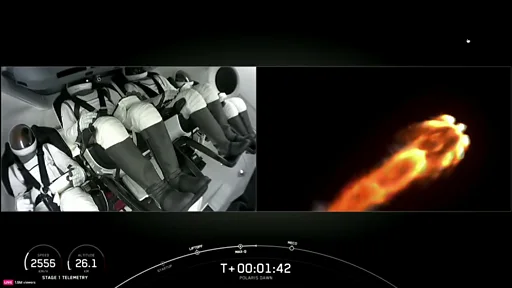
Billionaire Jared Isaacman dey fly inside SpaceX Falcon 9 rocket for wetin im hope to be di first eva privately funded space waka.
Di mission, wey dem call Polaris Dawn, na di first of three wey di founder of payments processing business Shift4 dey sponsor.
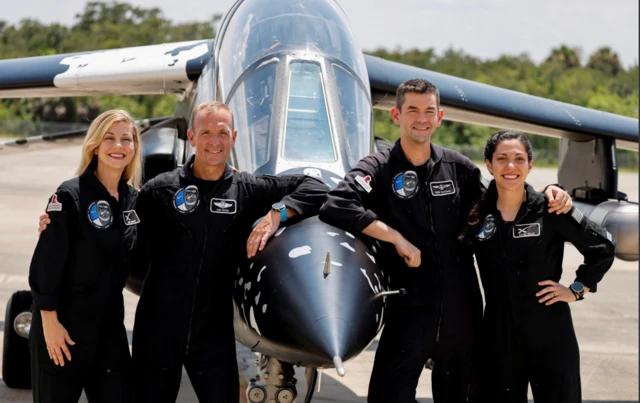
Im dey onboard as commander wit im close friend Scott 'Kidd' Poteet, wey be retired air force pilot, and two SpaceX engineers Anna Menon and Sarah Gillis.
Di spacecraft, wey im name na Resilience, go enta di orbit wey go carry dem go up to 870 miles (1,400km) above di planet.
No human being don go far reach like dat since Nasa Apollo programme end for di 1970s.
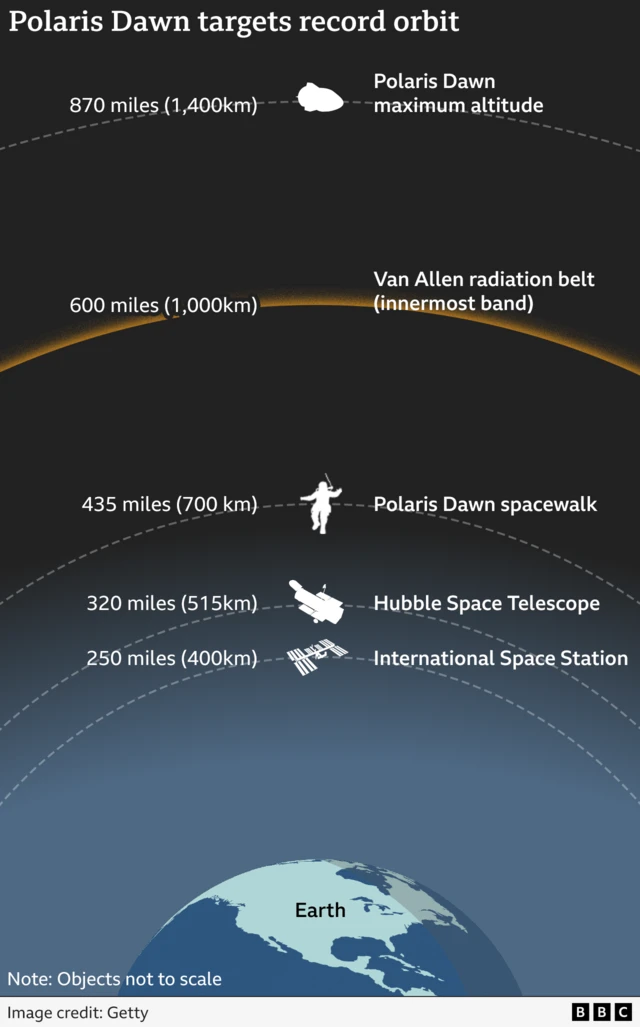
Di astronauts go pass through one region of space known as di Van Allen belt, wey get high levels of radiation, but di spacecraft go protect di crew and dia space suits wey dem just newly upgrade.
Di small time wey dem go pass dat side of di belt go expose dem to di equivalent of three months of di radiation wey astronauts dey experience for di International Space Station, wey dey within acceptable limits.
Dia aim na to study di effects wey a relatively short exposure wey dey safe fit get on di bodi of human beings.
Di crew go spend dia second day for space for dia maximum altitude, wia dem go conduct up to 40 experiments.
Di experiments include intersatellite laser communication between di Dragon Spacecraft and Space X’ Starlink satellite constellation.
If evritin go according to dia plan, day three of di mission, oga Isaacman and Sarah Gillis dey expected to attempt di first eva privately funded space waka, wey go last for two hours.
Dis go be wen dem dey 700km for orbit. Di astronauts go begin test new extravehicular activity (EVA) astronaut suits wey, as dia name suggests, don dey upgraded from Space X intravehicular activity (IVA) suits for working outside of spacecraft.
Di EVA suit carry one heads-up display for di helmet, wey dey give information about di suit even as dem dey use am. Dem say di EVA suits dey comfortable and flexible enof to wear during launch and landing, and e remove di need to get separate IVA suits.
For interview wey she give wen she bin dey train for di space waka Ms Gillis tok say di part dey necessary for Space X plans to send pipo to oda worlds.
“So far na only kontris don fit perform space waka. Space X get veri big ambitions to go Mars and make pipo fit live dia life for different planets.
For dis ambition to happun, we need to start from somwia. And di first step na to test out di first iteration of di EVA spacesuit so dat we fit go waka for space and design future suit wey go beta pass dis one.”
Na sentiment wey oga Isaacman tok about.
“Space X know say dem need EVA capability if dem go realise dia long-term dream of populating anoda planet one day."
Di aim na to make spacesuits wey dey like wetin tailor sew, wey go fit carry a wider range of commercial astronaut shapes and sizes so dat e go reduce costs as human spaceflight dey become commonplace for pipo.
Wia dis foto come from, Reuters
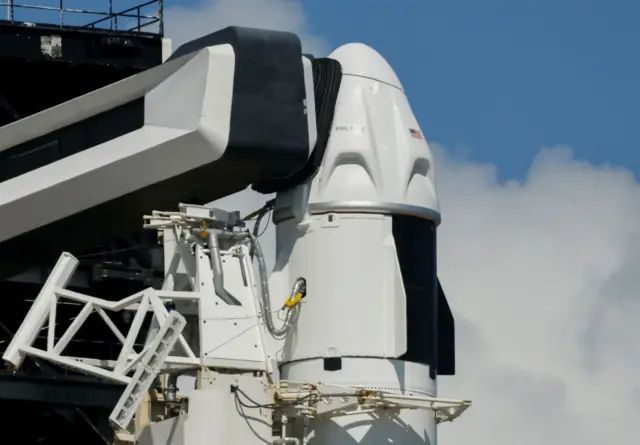
One unique aspect of di spacewalk na say di Dragon spacecraft, wey be Resilience, no get any airlock, wey be one sealed room between di doorway into di vacuum outside and di rest of di spacecraft.
Normally di airlock dey depressurised bifor di astronauts step in and out, but for di case of Resilience, dem go depressurise di entire craft and di astronauts wey no dey do di space waka go still dey fully suited up.
Dem design di spacecraft to withstand di vacuum. Dem also put extra nitrogen and oxygen tanks and all four astronauts go wear EVA suits, even though na only two go comot from di spacecraft.
Di mission go diafore break di record for di most pipo for di vacuum of space at once.
Di flight team don take di challenge as an opportunity to do tests on di impact of decompression sickness, wey dem also know as di “bends” and di blurry vision astronauts fit sometimes experience wetin dem dey call spaceflight associated neuro-ocular syndrome.
Tests on di impact of radiation from di Van Allen belts as well as di space waka dey intended to lay di foundation for more high-altitude missions by di private sector possibly to di Moon or Mars.

Wia dis foto come from, SpaceX
Plenty 'firsts' dey for di crew wey no too get experience to achieve. Na only one time Isaacman don go space and di oda three neva fly go space bifor.
“We dey feel say plenti risks dey hia,” according to Dr Adam Baker, one rocket propulsion specialist for Cranfield University.
“Dem don set plenti ambitious objectives for diasefs and dem no get plenti spaceflight experience.”
“But to counter dat, dem don spend plenti thousands of hours dey plan how di mission go be. So, dem dey do dia best to reduce di risks.”
If di mission dey successful, some analysts believe say e go start an explosion of eva greater and cheaper private sector missions wey go take more pipo further dan goment space agencies get.
But Dr Baker take a more cautious approach.
“Di record so far don take a huge amount of money wey private sector spend, plenti tok-tok for publicity, but less dan 100 additional pipo on top of di 500 or so goment-funded astronauts wey go travel go space come back, and many of na for only short periods.
“Spaceflight dey difficult, expensive and dangerous, so expecting to see large numbers of even some well-off members of di population, an opposed to di ultra-rich,wey dey fly into space soon, or to expect say you fit dey among dem, fit no happun.”
Wia dis foto come from, Reuters
Some see di idea of billionaires wey dey pay for demsefs to go into space as bad tin, and some some pipo donn. dey raise eyebrows ova a mission wia di pesin wey dey pay for di trip na also di commander.
But make dem no brush am off as wasteful project, according to Dr Simeon Barber, one space scientist for di Open University, wey develop scientific instruments on spacecrafts, almost entirely for projects wey goment dey fund.
“Isaacman na actually di most experienced astronaut of di crew – only am don go space bifor, for anoda self-funded mission wit SpaceX, wia im bin also take di position of Commander.
For di context of di mission, na im be di natural choice,” im tell BBC News.
“More widely, di money wey go come out from selling dis stellar class ticket to ride go remain on Earth – di money go buy materials and services, e go pay salaries and in turn go generate taxes. Not to mention di charitable funds di mission go raise.”
Im tok say many pipo for di space sector believe say di involvement of wealthy individuals go be good tin.
“If dem wish to venture off-planet, and one day to di Moon or even Mars, den e go create opportunities to do science along di way. And di more plenti reasons dey why we go explore space, di more resilient di programme go be.”