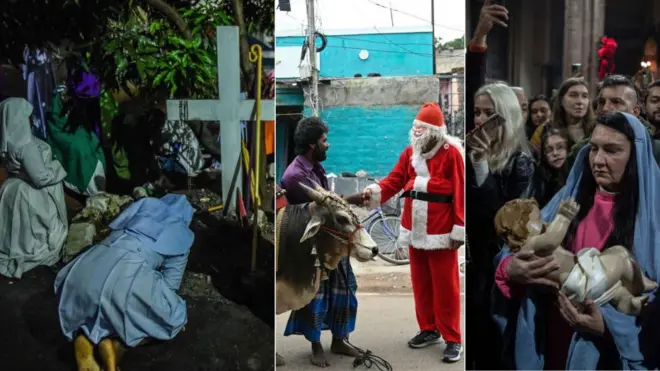
How one pagan celebration for Ancient Rome lead to di Christmas holiday
Wia dis foto come from, GETTY IMAGES
Among many oda tins, di Roman Empire bin leave legacies wit di Western world wey include di principles of di legal system wey dem dey practice for dozens of kontris.
Na di Roman Empire bin get di roots of languages such as Spanish, French, and Portuguese, and even di style wey dey behind how fire departments dey operate for many cities.
But e get anoda part of di legacy wey pipo no too sabi about di Roman Empire - na di Christmas celebration.
Na one of Christianity main celebrations wey dem dey mark wit trees wey get lights, Santa Claus, fine scenes, and family gatherings, but e dey difficult to see any trace of Roman culture.
Dis na mainly becos, for more dan five centuries, di Roman Empire na pipo wey believe in multiple deities.
But wetin be di connection between di Christmas wey we sabi and Ancient Rome?
Di ansa to dis kwesion refer to a particular Roman celebration: Saturnalia, wey be di ritual wey dem dey use welcome winter for di Roman Empire.
"Di choice of December 25 as di date of Jesus birth no get anytin to do wit di Bible; dem just decide to use di winter period to symbolise di role of Christ as di light of di world," Diarmaid MacCulloch, professor of church history for Oxford University for United Kingdom, tell BBC News.
"Di festive customs of Saturnalia at di same time of year naturally move into Christian practice, since di 4th century wey Christianity dey become more prominent for Roman society."
Di new beliefs dey beta accepted as e no get conflict wit ancient non-Christian customs," di professor add.
But wen dis encounter between Roman rites and Christian celebrations bin occur, and how come dem dey practice dem today?
Wia dis foto come from, GETTY IMAGES
Saturnália
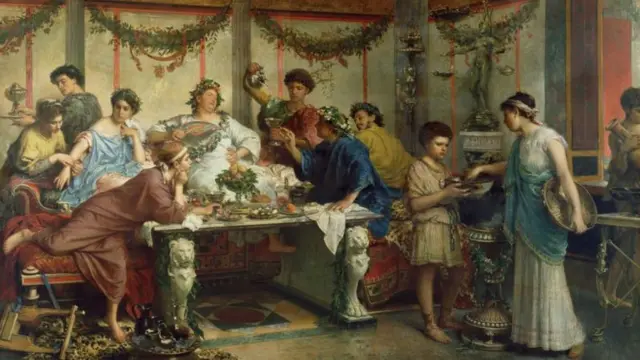
Saturnalia na festival wey di ancient Romans dey hold to celebrate wetin dem call di "rebirth" of di year, to mark di winter event for di Julian calendar (wey dey common for di Roman Empire and Europe for centuries) wey dem dey celebrate for December 25.
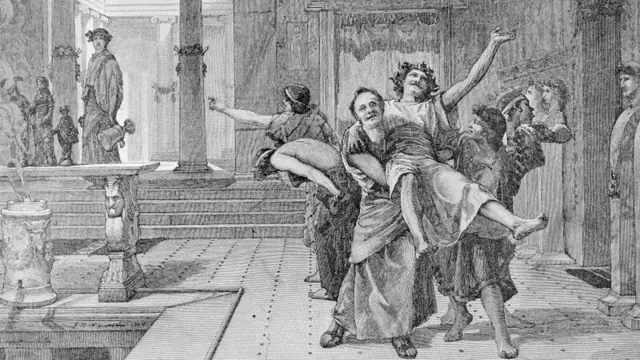
However, di party begin eight days earlier, for December 17, wen dem reverse di norms wey ordinarily dey govern society: men dress as women and masters dress as servants.
But den di similarities wit di Christmas wey we sabi today begin: dem go decorate di house wit foliage, light candles and exchange gifts.
"Dis celebration dey in honour of di god Saturn and e dey always dey characterised by relaxation of social order and carnival atmosphere," according to historian Marguerite Johnson of di University of Newcastle for Australia during di interview wit BBC News Mundo.
Johnson emphasise say di celebration in honour of Saturn for di beginning of winter get meaning: Saturn na di main deity of di Romans.
"E be di god of time, agriculture, and supernatural tins. As di days grow shorter and di earth symbolically die, e dey necessary to keep di god of time and food happy," Johnson explain.
And as part of dis tradition to please di deity and oda pipo, dem introduce gifts.
Wia dis foto come from, GETTY IMAGES
"As part of di festivities, Romans exchange gifts: candles, slippers, hats, and even socks. Dem dey do dis among families, while slaves enjoy dia free time."
But di historian points out say, in addition to di Saturnalia festival, di Romans get anoda important celebration: di "birth of di unconquered sun" (Natalis Solis Invicti), wey dem dey celebrate evri December 25, according to various documents from Roman times.
"For di 4th-century almanac, di Calendar of Philocalus, e get mention of a celebration of Invictus on December 25, wey be probably a reference to di 'Unconquered Sun,'" Johnson tok.
"And na inside dis document dem first mention say December 25 na di birth of Jesus," di historian add.
December
Di truth be say, for di end of di Roman era, Christmas don alreadi dey part of di Roman calendar.
According to historians, na gradual process wey involve mixing of traditions.
By di middle of di first century, Christians don already arrive for Rome and begin to shape di society of di empire.
"As Christianity become more into di Roman world and di old polytheistic religion fall behind, Christians adapt to dis established rites and make am dia own," Johnson tok.
"E dey possible say dem choose dis feast becos of di connection wit rebirth, but dis time wit di rebirth of Christ, wey get di mission to redeem dem and lead dem to eternal life," e add.
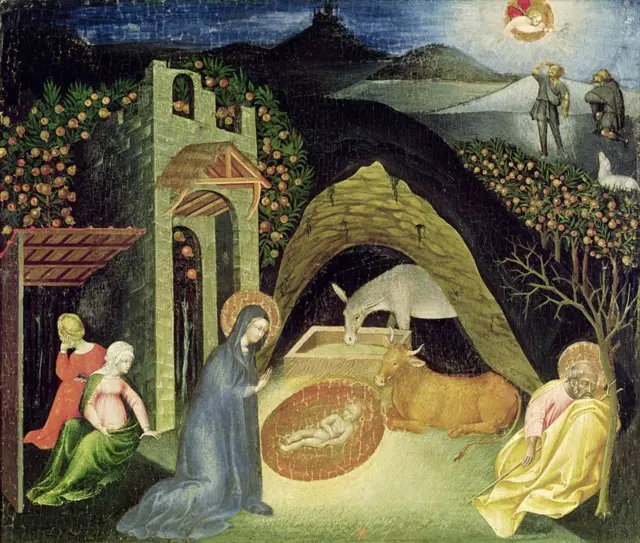
By di 4th century, dem write evritin down: between 320 and 353, Pope Julius I set di solemnity of Christmas on December 25, as strategy to convert di Romans.
Wia dis foto come from, GETTY IMAGES
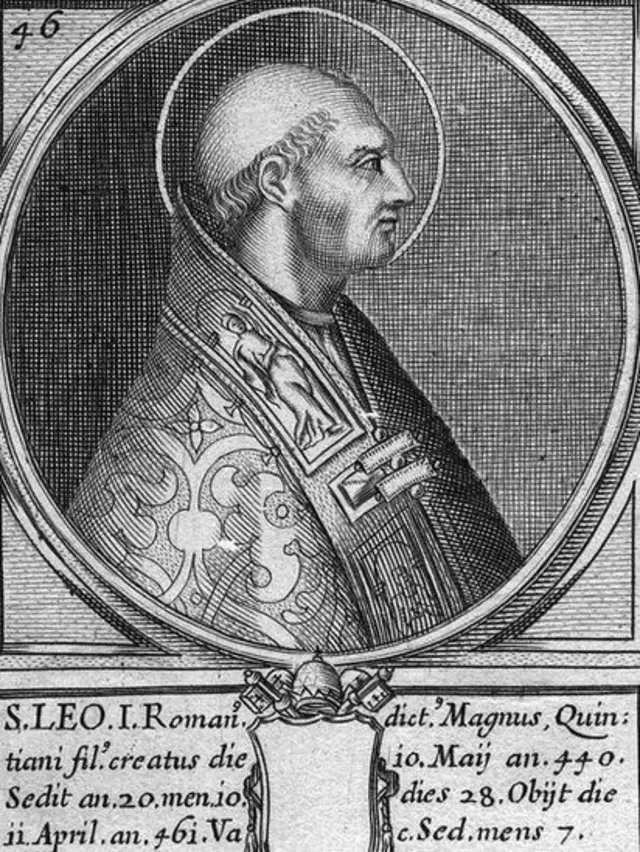
For di year 449, Pope Leo I establish di date for commemorating di birth of Jesus as one of di main feasts of di Catholic Church, and finally Emperor Justinian for 529 declare am official holiday of di empire.
So, dem begin dey reason say na for December dem born Jesus. However, for di 15th century, Italian historian Polidoro Virgilio begin to notice di similarities between various pagan rites and di celebration of Christmas.
"Polidoro Virgilio point out di connection between di predominantly English tradition, 'The Lord of Misrule,' wey take place for Christmas Day, and di equivalent custom wey take place during Saturnalia. Both dey involve lords and servants or slaves to swap dia roles for one day," Johnson tok.
Since den, dem dey find di exact date of Jesus birth wey some historians place for mid-March or early April.
But di influence dey so strong sotey we continue to dey celebrate wit gifts, parties, and family gatherings on December 25.
Dis text dey originally published by BBC News Brasil for December 2021 and republished afta updating