Why Nigeria govment suspend use of mother tongue, adopt English language for teaching in schools
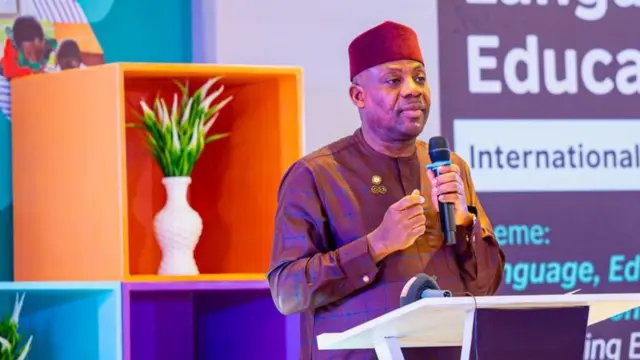
Wia dis foto come from, Tunji Alausa/X
Nigeria govment don suspend one national policy wey make compulsory, di use of native languages as di medium of instruction for schools.
Di Minister of Education Tunji Alausa, announce dis informate for di 2025 Language in Education International Conference wey di British Council for Abuja, di kontri capital organise on Wednesday, 12 November.
Na for 2022, Nigeria govment bin approve di National Language Policy (NLP).
Di policy provide say make di language of instruction from early childcare education to primary six, be di mother tongue or di language of di immediate community.
Di aim of di policy at di time na to promote indigenous languages, recognise dia equal status, and improve early childhood learning outcomes.
Di policy however state say English go remain di official language to be used in later education and for formal settings.
Dis article contain content wey X provide. We ask for una permission before anytin dey loaded, as dem fit dey use cookies and oda technologies. You fit wan read di X cookie policy and privacy policy before accepting. To view dis content choose 'accept and continue'.
End of X post
For di conference, di minister announce say di kontri don adopt English as di language of instruction for Nigerian schools from primary to tertiary levels.
"We officially announce di National Council on Education (NCE) decision to suspend di Nigerian Educational Research and Development Council (NERDC) language policy and confam English as di medium of instruction from primary to tertiary education across Nigeria".
Oga Alausa tok say di reason dem dey suspend di policy na based on di evidence wey dem don gada ova di past 15 years wey show say di mother tongue model no dey work and no improve learning outcomes.
"In practice, e don prove impractical and inequitable for kontri wit ova 500 indigenous languages, wey also dey face di challenge of limited learning materials, insufficient teacher preparation, and weak transitions to English wey don affect student performance."
E add say govment decision na based on data wey show poor academic performance for areas wia mother-tongue instruction dey highlighted.
"We don see mass failure rate for WAEC, NECO and JAMB for certain geo-political zones of di kontri, and those na di states wey adopt dis mother tongue for over-subscribed manner," Alausa tok.
E say di different languages wey dey for different region also na problem. "Dem dey conduct exams in English, but we taught these kids through dia mother tongue. In Borno State, di mother tongue na Hausa, but many speak Kanuri. In Lagos, areas like Ajegunle get mostly south-eastern populations, but 90% of teachers na from di southwest. Dis diversity require a unified approach to language instruction."
Di education minister say by maintaining English as di primary medium of instruction, govment aim to strengthen learning outcomes, ensure continuity and fairness across all states and align Nigeria education system wit global best practices.
Alausa say di new Inclusive Language Policy go continue to promote di teaching and learning of at least one Nigerian language alongside English, e say dis go "preserve our linguistic diversity and ensure say every learner fit thrive in a globalized world."
Di British Council County Director for Business and Trade Division, Donna McGowan, tok say dem go continue to dey provide support and expertise to Nigeria education policies wey dey aimed at repositioning di education sector.
'Di new policy go give Nigerian students edge globally but fit affect local culture'
Education analyst Dr Harmony Mark-Ewa hail govment adoption of English as di official language of instruction across all levels of Nigeria education system.
Mark-Ewa wey follow BBC News Pidgin say di new Inclusive Language Policy go give Nigerian students edge globally, but she worry say dis new policy fit eliminate local culture and values.
"Education suppose dey culturally responsive and one way to get am na to integrate our tradition and innovation in teaching children," she tok.
Di educationist say apart from di home wia children fit learn dia native language, anoda place dem fit learn am na school, and dat na why e suppose dey mandatory as a subject.
She also highlight say di reason why some countries dey make compulsory learning dia language as requirement bifor dem give pesin visa na bicos dem understand di need to preserve dia culture.
Dr Mark-Ewa add say weda di instructor teach in English or for mother tongue language, di koko na for di students to understand wetin e dey teach and to apply am.