'Nowhere dey safe' - Cameroonians wey trap between separatists and sojas
- Author, Nick Ericsson
- Role, BBC Africa Eye
- Published
- Read am in 8 mins
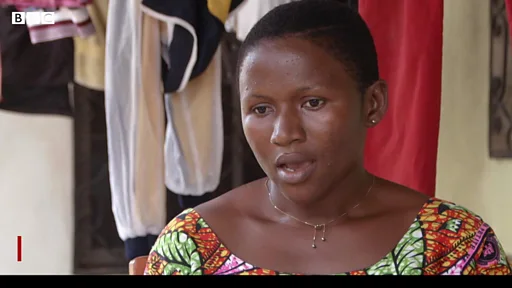
Ngabi Dora Tue, no fit stand by herself as she dey grief seriously.
Her husband, Johnson Mabia, coffin siddon for di middle of one crowd of sad mourners for Limbe for Cameroon South-West region - one area wey don witness tins like dis many times bifor.
Armed separatists bin capture Oga Johnson and five of im colleagues as dem dey go work. Oga Johnson na civil servant and e sabi speak English.
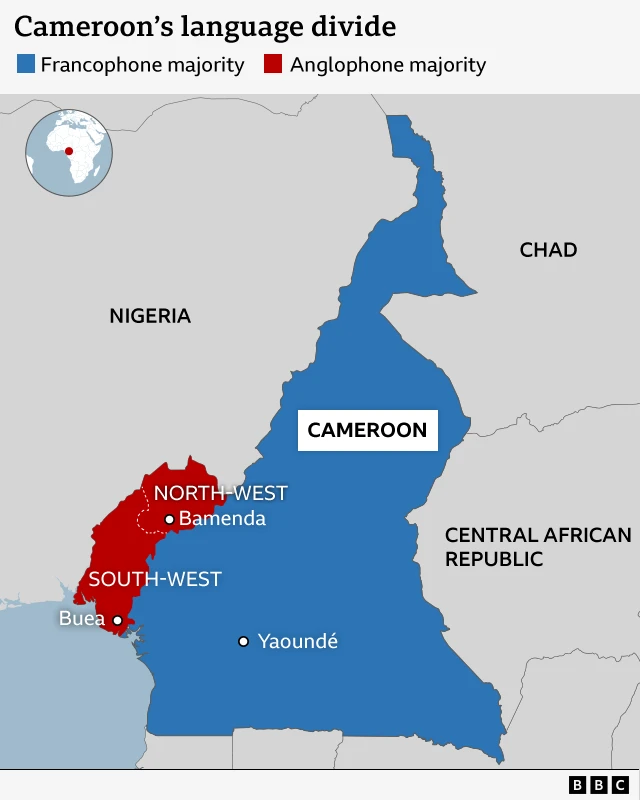
Di militants still dey fight for di independence of Cameroon two anglophone regions for area wey be mainly francophone kontri. Di almost ten years long conflict don lead to thousands of deaths and affect development for di area.
Wen dem kidnap am four years ago, Dora bin struggle to reach Johnson. Wen she later hear from separatist militants, dem ask her to pay ransom of ova $55,000 (£41,500) within 24 hours to secure im release. Dora later receive anoda call from one of Johnson relatives.
"E say… make I take care of di children, say my husband don die. I know even no wetin to do, as I shock. E bin travel on Tuesday, wen dem kidnap am. By Friday, dem kill am," Dora tok.
Di separatists wey dey responsible no just kill Johnson, dem cut-cut am, and leave im body for road.
Wia dis foto come from, AFP
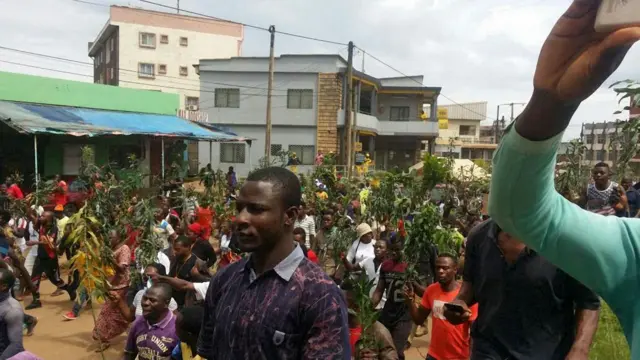
Di root of di separatist struggle lie for one long-standing grievance wey go back to full independence for 1961, and di formation of one single Cameroonian state for 1972 from former British and French territories.
Since den di English-speaking minority no happy for wetin dem feel say be erosion of rights by di central government. Johnson na just one innocent by-stander, wey be victim of di increasingly brutal fight for self-determination and di goment desperate attempts to end di kasala.
Dis current wave of violence start almost ten years ago.
For late 2016, peaceful protests bin start against wetin dem reason to be di creeping use of di francophone legal system for di region courtrooms. Di French- and English-speaking parts of Cameroon dey use different judicial systems.
Di protests quickly spread, and e lead to a call for di closing of shops and institutions.
Di response of di security forces bin dey very severe – dem beat pipo, intimidate dem and dem carry out mass arrests. Di African Union call am "a deadly and disproportionate use of violence".
Cameroon defence ministry no respond to requests for comment on dis or oda issues for dis article.
Armed groups bin dey set up. And, for late 2017, as tensions rise, anglophone separatist leaders declare independence for wetin dem call di Federal Republic of Ambazonia.
To date, dem don drag five million anglophone Cameroonians inside di conflict – wey dey equivalent to one-fifth of di total population. Dis one mean say at least 6,000 pipo don die, and hundreds of thousands dey forced from dia homes.
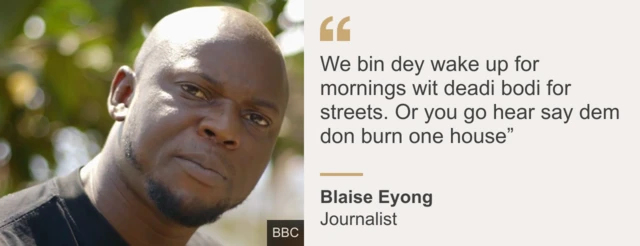
"We dey always wake up for morning to see dead bodies for streets," Blaise Eyong, one journalist from Kumba for di English-speaking South-West region of Cameroon tok. E don produce and present one documentary on di crisis for BBC Africa Eye, e bin dey forced from im hometown wit im family for 2019.
"You fit hear say dem don burn one pesin house. Or dem don kidnap pesin. You go see how dem cut-cut pipo body put for roadside. How you wan take live for city, wia every single morning you dey worry if your relatives dey safe?"
Some national and international attempts don dey to resolve di crisis, wey include wetin di goment call "a major national dialogue" for 2019.
Although di discussions bin establish one special status for di kontri two anglophone regions wey acknowledge dia unique history, but na very little dem resolve in practical terms.
Felix Agbor Nkongho – one barrister wey be one of di leaders of di 2016 protests, wey dem later arrest – tok say as both sides dey act anyhow, di moral high ground don disappear.
"E get one time… wey most pipo feel say if dem need security, dem go go meet di separatists," e tell BBC Africa Eye.
"But ova di last two years, I no tink say any reasonable pesin go tink say separatists go be di ones to protect them. So make everybody die bicos we dey find independence, and I ask di question: who you go govern?"
But no be only di separatists chop accuse of abuses.
Organisations like Human Rights Watch bin record di brutal response of security forces to di anglophone independence movement.
Dem bin document di burning of village, di torture, unlawful arrests and extrajudicial killings of pipo for war, wey pipo for outside no even see.
Examples of state-sponsored brutality no dey difficult to find.
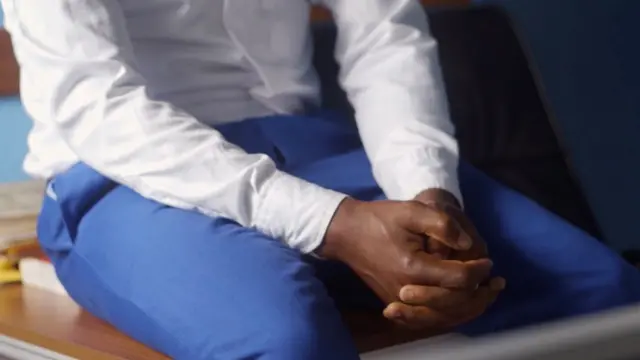
Cameroonian military forces bin arrest John (no be im real name) and one of im close friend, dem dey accused of buying weapons for a separatist group.
John tok say afta dem put dem for prison, di sojas bin give dem one document to sign, and dem no give dem di chance to read di contents. Wen dem refuse, dem begin torture dem.
"Dat na wen dem separate us into different rooms," John tok. "Dem torture [my friend]. You fit hear di sound of flogging everywhere. I dey feel am for my own body [too]. Dem beat me everywhere. Later, dem tell me say e don accept and sign, and dem allow am to go."
But na lie.
One month afta di arrest, anoda man land for John cell. E tell am say im friend bin die for di room wey dem hold and torture am. Months later, dem drop John case and later release am without charge.
"I just dey live in fear bicos I really no know wia to start from, wia dey safe and how to start," John tok.
Part of di separatists strategy to make di state and dia security forces weak, na to push for ban on education, wey dem claim say na di tool wey goment take dey spread propaganda.
For October 2020, dem attack one school for Kumba. No-one claim responsibility for di attack bit di goment blame di separatists. Men wey dey armed wit machetes and guns bin kill at least seven children.
Di incident spark international outrage and condemnation.
"Dem don close nearly half of di schools for dis region," journalist Eyong tok.
"A whole generation of kids dey miss out on education. Imagine di impact dis go get on our communities and also for our kontri"
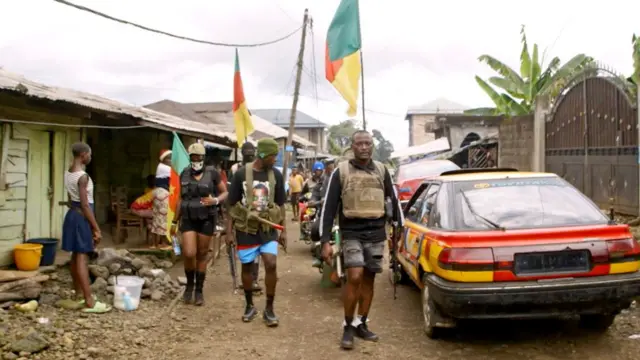
As if di violence between di goment forces plus di various separatist groups no dey enough, one additional front don open up for di war. Militant groups for di separatist areas don rise to fight di Ambazonians inside effort to keep Cameroon united.
Di leader of one of these groups, John Ewome (wey dey known as Moja Moja), bin regularly lead patrols for di town of Buea in search of separatists until dem arrest am for May 2024.
E too chop accuse of human rights violations, public humiliation and torturing of unarmed civilians dem reason say be separatist sympathisers. E deny di accusations. "I no ever lay my hands on any civilian. Just di Ambazonians. And I believe say di gods of dis land dey wit me," e tell BBC.
Meanwhile, di cycle of abductions and killings still dey go on.
One separatist group also arrest Joe (no be im real name) di way dem take arrest Johnson, just bicos say dem wan maintain control through fear - and to cash in.
"I waka inside di house and see my children and my wife for floor while di commander siddon for my kitchen wit im gun very close. Dem don carry my neighbour and my landlord. As I see dem, I know say na my turn," Joe tok.
Dem carry am enta forest alongside 15 oda pipo wia e witness di execution of two of im fellow captives. But dem later free am afta di military discover di camp.
Johnson bin no dey dat lucky, about two years afta im funeral, dem receive news say none of di five colleagues wey dem kidnapped wit am make am out alive.
More families now go dey try to come to terms wit dia enormous loss. For Ngabi Dora Tue, her future no sure.
"I get debts to settle, I no even know how I go clear di am," she tok.
"I don tink to sell my body for money. And I reason di shame wey go come afta, I go just need to swallow di difficulty and push forward. I still dey very young to become a widow."

BBC don ask for response from di Ambazonia Defense Forces (ADF), wey claim to be di largest separatist force.
E respond say e get multiple separatist fighters now wey dey operate for di anglophone region.
Di ADF say e dey operate within international law and no dey attack government workers, schools, journalists or civilians.
Instead, e don blame individuals and some oda entities wey dey act on dia own accord wey no be members of di ADF for dis attacks.
Di group also accuse government infiltrators of committing atrocities while claiming to be Ambazonian fighters to turn di local population against di liberation struggle.