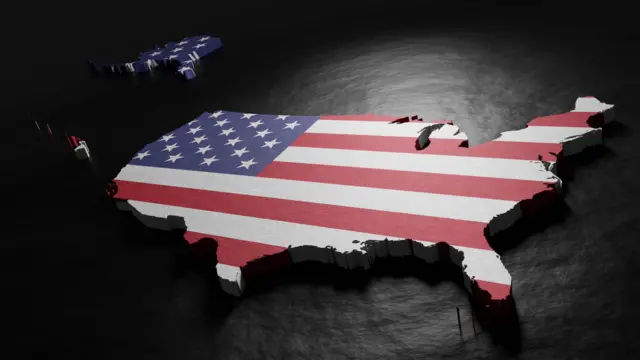
Di territories wey United States purchase throughout dia history to form di kontri wey e be today
Wia dis foto come from, Getty Images
- Author, Guillermo D. Olmo
- Role, BBC News Mundo
- Published
- Read am in 8 mins
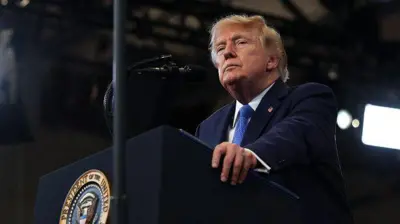
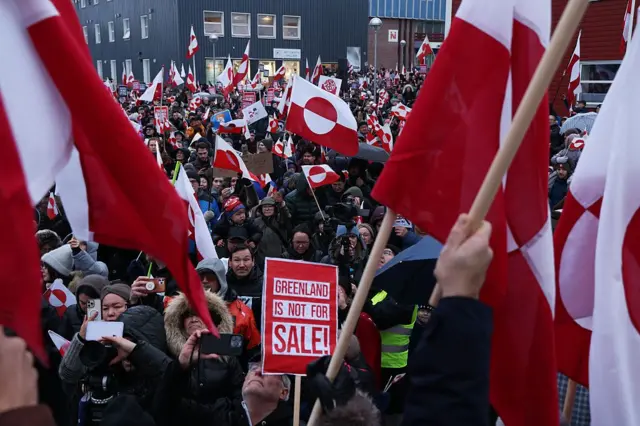
As President Donald Trump keep im eye on control of Greenland, di semi-autonomous Danish territory for di Arctic - historians dey reflect on di history of how di United States dey expand through buying land.
For di past, "as wit Greenland, Washington claim say e need to seize dis territories bifor e go fall into di hands of oda powers", Jay Sexton, historian for di University of Missouri tok.
Trump insist say di US need to "own" Greenland for security, and although at one point e say e dey prepared to do am "di hard way", e kon say e want "immediate negotiations" and "no go use force".
For here, we review some of di US most significant land purchases of di past two centuries as di kontri extend dia borders.
Di Louisiana Purchase (1803)
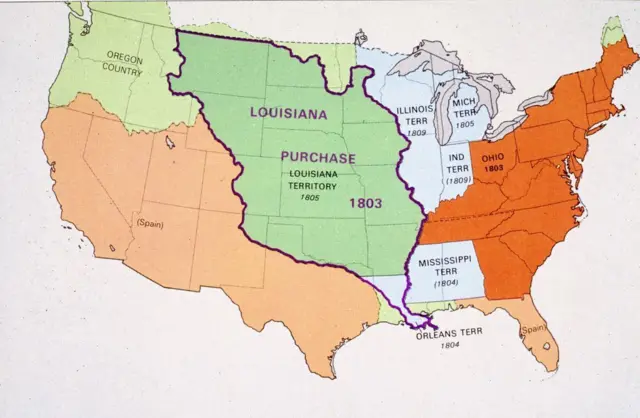
President Thomas Jefferson decision to buy di Louisiana territory from France for 1803 na watershed moment for di US.
Wit more dan 2,000,000 sq km of land, di Louisiana Purchase na major turning point for di new nation and dia transition to expand into continental power.
Di colony of Louisiana na France largest territory for North America. But repeated slave revolts for di French-controlled island of Saint Domingue (now known as Haiti), coupled wit di threat of war wit Britain, make di French leader Napoleon Bonaparte to sell am to di US.
Wia dis foto come from, Getty Images
Louisiana at dat time dey much larger dan dia present-day state, comprising of wetin be di now 15 modern states wey dey lie between di Mississippi River and di Rocky Mountains.
To own dis land dey key to Jefferson ambitions to expand di west, wey e believe say na di future of di United States.
Di American and French govment reach agreement for November 1803, wia di US pay $15m for Louisiana, wey be equivalent to more dan $400m for today dollars.
Di big acquisition also almost double di size of di young nation.
Di Mexican Cession (1848)
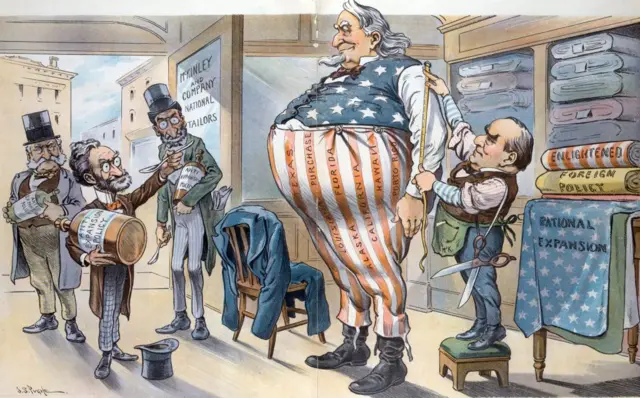
By di 1840s, much of di American public don dey convinced say dia "manifest destiny" na to expand to di west to di Pacific coast.
Dem do dat at Mexico expense.
Wia dis foto come from, Getty Images
One of di most strong supporters of expanding America borders na President James K Polk. Afta im inauguration for 1845, e inherit ongoing dispute ova control of Texas, wey bin gain independence from Mexico for 1836.
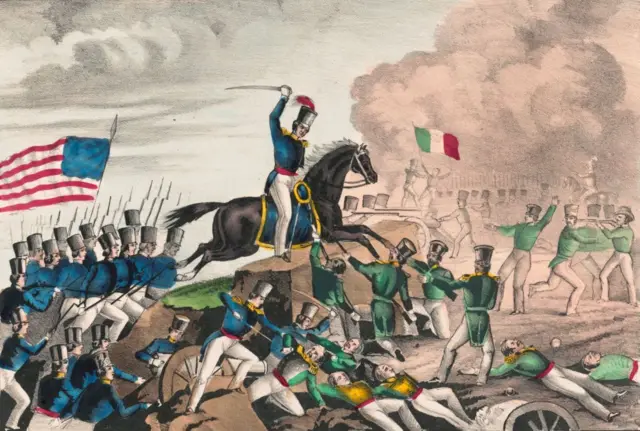
Washington annex Texas for 1845 and e become US state. Di following year, afta clash between American and Mexican troops, Congress approve declaration of war on Mexico, but di cause of di conflict run deeper.
According to historian Jay Sexton: "Di United States show interest for California, wey belong to Mexico and na one of di most economically vibrant areas for America, wit deep-water ports wey dey coveted for trade wit Asia."
According to Sexton explanation, no Mexican govment fit agree to sell California and expect to remain in power.
Wia dis foto come from, Getty Images
Afta di Americans win di war, di two nations sign di Treaty of Guadalupe Hidalgo for 1848.
Washington end up paying $15m, wey be about $615m for today dollars, for di ceded land. E include present-day California, Nevada and Utah, as well as parts of Arizona, Colorado, New Mexico and Wyoming.
But, as Sexton point out, di Mexican side no go sell di land if dem no lose di war. "Na sale at gunpoint," e tok.
In all, Mexico hand ova more dan half of dia pre-war territory, while di US gain nearly 1,360,000 sq km.
Di sale of La Mesilla (1853)
Despite di Mexican-American war wey end for 1848, tensions between di two nations kontinue. For deal wey dem finalise for 1854, di two govments bin agree to di sale of small strip of Mexican territory for di south wey later become part of Arizona and New Mexico.
Know in Mexico as di Venta de la Mesilla and for di United States as di Gadsden Purchase, di deal na partly di result of American interest for building transcontinental railway and partly down to economic difficulties wey di Mexican govment face.
Di American govment end up paying $10m, worth nearly $421m for today dollars, for nearly 76,900 sq km of land. E later become di southern border of di present-day United States.
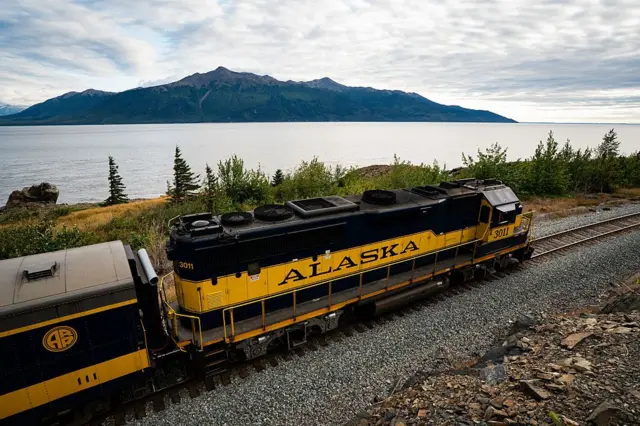
Di purchase of Alaska from Russia (1867)
Many no understand di determination of Secretary of State William Seward to purchase di remote Arctic territory of Alaska from Russian Empire for 1867.
Seward believe di land hold great strategic value, as e go stop di British from intervening in North America and e go give di US access to rich fisheries for di Pacific Ocean.
Russia believe say dem dey comot hand from territory of little value, wey dey costly to administer and seen as vulnerable to potential attack by di UK - dia main rival at di time.
Wia dis foto come from, Al Drago / Getty
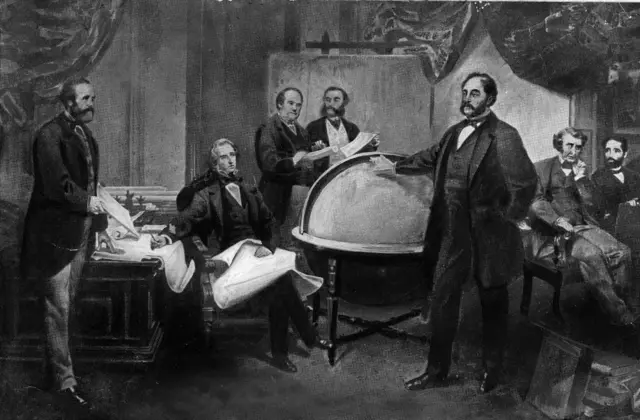
Wen Seward strike deal to purchase di 1,554,000 sq km of land from Russia for $7.2m, wey worth about $158m for today dollars, di American public no receive am.
"Seward folly", as im opponents name di deal, generate considerable controversy, wit some believing di US purchase useless land.
Despite di criticism, Congress ratify di purchase agreement and Alaska become part of di United States, though e no become state until 1959.
Ultimately, Seward investment for Alaska pay off wit di discovery of gold and large oil deposits, and di state take on added military importance during di Cold War.
Wia dis foto come from, Getty Images
Purchase of di US Virgin Islands from Denmark (1917)
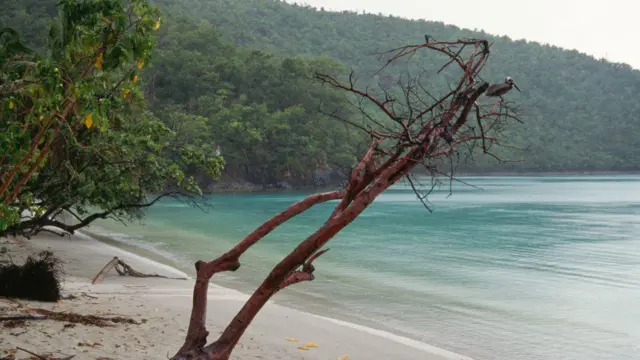
Di last time di US purchase territory na from Denmark. Di Danish West Indies, as dem sabi am den, na group of islands for di Caribbean wey dey coveted by US strategists since di mid-19th Century.
Again, William Seward see dis territory as key part for im plan for peaceful expansion.
Wia dis foto come from, Sean Gallup/Getty
Di port on Saint Thomas, one of di three main islands wey make up di present-day US Virgin Islands, na of particular interest. Dis na in part becos dia harbour na ideal base for controlling di Caribbean.
Around di same time, Denmark don begin lose interest for di islands. Dem previously develop large sugar plantations on di land, wey enslaved Africans wey European traders bring across di Atlantic dey work on.
But as global prices for sugar begin to rise, so too di Danes enthusiasm for keeping dose plantations dey rise.
By 1867, di two kontris reach initial settlement to sell two of di islands for $7.5m, about $164m in today dollars. Dat deal, however, fail to get across di finish line as di US Congress no ratify am.
Wia dis foto come from, Getty Images
Di outbreak of World War One and di threat German submarine pose to US ships start Washington interest, as e fear say Germany fit invade Denmark and take control of di islands as well as di strategically-valued port of Saint Thomas.
According to di US State Department website, President Woodrow Wilson secretary of state issue warning to Denmark say, if dem refuse to sell di territory, di US fit occupy di islands to prevent dia potential capture.
For Astrid Andersen, one senior researcher for di Danish Institute for International Studies, e hard not to see di modern parallels between wetin happun wit di US Virgin Islands and wetin dem dey see today.
"E get echoes of wetin we dey hear now wit Greenland, becos wetin di United States come to say na: 'Either you sell am to us or we go invade am,'" Andersen tok.
By 1917, di two sides bin reach arrangement, wey go see di Caribbean islands sell to di US at price tag of $25m, wey dey equivalent to about $630m for today dollars.
As part of dat deal, di United States also agree say dem no go oppose how Denmark "extend dia political and economic interest ova all of Greenland".