Who be di two African kontries wey no want Palestinian State
Wia dis foto come from, Getty Images
- Author, Marina Daras
- Read am in 4 mins
Afta UK, Canada and Australia recent recognition of a Palestine state, more kontris dey expected to follow.
But how African kontris dey reason Palestine?
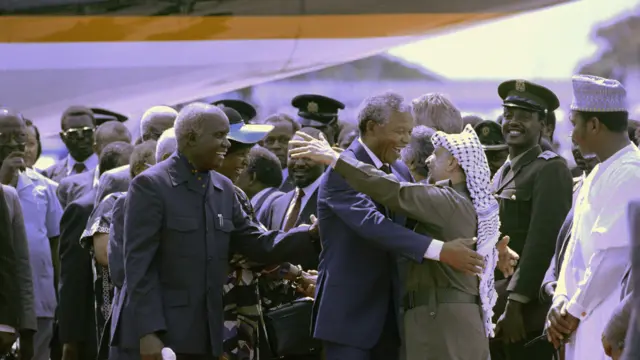
Most kontris on di continent bin recognise Palestine for di 1980s afta Palestinian leader, Yasser Arafat, declare independence for Algiers.
Leaders like Thomas Sankara and Nelson Mandela bin even link Palestinian struggle to Africa liberation fights.
However, two kontris - Cameroon and Eritrea – no follow for di recognition.
We look di reasons behind dia decision.
Cameroon
Wia dis foto come from, Getty Images
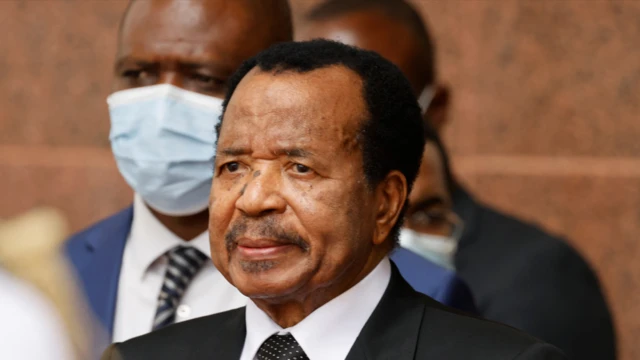
West African nation, Cameroon gum bodi heavily wit Israel.
David Otto, Director of Defence, Geneva Centre for African Security and Strategic Studies, tok say Israel see Cameroon as one of dia strongest allies for Africa.
"Cameroon no fit afford to, you know, mess up dia relationship wit Israel from di diplomatic side," Otto tok.
E say di relationship dey deep and e mainly dey based on security.
"Israel don contribute and continue to contribute well-well to protecting di Cameroon regime," e tok.
Israel don train and pipo reason say still dey involved for di kontri rapid intervention forces plus di special unit wey dey ensure di president personal safety.
"Di relationship wey Cameroon don establish wit Israel don make dem get di support of di United States, wey also be very close ally to Israel for all fronts."
Cameroon position on Palestine fit also dey influenced by dia own struggle for di Anglophone regions.
"Recognizing di Palestinian state go put, you know, some kain pressure within di kontri, say make dem also consider recognizing di secessionist movement. And di govment don make am very clear say Cameroon na one and indivisible," Otto tok.
Cameroon position dey mostly defined by silence and caution.
For Eritrea, na one very different history shape dia own position, one wey dey rooted for dia own struggle for self-determination.
Eritrea
Wia dis foto come from, Getty Images
For 1988, wen Yasser Arafat declare say make Palestine become a sovereign state, e bin need di support of African kontris.
One of dem na Ethiopia.
"Di headquarters of di African, or Organization of African Unity at di time, wey later become African Union na for Ethiopia, for Addis Ababa," Eritrean political analyst, Abdurahman Sayed tok.
"Di military regime for Ethiopia also be pro-Soviet and dem bin dey very supportive of Palestinian rights and struggle."
But Eritrea then bin dey fight for dia own independence against Ethiopia.
"Clearly, at di time, Ethiopia bin dey occupy Eritrea. And Eritreans bin dey inside struggle, armed struggle, against di Ethiopian occupation," Sayed tok.
"For di Palestinians to establish any kind of relationship wit di Ethiopians, dem gatz distance themselves from di Eritreans at di Eritrean cost, and dat na wetin I tink Yasser Arafat do, wey no go well wit di Eritreans in general, plus di current president too," e tok.
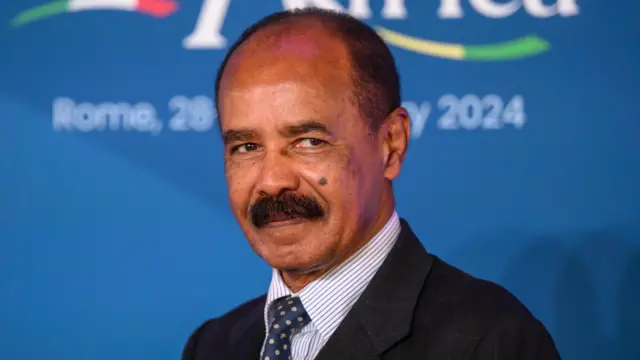
However, Eritrean President Isaias Afwerki don show sympathy to di Palestinian cause and for 2012, dem even vote to grant Palestine "non-member observer state" status for di UN.
But e also reject peace efforts like di Oslo Accords, wey set out one peace framework wey grant limited Palestinian self-rule for parts of di West Bank and Gaza as stepping stone towards an independent state.
"Di Eritrean president dey among di firsts to dismiss di Oslo agreement for 1993 as a useless agreement wey no bring anytin to address di cause of di conflict or di issue of rights and self-determination of di Palestinians," Abdurahman Sayed tok.
President Afwerki tok say im no dey in favour of a two-state solution.
But e fit feel some push back from within as 55% of im kontri population na Muslim.
"Eritrea come to be through dia struggle for self-determination. So, for pesin wey lead or dey part of di struggle for liberation not to support di liberation of oda pipo, morally no look right. Plenti pressure go dey on dem," Sayed tok.
BBC bin ask di two govments for comments but none of dem reply.