Production and manufacturing
A person who works on developing concept ideas produced by designers to achieve a functioning product. The design of the functioning product will be based upon scientific and mathematical understanding. need to consider the scale at which their product will be manufactured, as different volumes of production are required for different production methods. There are five terms used in relation to manufacturing a product:
- The first working model of a design used for testing, development and evaluation. or one-off production
- Where one group of identical products is made at the same time, before moving onto producing the next group.
- When the same product is manufactured many times.
- A systematic approach to minimising waste within a manufacturing system.
- Materials or parts are delivered just before they are needed.
Scales of production
Prototype and one-off production
In one-off production an individual item is designed and made to meet a client's specification. At this level both time and material costs are high, and a high level of design and manufacturing skills is required. An example of a one-off product is a specialist powered wheelchair for a user with specific disabilities, which may require skills like the A method of joining, usually electrical components, by heating a filler metal called solder. When the solder cools, it fused the components together. of switches to allow for operation of the controls for specific movements.
Batch production
Batch production is where many items of the same product are produced. It will involve the use of some Using automatic equipment in production. to reduce labour costs and will require the design engineer to consider how materials can be used efficiently and how samples can be tested to ensure quality. An example of a batch produced product would be the Creating designs on metal or glass by corroding the surface with acid. of a printed circuit board (PCB) for a small team of specialist racing drones.
Mass production
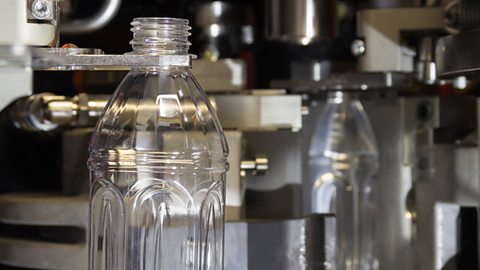
Manufacturing in huge numbers is categorised as mass production. This level of production involves standardised production methods, A set of tasks that come one after the other and result in an identical end product. and the extensive use of automation. Because of the high set-up costs, mass production systems tend to be inflexible. An example of a mass produced item would be a polyethylene terephthalate (PET) drinks bottle made using a blow moulding system.
Scales of manufacturing
Lean manufacturing
A systematic approach to minimising waste within a manufacturing system. puts a focus on efficiency to add value for a customer, simplifying manufacturing processes and reducing waste. The philosophy originated in the Japanese car industry and has since been adopted by many organisations. There are seven areas to lean manufacturing known as ‘The seven wastes’:
- over-production - producing more than is required
- transportation - the unnecessary movement of items
- over-processing - processing too soon or too much
- inventory - holding more than is required
- motion - the unnecessary movement of people
- defects - errors and mistakes
- waiting - for someone or for an event to happen
Just-in-time (JIT)
Materials or parts are delivered just before they are needed. is triggered by a customer order. The correct amounts of materials are ordered in to cover the order, and these arrive just as they are needed by production. This saves money on storage, reduces waste and ensures there is no money wasted producing stock that will remain unsold. There are disadvantages to the system in that, if any part of the product cannot be sourced, Person or organisation that wants a product manufactured, eg a retailer. have to wait for their order to be produced.
