Selecting materials
A person who works on developing concept ideas produced by designers to achieve a functioning product. The design of the functioning product will be based upon scientific and mathematical understanding. have to take into account a wide range of factors when selecting materials for products. Often the decisions made will be based on the functional aspects of the design and take into account different factors, eg the blade on a lawnmower will need to use materials that are tough to withstand impacts, hard to withstand bending and resistant to corrosion due to being exposed to moisture.
Properties
Each material has properties that make them good for specific tasks, and these must be considered when designing a product.
Physical properties
| Physical property | Usage example |
| Density - amount of matter a material has to its volume | Low-density foams, eg low density polyethylene (LDPE), can be used as low-weight, shock absorbing packaging materials to protect fragile items |
| Absorbency - ability to retain heat, light or water in a structure | Paper towels are absorbent and are used to soak up liquid spills or dry wet hands |
| Conductivity - ability of heat (thermal) or an electric charge (electrical) to pass through | Wooden handles are used on saucepans as they are poor thermal (heat) conductors, and copper is used for wires in power cables as they are good electrical conductors |
| Corrosive resistance - ability to withstand chemicals, water and weather conditions, eg snow | Glass is used in external windows as it maintains its transparency for a long time in most weather conditions |
| Flammability - ability to ignite (catch on fire) or combust (burn) | Specially engineered ceramics are used in brake pads for high-performance motorbikes as they have low flammability, and can be used in places where high-friction occurs |
| Physical property | Density - amount of matter a material has to its volume |
|---|---|
| Usage example | Low-density foams, eg low density polyethylene (LDPE), can be used as low-weight, shock absorbing packaging materials to protect fragile items |
| Physical property | Absorbency - ability to retain heat, light or water in a structure |
|---|---|
| Usage example | Paper towels are absorbent and are used to soak up liquid spills or dry wet hands |
| Physical property | Conductivity - ability of heat (thermal) or an electric charge (electrical) to pass through |
|---|---|
| Usage example | Wooden handles are used on saucepans as they are poor thermal (heat) conductors, and copper is used for wires in power cables as they are good electrical conductors |
| Physical property | Corrosive resistance - ability to withstand chemicals, water and weather conditions, eg snow |
|---|---|
| Usage example | Glass is used in external windows as it maintains its transparency for a long time in most weather conditions |
| Physical property | Flammability - ability to ignite (catch on fire) or combust (burn) |
|---|---|
| Usage example | Specially engineered ceramics are used in brake pads for high-performance motorbikes as they have low flammability, and can be used in places where high-friction occurs |
Working properties
| Working property | Usage example |
| Strength - how a solid material behaves when stress and strain are applied, eg compressive, tensile and shear strength | Steel is used for cables in suspension bridges as it has high tensile strength to support the weight of the bridge and vehicles |
| Hardness - ability to withstand indentations (dents) or abrasions (scratches) | A tunnelling drill can be encrusted with synthetic diamonds to ensure it stays sharp while drilling through rocks |
| Durability - ability to maintain functionality without requiring excessive repair or maintenance | Most plastics are durable - eg acrylonitrile butadiene styrene (ABS) is used to make safety helmets for builders and toy building blocks |
| Strength to weight ratio - strength divided by its density | Carbon fibre is used to make the bodies of racing cars as it is both lightweight and able to withstand the aerodynamic forces on it in a race |
| Stiffness - ability to withstand deformation (change in shape) when a force is applied | When constructing a frame of a building, steel will be used for its stiffness, preventing the building from deflecting (moving under the load) |
| Elasticity - ability to return to original shape after a force is applied | Silicone rubber is often used in swimming caps as it is extremely flexible |
| Impact resistance (toughness) - ability to withstand a sudden high force or shock | Polycarbonate is used in motorcycle visors for its impact resistance as it will not shatter if hit by a stone when at high speed |
| Plasticity - ability to be shaped or moulded | When heated, thermoplastics like ABS can be injection moulded into a variety of products |
| Working property | Strength - how a solid material behaves when stress and strain are applied, eg compressive, tensile and shear strength |
|---|---|
| Usage example | Steel is used for cables in suspension bridges as it has high tensile strength to support the weight of the bridge and vehicles |
| Working property | Hardness - ability to withstand indentations (dents) or abrasions (scratches) |
|---|---|
| Usage example | A tunnelling drill can be encrusted with synthetic diamonds to ensure it stays sharp while drilling through rocks |
| Working property | Durability - ability to maintain functionality without requiring excessive repair or maintenance |
|---|---|
| Usage example | Most plastics are durable - eg acrylonitrile butadiene styrene (ABS) is used to make safety helmets for builders and toy building blocks |
| Working property | Strength to weight ratio - strength divided by its density |
|---|---|
| Usage example | Carbon fibre is used to make the bodies of racing cars as it is both lightweight and able to withstand the aerodynamic forces on it in a race |
| Working property | Stiffness - ability to withstand deformation (change in shape) when a force is applied |
|---|---|
| Usage example | When constructing a frame of a building, steel will be used for its stiffness, preventing the building from deflecting (moving under the load) |
| Working property | Elasticity - ability to return to original shape after a force is applied |
|---|---|
| Usage example | Silicone rubber is often used in swimming caps as it is extremely flexible |
| Working property | Impact resistance (toughness) - ability to withstand a sudden high force or shock |
|---|---|
| Usage example | Polycarbonate is used in motorcycle visors for its impact resistance as it will not shatter if hit by a stone when at high speed |
| Working property | Plasticity - ability to be shaped or moulded |
|---|---|
| Usage example | When heated, thermoplastics like ABS can be injection moulded into a variety of products |

Other factors that design engineers have to take into account when choosing materials include:
- how easy it is to work with, eg to saw, glue together or beat into a shape
- how well it fulfils its function when used in different contexts, eg polyvinyl acetate (PVA) is an excellent adhesive for internal applications, but if it gets wet or hot it tends to fail
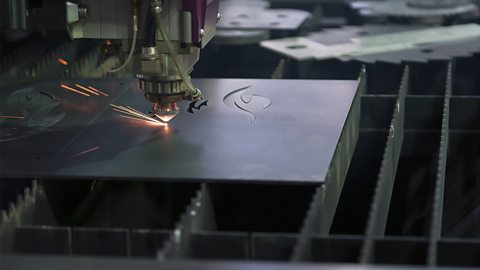
Once the design engineer has taken into account all of the physical and working properties of the material, they should address these areas:
- Functionality - Does the material perform in the way that is required?
- Aesthetics - What does it look and feel like?
- Environmental considerations - What impact does it have on the environment during extraction and processing? Does it require chemical treatment and can it be recycled?
- Availability - What Standard sizes for a material, component or product. does it come in and are they fit for purpose?
- Social, cultural and ethical considerations - Does the material have any a special cultural value or come from an endangered or unethical source? What were the working conditions for those extracting the material? Are there social trends that the material contradicts, eg the use of single-use plastics?
