There are lots of ways to play, including imaginative play, creative play and active play - all support key areas of children’s development. Play can sometimes look simple but something extraordinary is happening…
“[Play is] how children figure out who they are,” says child development expert Dr Amanda Gummer. “How they feel about things, what they’re good at, what their challenges are.”
In the early years especially, play is how children build their brains. When they play, they are not just listening or watching. They are moving, touching, balancing, imagining and exploring all at once.
“Play is multimodal,” explains Amanda. “The more senses you’re using, the more connections you’re making in the brain.”
Here are three powerful ways to play and help your child with their development.
1. Imaginative play - trying out the world

Imaginative play is all about pretending. It might be hosting a picnic with their favourite toys, running a shop, or becoming a pirate on a big adventure.
Young children spend much of their day being guided by adults: where to sit, what to wear, when to eat. Imaginative play gives children a chance to lead and plays a big role in their social and emotional development.
“They get to direct the play,” says Amanda, “They get to make the decisions and try out different personas.”
Through pretending to be someone else, children develop empathy. Imagining what it feels like to be a shopkeeper, a parent, a firefighter or even a dragon can help them understand different perspectives.
Freedom also helps build decision-making skills, initiative and confidence. When children play imaginatively with others, they practise negotiating rules, taking turns and understanding social boundaries. They learn that other people have ideas too, and that sometimes you need to compromise.
Ideas for a teddy bear's picnic - perfect imaginative play!
“Imaginative play can also help children process their experiences. You might notice them replaying something that happened at nursery or acting out a visit to the doctor. This is their way of making sense of what they have seen or felt,” says Amanda.
If your child prefers playing alone, that can be valuable too, Amanda explains.
“Solitary imaginative play helps children reflect, build independence and become comfortable in their own company. Playing with others adds extra social benefits, but time alone can still be rich and meaningful.”
You do not need lots of toys to encourage imaginative play. “There are some great toys that promote imaginative play,” says Amanda, “but you really don’t need an awful lot to facilitate it and can use everyday items found at home.”
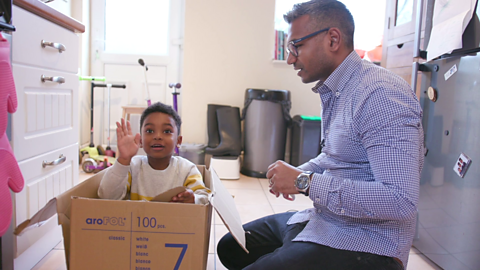
A cardboard box can become a spaceship. Cushions can turn into stepping stones across a sea of sharks. A scarf can transform into a superhero’s cape.
2. Crafty creative play - making something new

Creative play is all about making. It might be painting, drawing, building or modelling. It could also be gardening or helping to cook.
Creative play helps strengthen fine motor skills and dexterity, which are important for things like writing later on. It also supports problem-solving and flexible thinking.
“The word creation means producing something from essentially nothing,” Amanda says.
“When parents hear the words creative play, they often picture mess. But creativity does not have to mean chaos.”
“You can bring creativity into everyday life; making funny faces from vegetables on a plate; mixing cake batter; building a tower that stands up; or even collecting fallen leaves and arranging them into images.”
How to make toys out of household recycling
Creative play encourages experimentation and sometimes that means making mistakes.
“If your child becomes frustrated because something is not perfect, try focusing on the effort rather than the outcome,” says Amanda.
“'I can see you’re concentrating really hard on that,' is far more helpful than pointing out where they have coloured outside the lines.”
When children understand that mistakes are part of learning, they are more willing to try new things and creative play is the perfect chance to do that.
“Reframing mistakes as part of the process to eventual success is really powerful,” Amanda says.
3. Active play - growing bodies and brains

Active play is any play that gets children moving. It could be running, climbing, balancing, throwing or dancing. In the early years especially, movement is fundamental.
“The brain and body connection is so strong,” says Amanda.
“The more children are active, the more they’re feeding information back to the brain and building neural connections.”
Active play strengthens muscles and coordination. It builds confidence as children master new physical skills. It supports focus, mood and overall wellbeing and it can even help with sleep and eating.
“If children are active during the day, they’re more likely to build up an appetite and sleep better,” Amanda explains. “It creates a virtuous circle.”
Playing hopscotch is a perfect activity that also benefits language development!
Active play does not have to mean organised sport. “It can be walking to nursery or school and spotting red cars along the way; a family dance in the living room; or a trip to the park. You can even turn tidying up into a race,” suggests Amanda.
Active play can also involve manageable risk.
“Scraped knees and muddy clothes are often part of healthy exploration. When children are allowed to take age-appropriate risks, they develop judgement and resilience,” explains Amanda.
“They need opportunities to push boundaries a little bit and find out where their level of comfort is.”
Finding the balance
Parents may feel pressure to ensure children are meeting their play needs. However, Amanda encourages a balanced approach.
“Think of play like a healthy diet. Different types bring different benefits, and children need a mixture over time.
“Play does not have to be another item on your to-do list. It can be woven into everyday life, like helping with cooking or playing a matching socks game on laundry day.”
Getting involved with play can also help parents bond with their child.
“Don’t be afraid of making a fool of yourself,” Amanda says.
“Find something that makes you laugh and share it with your kids. Embrace a playful mindset and watch as your child opens up through play.”
More from CBeebies
Mess-free creative play for kids - paint, draw, stamp and stick with our fabulous online art tool, featuring some of your favourite characters from CBeebies!
Active play indoors and outdoors - come rain or shine, active play can really help your child’s development through movement and expression.
There’s lots of activity inspo from CBeebies to support your child’s imaginative play, active play and digital play with arts, crafts and playing pretend.