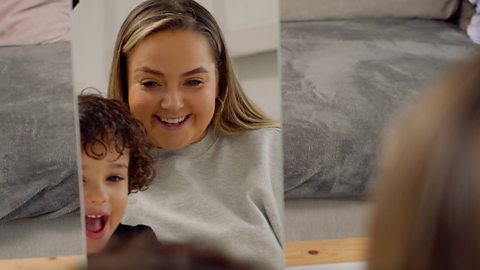
Children learn loads between birth and starting school.
One thing they pick up are their fine motor skills. Motor skills are a key area of development, and help kids improve their dexterity and control of their bodies.
So, what are some examples of fine motor skills, and how can you support your little one?
What are fine motor skills?
Health visitor Kerry Bennett says…
Fine motor skills are “tiny” and “precise” movements that rely on small muscles, the brain and the nervous system working together.
This can include kids being able to move their fingers, toes and the muscles across their face, including their eyes, lips and tongues.
Why are fine motor skills important?
Fine motor skills are a building block for your child as they become more physically independent.
They help children to improve their dexterity - completing tasks with their hands - leading to them picking up useful skills like getting dressed independently or sitting and scribbling before learning to write, Kerry explains.
She adds that helping kids with fine motor skills starts right from birth and can be adapted depending on their age.
For example, if your child is able to sit, you could “hold a book and they might be able to turn the page, to build up to them independently holding the book.”
“Whatever level or age we’re supporting a child, we should be giving them the opportunity to continuously develop and fine-tune those motor skills,” says Kerry.

When do fine motor skills develop?
Kerry explains that fine motor skills develop at different rates for different kids, and that it’s important to think of your child’s development as a whole.
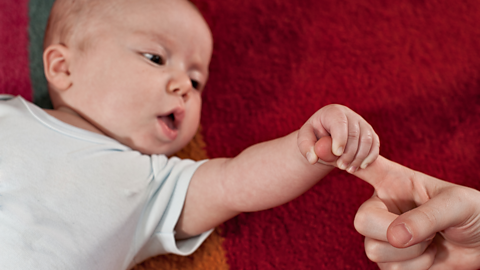
Some early examples of fine motor skills development are when baby grabs your finger, brings their arms up, or puts their hands to their mouth, which could happen from birth to anywhere around six months old.
Babies might also learn to poke their tongue out, follow noises and sights with their eyes and reach for things, says Kerry.
“Fine motor skills can still appear quite clumsy early on.”
However, at around one year old, babies gradually become more dexterous and precise in their movements and might be learning to stack things, use a spoon or make marks with crayons.
By the time they’re starting school, these fine motor skills will help with getting ready to write, holding cutlery, and using scissors safely.
Examples of fine motor skills
Eye movements
Poking tongue out
Grabbing, grasping, poking things
Stacking objects
Holding a crayon, making marks
Activities to support fine motor skills
Helping kids fine-tune their motor skills doesn’t have to be expensive or complicated.
Kerry says it helps to find things that your child finds interesting.
She suggests adults can introduce kids to “textures which are inviting and encourage a child to use those fine motor skills, like clenching fingers together or squidging things with their feet.”
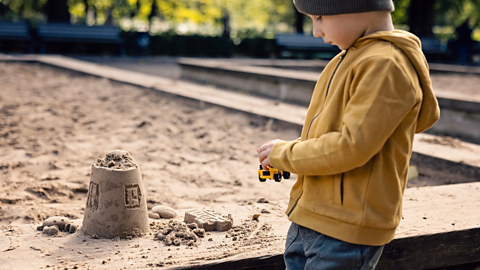
She adds that age-appropriate arts and crafts, squashing and stretching playdough, sandpits and outdoors play can all help little people pick up fine motor skills.
Kerry adds: “Playing with water, emptying things and filling them up again can be great. All those types of activities can help their hand-eye coordination.”
As kids get older they can (with careful supervision) learn trickier skills like using scissors for cutting and sticking.
With babies not yet able to crawl or roll, Kerry suggests “using different colours to attract attention for the child to want to reach and grab and pinch.”
This simple to master game is perfect for all ages and can help with learning hand-eye co-ordination, so why not play along with your little one.
Fine motor skills delays – what do they mean?
Kids not meeting expected developmental milestones can cause lots of anxiety for a parent or caregiver.
“The most stressful job is being a parent, because it doesn’t come with a textbook for your individual child,” says Kerry.
However, she says parents should feel confident about talking to their health visitors if they’re concerned about any potential motor skills delays.
“You are the expert in your child,” she says, adding that sometimes fine motor skills delays can be trickier to spot in younger kids, and more obvious in older ones.
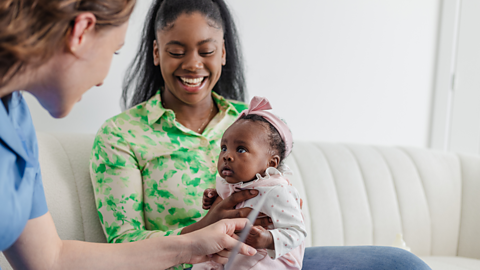
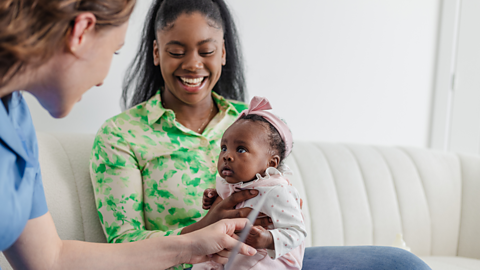
Parents can usually expect a series of health visitor assessments over the first two years after birth.
According to the NHS, these are at 1-2 weeks, 6-8 weeks, 9-12 months and around 2 years.
These can help parents and health visitors check their child’s development is on track.
Poor coordination and clumsiness can be a sign that a child needs additional support, says Kerry.
She adds it’s important for “parents to reach out when there are concerns and be able to get reassurance or timely support.”