Home > Tips and advice > Play
Does your child love chatting to their toys? Or do they dress up and pretend they are pirates or superheroes? Your little one has a BIG imagination.
But this pretend play is not just for fun: it also helps develop your child’s language and social skills. And imaginative play starts earlier than you might think.
Dr Claire Halsey, a child psychologist and parenting expert, says: “Pretend play can start when your child is around one. You’ll see them start to use things around them in ways they aren’t intended for.
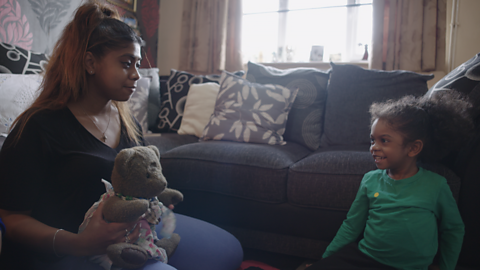
“They might start trying to feed their teddy – that’s the start of creative play.”
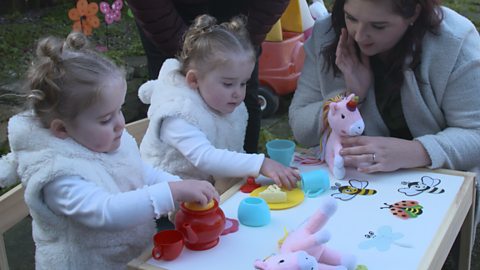
To encourage this, she suggests setting up creative games for your little one. “Anytime from around 12 months you can help them act out things in their play. You could set up a toy tea party for example.”
Your child learns from you every day. So don’t be surprised to see them acting out things you do in their play.
Over the years imaginative play evolves into things that are more structured.
"When they are between two and three they’ll start to act out things like mummy going to the shops or daddy cooking dinner,” says Dr Halsey.
As your child gets older and starts to read, you’ll see them start to make up their own stories as they play. “You can start this earlier by telling a story and asking your child what happens next”, says Dr Halsey.
“As they start to read and write, they may want to act out their own story or their favourite book or cartoon. You could encourage them to put on a play for you if they want. Praising your child for their creativity will help build their confidence.”
Here, Dr Halsey reveals four surprising benefits of imaginative play.
1. Pretend play helps with language development
Your child learns language from the world around them. And imaginative play helps them create exciting worlds where they can use lots of new words.
Dr Halsey says: “Make-believe play gives children a chance to use vocabulary they might not use during an ordinary day. Unless you are going to the zoo, you aren’t talking about zebras or penguins."
Children go to wild and different places during pretend play – from magical worlds to rainforests. It’s great for language, speech and communication.
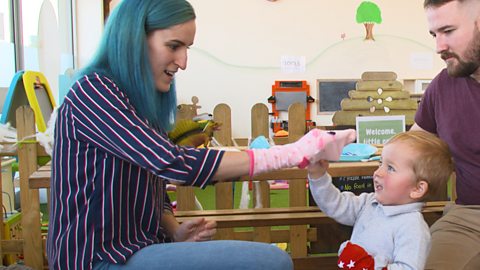
Join in with the imaginative play by using a sock puppet and making it speak. “As a parent, you can start a conversation with them about where they are and model new words for them.”
2. It helps your child walk in someone else’s shoes
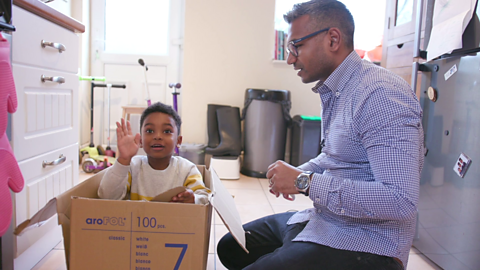
From pretending to be an animal through to acting out a role as mummy or daddy, your child loves role play. And this is not only fun, it also helps with their social and emotional development.
“This imaginative role play is helping your child explore what other lives are like”, says Dr Halsey.
“They can go wherever they like; they don’t have to be at home. They can be somebody else and walk in someone else’s shoes.”
Creative play also helps them understand the world around them and where they fit in.
Children often use creative play to explore what is happening in their world.
"You might even hear your child repeating something you’ve said when they are playing,” adds Dr Halsey.
To help, Dr Halsey suggests introducing some props.
“This will help your child as they explore role playing. It supports their creativity. You don’t need expensive things: it could be a wand you’ve made out of a cardboard tube and a bit of paper so they can pretend to be a fairy.”
3. It helps your child learn how to problem solve
Ever overheard your child pretending to be an astronaut travelling to the moon? Or a vet who has to care for lots of animals?
Imaginative play has another surprising benefit, says Dr Halsey. “When children are creative they exercise part of their brain that allows them to problem solve and think outside the box. During creative play they problem solve in random ways and sometimes come up with fantastic ideas.”
As they get older, this creative problem solving helps with their social development as well. “Children can use it to explore different ways they could have done something, particularly as they get a bit older."
And when they are presented with a problem they'll think of creative ways to deal with it.
If your child is older, Dr Halsey suggests trying this rainy day activity: get them to think of 20 ways to use an everyday item like a brick or a pen. “Give them 10 minutes to come up with as many ideas as they can. It helps them with problem solving and thinking sideways.”
4. It helps them explore the world
“Children are primed to be young explorers”, says Dr Halsey. So it’s no surprise they are brilliant at creating new worlds for themselves to explore.
Imaginative play is all about curiosity and exploration.
"It gives them opportunities to use their curiosity and explore something that isn’t in their everyday lives.”
It also helps them build connections between words and the world around them.
This is a great opportunity for parents to introduce textures and help you child name things, adds Dr Halsey. “If you’re having a teddy bear’s picnic, ask your child what noise the tea is making as it’s poured and whether the water warm or cold. Or ask if their teddy is soft or spiky.”
Need a new way to get creative? Check out our Swashbuckle Adventure Game.
More from CBeebies
What’s really going on when kids pretend? - You can support your child's pretend play at home by helping them to label feelings and explore difference, and by taking their play seriously.
Play pretend with Bluey and her family - Pretend play in Bluey often mirrors real-life situations with Bluey and Bingo pretending to be everything from shopkeepers to astronauts. They learn how to solve problems, express emotions, get along with others and deal with winning or losing.
Dressing up as their favourite characters - Check out this list of easy DIY CBeebies character costume ideas to enhance your little one’s playtime.
Using screens mindfully - If you’re introducing your little one to gaming, check out this free selection of fun and challenging games.