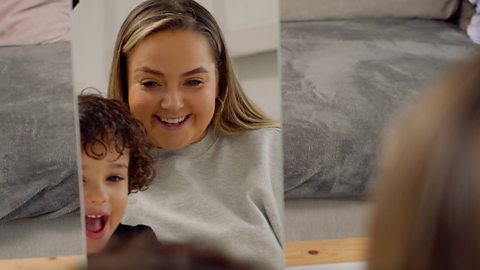
When we hear the words 'physical activity', we sometimes picture organised classes or structured sports. However, active play doesn’t have to be structured and can take place at any time and anywhere.
Child development expert Dr Amanda Gummer shares her top tips to get your children moving and explains why it’s so important.
Why movement matters so much
When children move, they are not just exercising their muscles. They are using balance, coordination, spatial awareness and sensory systems. All of this feeds information back to the brain.
“Children are built to move,” says Amanda. “The brain and body connection is incredibly strong in the early years. The more children are active, the more they’re using different senses and different parts of their body.”
“That all forms neural connections.”
Active play helps children develop gross motor skills such as running, jumping and climbing. It strengthens fine motor skills too, which help with things like writing, using cutlery or buttoning up clothes.
“It also builds confidence," Amanda explains.
“When children master a new skill, climbing a little higher or balancing for longer, they feel capable. That sense of achievement carries over into other areas of life and has behavioral and emotional benefits too.”
Frustration can sometimes build in young children, especially if they are constantly being told what to do and can’t yet clearly communicate how they feel.
“A lot of so-called bad behaviour can come from children being shoehorned into patterns that don’t suit how they’re built,” Amanda says.
“Active play gives them a chance to release energy, reset and rebalance.”
Active play can also support sleep and appetite. “After a day filled with movement, children are more likely to feel hungry at mealtimes and ready to rest at bedtime. It creates a virtuous circle,” Amanda explains.
What is 'manageable risk'?
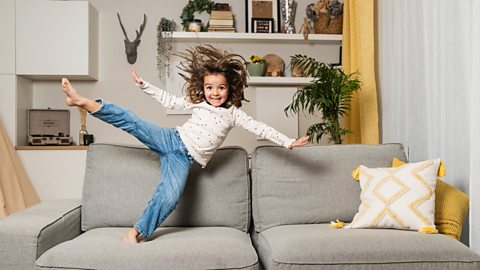
Active play often includes an element of risk that comes with climbing, balancing, and running fast. As a parent, it is natural to feel cautious. But manageable, age-appropriate risk can be beneficial.
“If children are never allowed to take age-appropriate risks, they don’t develop risk assessment skills,” Amanda says.
“Through small bumps and near misses, children learn boundaries. They begin to understand what feels safe and what does not. They develop judgement and resilience over time.”
Risky play does not mean unsafe play. It means providing opportunities for children to explore within a sensible safety net under parental supervision.
'Structured' and 'unstructured' movement
There is room for both structured and unstructured active play.
“Structured activities, such as gymnastics or a simple game with clear rules, can teach children about turn-taking and following instructions,” explains Amanda.
“Unstructured play is more open-ended. It might be racing round the garden, inventing an obstacle course or playing chase at the park.”
“Children benefit from both. What matters most is that movement becomes a regular part of their routine.”

How to fit active play into your world
Not every family has a garden and not every parent may be able to run around with their child. However, active play can be simple and achievable from the comfort of your own home and neighbourhood.
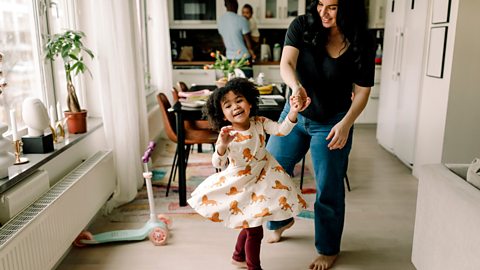
“If you live in a smaller home, short bursts of movement indoors can make a difference. A quick obstacle course using cushions, a race to tidy up the kitchen, or a dance to a favourite song all count as active play.”
“Local parks and playgrounds are valuable spaces to get outside too,” Amanda says.
For families where mobility is a challenge, bringing others into the mix can help.
“Arrange playdates. Explore local youth clubs. Meeting friends and family can benefit parents as well as children. While children play, adults can connect and build support networks.”
Making active play a part of everyday life
Active play does not need to be expensive or complicated explains Amanda.
“It can be walking to the shops instead of driving. Parking a little further away from your destination and playing I Spy along the way. These small moments add up.”
In the early years, movement builds strong bodies, confident minds and resilient attitudes.
“For young children, moving is not just about staying active. It is how they explore, understand and thrive in the world around them. Make small changes in your day to day to get the family moving and have fun!”
More from CBeebies
Dress up as dinosaurs or CBeebies characters and experiment with movement and impressions.
Get some fresh air - outside play is a great way to encourage your child to work off their energy throughout the day, so they can rest better at night. Check out our list of outdoor games and exploring activities!
Rainy day active play - if exploring outside is off the table, try some indoor activities like yoga, dance, or even toddler aerobics with Joe Wicks!