Medicine Through Time…
Fleming, Florey and Chain!
Throughout the murky meanders of medical history, millions of people died from infection every year.
Even minor infections could become fatal.
In the twentieth century, that started to change, with the ground-breaking work of three medical superstars:
Fleming,
Florey and
Chain, who were responsible for developing the world’s first antibiotic: Penicillin.
The story started in the 1860s with Louis Pasteur, whose Germ theory paved the way for a greater understanding of bacteria.
By 1914, scientists had discovered several 'magic bullets' – chemicals that specifically targeted and killed disease-causing microorganisms in the body.
But magic bullets didn’t work against staphylococcus – a nasty little brute of a bacteria that could lead to everything from pimples and impetigo, to pneumonia and meningitis.
Step forward Alexander Fleming…
Our first superstar wasn’t having any of this staphylococcus nonsense.
He saw how it had killed soldiers in the First World War, and set about finding a solution, which came about by accident when he left a petri dish full of staphylococcus just sitting in his lab… as you do.
When he returned to the dish, a mould had started growing, killing the pesky bacteria…
He called this mould “Penicillin”.
‘A-haaaa’ Fleming thought, ‘I’ve got you now, staphy.’
But that’s where his breakthrough petered out, because he never tested his penicillin on an infected animal, which meant he never fully realised its properties.
And he just sort of…moved on.
But unknowingly, Fleming had set the scene for our next two superstars to shine.
Howard Florey and Ernst Chain were researchers at Oxford University. When they discovered Fleming’s findings in 1937, they decided to put Penicillin to the test. They applied for funding from the hard-up wartime government, who gave them a whopping £25… ooh, don't spend it all at once fellas.
But Florey and Chain made do and quickly set up a mould-growing lab to test infected mice, and, eventually humans.
The first person they treated with penicillin was policeman Albert Alexander in 1940.
He’d been accidentally scratched by a rose thorn in his mouth, that had become badly infected with staphylococcus.
The Penicillin improved Alexander’s condition dramatically, but as soon as his supply ran out, Alexander died (providing a cautionary tale for any would-be rosebush canoodlers out there).
So not exactly a perfect outcome, but the impact of the trial results was ginormous.
For the first time, the reliable effectiveness of an antibiotic had been proven, and it couldn’t be ignored. By the end of the Second World War, the US and UK governments had invested in tons of the stuff.
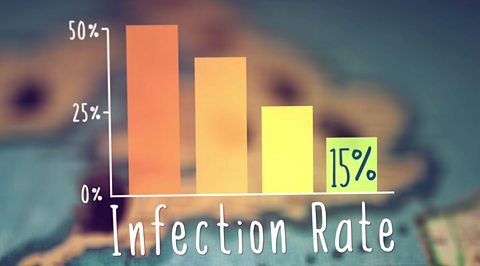
15% of people with infected injuries during the war had been saved by Penicillin.
That’s an impressive stat for a humble bit of mould.
After the war, Penicillin was officially classed as an antibiotic and went into mass production, saving millions of lives and marking the beginning of huge government investment in new medicines. And so we come to the end of our mouldy, marvellous tale.
The discoveries of Fleming, Florey and Chain had a monumental impact on medicine, preventing millions of unnecessary deaths.Granted, other factors helped them out.
These included: war, advanced production technology, and a healthy dollop of chance - we’re looking at you and your lucky mould, Fleming.
Today, Penicillin is still commonly used as an effective cure for many infections - you’ve probably had it yourself.
However, like everything amazing in life, it has its limitations. Just as magic bullets were discovered to be ineffective against staphylococcus, Penicillin is ineffective against superbugs like MRSA.
So let’s hope this latest challenge will inspire innovative medical minds today!
That’s you.
Video summary
An engaging animated summary of the work of medical pioneers Alexander Fleming, Howard Florey and Ernst Chain.
Using authentic archival photographs and illustrations this summary immerses pupils into accounts of pioneering experimentation.
Outlining key events that lead to the discovery and later mass production of penicillin; revisiting Pasteur's germ theory, we see a progression of medical understanding through overcoming specific problems such as the resistance of staphylococcus to magic bullet cures.
Seen alongside scientist’s current battle with the resilience of MRSA against modern antibiotic treatments, this process of scientific discovery is linked to the present.
It also encourages pupils to pick out key factors which led to the mass production of antibiotics; such as chance, individual brilliance and advancements in technology.
Narrated by actor and impressionist Duncan Wisbey, the pace is quick, humorous and tone irreverent.
This is from the series: Medicine through time.
Teacher Notes
This could be used to discuss what key elements were in place to allow the spread of penicillin use across the wider population, and why were they important.
Pupils could consider the influence of war, increased government spending, chance, individual brilliance and huge advancements in technology.
This clip will be relevant for teaching KS3 and KS4/GCSE History in England, Wales and Northern Ireland and National 4 History in Scotland.
This topic appears in OCR, AQA, WJEC in England and Wales, CCEA GCSE in Northern Ireland and SQA Scotland.
History KS3 / GCSE: Lister and Simpson. video
An engaging animated look at the work of medical pioneers, Lister and Simpson.
History KS3 / GCSE: Vesalius, Paré and Harvey. video
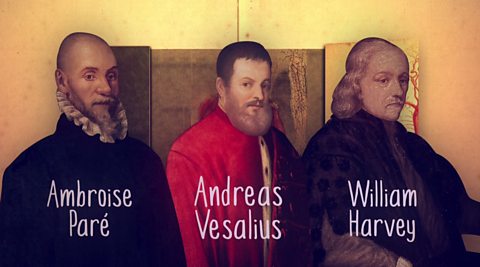
An engaging animated look at the work of medical pioneers Vesalius, Paré and Harvey
History KS3 / GCSE: 19th Century Medicine. video
An engaging animated summary of medical progress in the 19th century.
History KS3 / GCSE: Chadwick and Snow. video
An engaging animated look at the work of medical pioneers, Chadwick and Snow.
History KS3 / GCSE: 18th Century Medicine. video
An engaging animated summary of medical progress in the 18th century.
History KS3 / GCSE: Medieval Medicine. video
An engaging animated summary of medical progress through the medieval period.
History KS3 / GCSE: 16th and 17th Century Medicine. video
An engaging animated summary of medical progress in the 16th and 17th centuries.
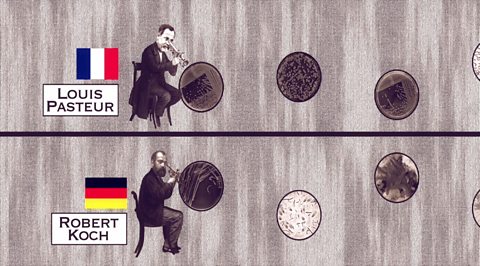
History KS3 / GCSE: Pasteur and Koch. video
An engaging animated look at the work of medical pioneers, Pasteur and Koch.
History KS3 / GCSE: Modern Medicine. video
An animated summary of medical progress during the 20th century to the present day.