Medicine Through Time…
The 16th and 17th centuries!
Ahh… The Renaissance period. Sounds posh dunnit.
The rebirth of learning, creativity, and marvellously, of common sense!
The Church’s 5,000 year stranglehold on medicine was finally loosening, allowing a new generation of medical pioneers to advance…
Not only that, but the invention of the printing press meant the spread of progressive ideas became cheaper and easier. Da Vinci was basically the viral meme of his day.
But – and it’s a big butt - no, not that type of big but some of the old, really - weird practices and ideas were still common… People even still believed in the magical properties of… err… stones?
Bezoar stones were solid masses that grew inside the stomachs of goats…
It was believed that rubbing these stones on the body cured all forms of poisoning, and even King Charles IX of France was a fan.
But his Royal Surgeon, an ambitious doctor named Paré, thought that the King was being as dense as his so-called magical stones…Paré was determined to prove it was all nonsense, so he did an experiment: He saved a criminal from being hanged…
[PAUSE]
… then he poisoned him.
Paré used the Bezoar stone treatment on the criminal, which of course did nothing.
This proved that you could challenge old beliefs with intrepid investigation. And that ‘magical’ stone treatment was a bit well… stone dead.
Printed medical books were now prevalent if you were rich enough to be able to read, and had loads of pretty images of charming things like cut up frogs, dismembered corpses and freaky-looking babies.
This led to dissection being practiced more widely, and in turn, more medical understanding. Things were changing on the battlefield too.
New weapons meant new injuries, so doctors like Paré saved many lives when he developed new types of treatments, moving on from cauterising wounds with burning oils… to cleaning them with rosewater and sewing up veins.
Still, ouch.
Ideas about blood flow were also evolving, as doctors realised that the heart was actually a pump pushing blood around the body!
There was a physician called William Harvey, who dissected lizards.
By cutting up these rampant reptiles he detailed a new theory of blood ‘circulation’, challenging Galens’ old idea that blood was created in the liver and simply ‘burned up’ by our muscles. But Renaissance medical knowledge was pushed to its limit by, drumroll please…
THE GREAT PLAGUE OF 1664!!
Like the Black Death 300 years earlier… the Great Plague was pretty damn harsh, killing around 100,000 people in London; almost a quarter of its population – in under 18 months.
Public health services were still non-existent, and people were living in towns so dirty and crowded you couldn’t swing a cat (or a dog) in them.
In fact, cats and dogs copped a lot of the blame for the plague.
Not realising that flea-ridden rats were to blame, the London Mayor, ordered the death of 200,000 cats and dogs, as they were widely thought to cause the disease.
Meanwhile, people also falsely believed] in such remedies as (ahem) bathing in urine, ewww, heavy pipe smoking…
[Coughs/ Wheezes]
… and the trusty…. unicorn horn. But there was some good news…
Some doctors, such as George Thomson, were starting to challenge old beliefs about the plague. Thomson refused to evacuate London, so he could study the disease. He eventually caught the plague but miraculously survived!
He claimed he did this by placing a frog on his chest… and although this was scientific codswallop, his work demonstrated a renewed interest in observation, experimentation, and challenging the norm.
So as you can see, by the end of the 16th & 17th centuries there had been some key developments in medicine.
New medical books were flying off the printing presses, Paré was pioneering new surgical methods on the battlefield, blood circulation was now understood, and Thomson was so keen to investigate the plague he even caught it himself.
But these developments didn’t trickle down to the wider population, and even among doctors, there were still some hopping mad ideas.
And it would be a few more years before medical science truly started to accelerate…
Video summary
An engaging animated summary of medical progress in the 16th and 17th centuries.
Using authentic archival illustrations and diagrams, this animation brings to life how the Renaissance brought on a fresh thirst for scientific enquiry.
Narrated by actor and impressionist Duncan Wisbey, the pace is quick and tone irreverent.
The film draws on the work of key figures of the time such as Ambroise Paré, William Harvey and George Thomson.
Looking at their work we see the critical advancements they made in our understanding of new treatments and the human body.
Key themes that directly affected progress during this period were new weapons on the battlefield, the Great Plague of 1664 and the circulation of new ideas through the invention of the printing press.
The summary clearly highlights successes of the period with new experimentation leading to a better understanding of the human body, but also the short-fallings; such as the failure of many people to accept these new ideas and ultimately these new discoveries not benefiting the wider population.
This is from the series: Medicine through time.
Teacher Notes
This could be used to ask pupils to discuss the printing press as a catalyst for medical progression.
They could investigate the Plague, and how it illustrates how medicine did and did not change from the medieval period.
Pupils could discuss why was the medical Renaissance important, if it didn’t make anyone healthier?
This clip will be relevant for teaching KS3 and KS4/GCSE History in England, Wales and Northern Ireland and National 4 History in Scotland.
This topic appears in OCR, AQA, WJEC in England and Wales, CCEA GCSE in Northern Ireland and SQA Scotland.
History KS3 / GCSE: 18th Century Medicine. video
An engaging animated summary of medical progress in the 18th century.
History KS3 / GCSE: 19th Century Medicine. video
An engaging animated summary of medical progress in the 19th century.
History KS3 / GCSE: Modern Medicine. video
An animated summary of medical progress during the 20th century to the present day.
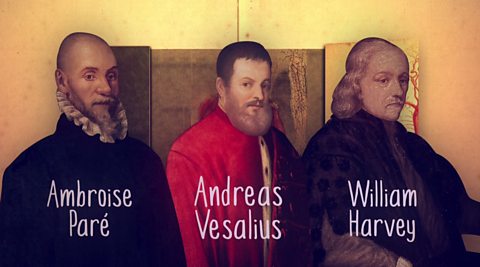
History KS3 / GCSE: Vesalius, Paré and Harvey. video
An engaging animated look at the work of medical pioneers Vesalius, Paré and Harvey
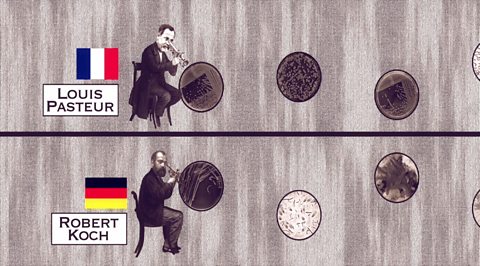
History KS3 / GCSE: Pasteur and Koch. video
An engaging animated look at the work of medical pioneers, Pasteur and Koch.
History KS3 / GCSE: Lister and Simpson. video
An engaging animated look at the work of medical pioneers, Lister and Simpson.

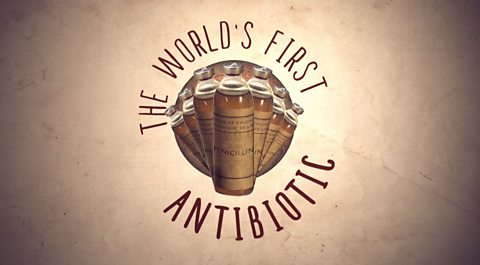
History KS3 / GCSE: Fleming, Florey and Chain. video
An engaging animated look at the work of medical pioneers, Fleming, Florey and Chain.
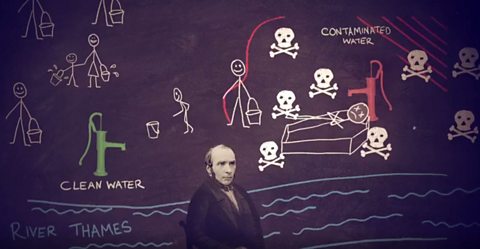
History KS3 / GCSE: Chadwick and Snow. video
An engaging animated look at the work of medical pioneers, Chadwick and Snow.
History KS3 / GCSE: Medieval Medicine. video
An engaging animated summary of medical progress through the medieval period.