Medicine Through Time…
PASTEUR & KOCH!
Mmmmm… Germ Theory.
The delectable idea that disease is caused by microorganisms invading the body.
We literally get infested!
It’s gross but it’s true, though people didn’t always believe it.
Even by the start of the 19th century, people had all sorts of crazy ideas about where disease came from, such as the theory of miasma, which claimed that diseases were caused by foul-smelling air… no, no, no - not that kind… and the theory of spontaneous generation,- which stated that life basically arose from, erm, nothing.
These views started to change when two mighty microbiologists, fuelled by national rivalry, entered into a battle to become the first person to prove where disease came from.
Enter: Louis Pasteur of France and Robert Koch of Germany.
*Mais oui!
It was the Frenchman who landed the first punch.
Pasteur was the first to challenge old barmy beliefs, hypothesising that germs caused disease and not vice versa.
He of milk pasteurising fame was able to prove that milk went off, and not just because…. err, well it just did, but because of bacteria in the air.
Pasteur went on to argue that this same bacteria could cause disease. To describe these ideas, he coined the phrase ‘Germ Theory’.
But someone was hot on Pasteur’s heels… Oh ja! About a decade after Pasteur had first concocted Germ theory, Koch took the next step, by - erm - making rodents sick.
He isolated anthrax bacteria and injected it into healthy mice, who then became ill, proving that the bacteria was the cause.
This was Pasteur’s Germ Theory in practice, and, quite literally, in the bodies of cute little mice. Awwww.
The rivalry between Pasteur and Koch massively speeded up medical progress. Thanks to the Franco-Prussian war of 1870-1871, the two scientists’ respective nations were fighting each other on the battlefield as well as in the lab, so their research was charged with epic significance.
National pride was at stake and nobody wanted to lose the ‘Battle of the Bacteria’.
Koch went on to find ways of staining, photographing and therefore identifying different bacteria, disproving old ideas about all bacteria being the same.
This pioneering work, which led to the identification of 21 disease-causing germs by 1900, earned Koch his status as ‘the father of modern bacteriology’.
Meanwhile, Pasteur was still beavering away. Or should we say… chickening away?
His germ of an idea about… germs, had led him to study cholera in chickens.
He found that when he injected an old culture of cholera bacteria into his birds, they fell ill, but did not die as expected.
And from that point on they were resistant to fresh cholera injections.
This wasn’t in itself a brand new idea, as a century earlier the father of the vaccination, Edward Jenner, had found that a small dose of cowpox could immunise against smallpox.
But what was ground breaking was that Pasteur, was the first person ever to create vaccines in a lab.
This was a massive turning point in the fight against infectious disease, as it meant that vaccines could be manufactured, eventually on a mass scale.
In Britain, meanwhile, the likes of Tyndall, Roberts and Cheyne were frantically translating and lecturing Pasteur and Koch’s ideas.And as a result the ideas of Pasteur and Koch spread rapidly.
Soon, a new generation of young Pasteur-and-Koch disciples came to be known as the ‘microbe hunters.’ And their work was influential in its own right, inspiring new research and new findings.
Pasteur died in 1895 and Koch keeled over in 1910.
But the fight against germs didn’t stop… it’d only just started.
They passed the bacteria baton on to even more doctors and scientists, who continued to study and combat all manner of diseases, from tuberculosis, to rabies and even the pesky plague.
By the end of the 19th century, scientists were beginning to truly understand what caused disease and so much unnecessary death.So after all those intense, sweaty rounds in the metaphorical boxing ring, Pasteur and Koch’s gentlemanly tussle paid off, and they’ve both gone down in history as heavyweight champions of medicine.
Bravo boys, bravo.
Nice pants by the way…
Video summary
An engaging animated summary of the work of pioneers, Louis Pasteur and Robert Koch, outlining how their national feud lead to great medical advancements.
Narrated by actor and impressionist Duncan Wisbey, the pace is quick and tone irreverent.
Utilising authentic archival illustrations and images the battle to prove where disease comes from is brought to life, focussing on the emergence of germ theory; an essential part of the syllabus.
It explores the intensification of their intellectual battle within the context of the Franco-Prussian war and sees how each one’s research and experimentation fed the others.
Seen alongside their British proponents; Tyndall, Roberts and Cheyne, the film centres on the importance of their legacy in understanding bacteria, and being able to treat disease more effectively today.
This is from the series: Medicine through time.
Teacher Notes
This could be used to ask pupils why the emergence of germ theory was such an important turning point in the fight against disease.
They could investigate this new understanding of bacteria within the context of the Franco-Prussian war and look at why this meant there was enough funding for scientists to develop their ideas quickly.
Pupils could discuss how Pasteur and Koch’s work was hugely influential in Britain.
This clip will be relevant for teaching KS3 and KS4/GCSE History in England, Wales and Northern Ireland and National 4 History in Scotland.
This topic appears in OCR, AQA, WJEC in England and Wales, CCEA GCSE in Northern Ireland and SQA Scotland.
History KS3 / GCSE: Fleming, Florey and Chain. video
An engaging animated look at the work of medical pioneers, Fleming, Florey and Chain.
History KS3 / GCSE: 19th Century Medicine. video
An engaging animated summary of medical progress in the 19th century.
History KS3 / GCSE: 16th and 17th Century Medicine. video
An engaging animated summary of medical progress in the 16th and 17th centuries.
History KS3 / GCSE: Medieval Medicine. video
An engaging animated summary of medical progress through the medieval period.
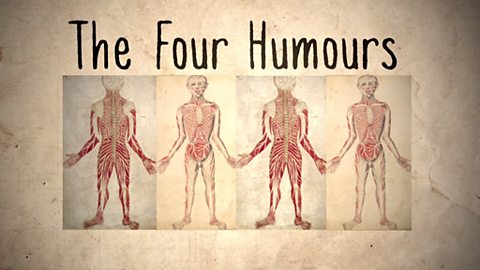
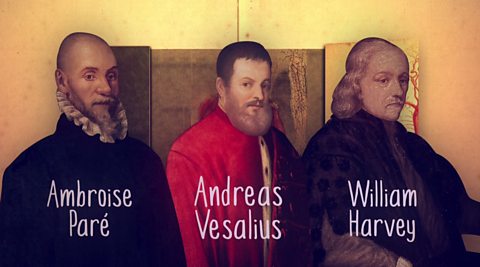
History KS3 / GCSE: Vesalius, Paré and Harvey. video
An engaging animated look at the work of medical pioneers Vesalius, Paré and Harvey
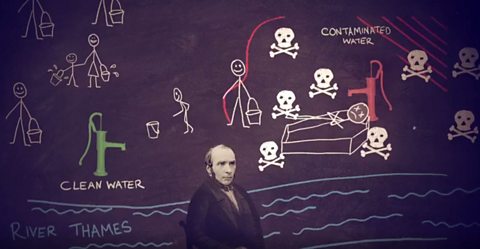
History KS3 / GCSE: Chadwick and Snow. video
An engaging animated look at the work of medical pioneers, Chadwick and Snow.
History KS3 / GCSE: 18th Century Medicine. video
An engaging animated summary of medical progress in the 18th century.
History KS3 / GCSE: Lister and Simpson. video
An engaging animated look at the work of medical pioneers, Lister and Simpson.

History KS3 / GCSE: Modern Medicine. video
An animated summary of medical progress during the 20th century to the present day.