By February 1917 the War was locked in a brutal stalemate. The German High Command decided that if they couldn’t defeat Britain’s Army then they would crush her people.
In the words of the German Kaiser, “We will starve the British people who have refused peace until they kneel and plead for it”.
The plan was to sink the merchant shipping which brought the food and supplies on which the country lived. The weapon would be the submarine, U-boats.
On a desolate mud bank in the salt marshes of Kent lies the metal carcass of a First World War German U-boat.
British ships were blockading German ports, but the U-boat was a new and terrifying way to wage war and it came close to defeating Britain.
The Germans knew that Britain imported two thirds of her food and they made a simple calculation. If they sank 600,000 tonnes of merchant shipping every month they could starve Britain into submission in a mere five months.
So on the 1st of February 1917 the Germans sent their U-boats in for the kill, ordering them to attack all merchant shipping supplying Britain. The devastation in the shipping lanes was catastrophic.
In 1917 46,000 tonnes of meat was sent to the bottom of the sea. Between February and June 85,000 tonnes of sugar were also sunk. Flour and wheat were soon in short supply and a stunned House of Commons was told that very soon Britain would not be able to feed herself.
The U-boat stranglehold seemed unbreakable.
Britain faced a stark choice, to grow much more food or to starve. But British farms were in crisis, many farmhands were now at the Front and so were the horses. So a new force was sent into the fields, 84,000 disabled soldiers, 30,000 German prisoners of war and over a quarter of a million British women. By the following year over seven million extra acres had been dug up to grow more food.
Well, it helped, eventually yielding about a month’s extra food each year, but that was still nothing like enough to make up for the thousands of tonnes being sent to the bottom of the sea by German U-boats. War was being waged on civilians and it was up to civilians to save themselves.
The order came to plough up Britain, to hand over land to the people so they could provide for themselves. This strip of land was waste ground until 1917, then it was dug up to provide cabbages, potatoes and marrows for a hungry nation.
Armies of women, children and the elderly set about transforming the landscape of Britain’s towns and cities, the nation had a new craze which the press called allotment-itis.
Before the War allotments had been a hobby for eccentrics, by the end of the War there were over one and a half million of them squeezed into any scrap of earth that could be dug up, from grass verges to village greens to railway embankments.
But no amount of allotment digging could hide the fact that things were simply getting worse, the U-boat blockade was biting.
In autumn 1917 shortages were so severe that huge queues formed outside butchers and grocers. In some cities people looted the shops for food, breaking the windows and beating up the shop owners.
Finally the Food Controller had to think the unthinkable. “It may well be”, he told a colleague, “that you and I are all that stands between this country and revolution”. People would have to be told what they could and couldn’t eat and so in January 1918 rationing was brought in. Now this was one person’s ration for a week. 15 ounces of meat, 5 ounces of bacon, 4 ounces of margarine and 8 ounces of sugar.
This was the first time a British government had ever rationed food and it worked. The queues outside the shops disappeared; rationing, allotments and a system of convoys to protect merchant ships kept starvation at bay.
This had become a War that wasn’t just being fought on the battlefields, but on every street in the land. It was a new kind of War and it brought a new term into the English language, the Home Front.
Video summary
Jeremy Paxman explores how Britain reacted to the campaign by German U-boats to sink merchant shipping and starve the country into submission.
Food was rationed, farming was prioritised and millions of new allotments created.
Hundreds of thousands of new farm workers, made up of women, disabled soldiers and German prisoners of war worked the land.
Paxman visits some allotments in South London that were created in 1917.
There were queues at shops, and we hear about the introduction of rationing for the first time in British history in January 1918.
We see the amount of meat, bacon, margarine and sugar each person was allowed under the rationing system.
Teacher viewing recommended prior to use in class.
Teacher Notes
Key Stage 3:Use as a starter to show the effect of the war on civilians. Create a government DORA Defence of the Realm Act leaflet advising civilians of the new laws effecting life as a result of the war.
Key Stage 4 / GCSE:Use as part of a decision-making exercise. Rationed food items have varying points given to them and pupils have a limited value of points to use. They then must prioritise and balance their use of the points, to achieve a balanced diet.
National 5 / Higher:This overall picture of food shortages, rationing and the shared war effort could be used to introduce the Home Front in Scotland. What impact did shortages have on Scotland's rural and urban populations. The clip could also be used as part of a decision making exercise. Rationed food items have varying points given to them and pupils have a limited value of points to use. They then must prioritise and balance their use of the points, to achieve a balanced diet.
This clip will be relevant for teaching History. This topic appears in at KS3 in England, Wales and Northern Ireland and OCR, Edexcel, AQA and WJEC/Eduqas GCSE/KS4 in England and Wales and CCEA GCSE in Northern Ireland. It also appears in National 5 and Higher in Scotland.
How Britain declared war in WW1. video
Jeremy Paxman explores the declaration of war after Germany invaded Belgium in 1914.
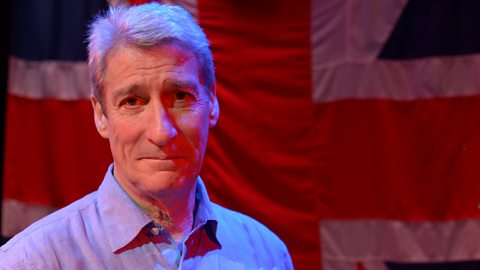
Your country needs you! video
Jeremy Paxman explains Lord Kitchener's iconic recruitment PR campaign of WW1.
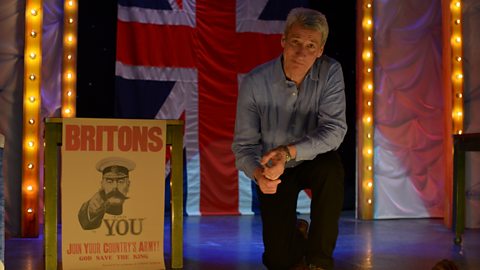
Crushing defeat in the first battle of WW1. video
Jeremy Paxman explores how Britain suffered defeat at the Battle of Mons.

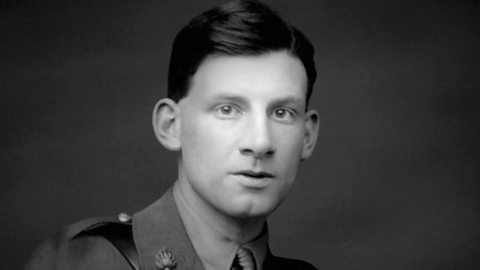
WW1 poetry and shell shock. video
Jeremy Paxman looks at the mental health problems suffered by poet Siegfried Sassoon and soldiers in the First World War.
Treating Indian soldiers at Brighton Pavilion. video
Jeremy Paxman explains how a former royal residence became a hospital for injured soldiers in WW1.
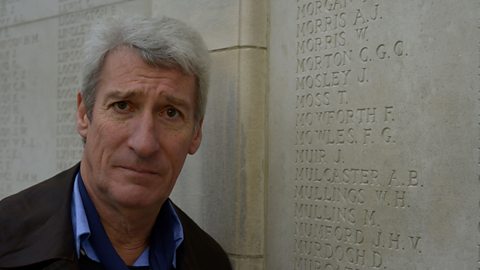
Air raids and the bombardment of Britain in WW1. video
Jeremy Paxman explains the unprecedented bombardment of Britain in World War One.
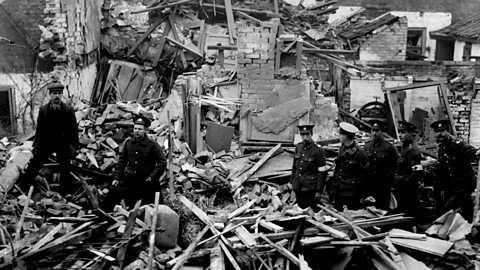
The dangerous jobs of women in WW1. video
How women entered the workforce and took up dangerous roles to support the war effort.

How the Britain turned the tide in 1918. video
How the British workforce, the Home Front and the USA joined together to fight back against the German advance in 1918.

1918: the end of the war and Remembrance Day. video
Jeremy Paxman describes the end of the First World War.