The First World War was the first industrial War. Soldiers at the front needed millions of shells, bullets and guns, known as munitions.
In May 1915 David Lloyd George was appointed the new Minister in charge of munitions. Lloyd George knew there just weren’t enough workers to produce what the troops needed.
He’d have to mobilise a new workforce, a new industrial army, the women of Britain.
Women in the workforce were nothing new, but now women began to do jobs which only men had done. Suddenly, Britain began to look very different on the streets, in the fields and in the factories.
The biggest change in the fortunes of women would take place in a strange, sometimes frightening, new world.
In 1915 this was one of the most dangerous places in Britain.
It’s pretty hard to believe now but this peaceful place was once alive with 6,000 people making explosives for the armies on the Front.
These strange structures were designed to withstand accidental blasts. Here the workers, many of them women, mixed deadly nitro-glycerine, or made cordite providing the bang that powered shells and bullets.
The women were known as Munitionettes.
The ones who worked at The Royal Gunpowder Mills formed just a part of the million-strong female workforce employed by Lloyd George’s new Ministry of Munitions.
The experience was exciting, new and dangerous.
Inevitably there were casualties.
This is a photograph of a woman called Charlotte Mead, mother of five children, with a husband away fighting in France.
It’s taken in a photographer’s studio where she’s posing in a munitions factory overalls.
It’s probably just as well it’s in black and white because working in close contact with high explosives could do terrible things to you. It could, for example, turn your skin yellow.
Within a year of this photograph being taken she was dead of toxic jaundice, not that you could have read about it in the newspapers because the press was banned from reporting such things. By the time her husband returned from the Front it was too late.
The need for munitions was insatiable in this relentless, total War. Meeting that need required the most dramatic transformation of production the country had ever seen.
Lloyd George’s impact on the munitions industry was spectacular. Within six months the number of shells being manufactured had increased twenty-fold, weapons which had previously taken a year to manufacture were now being turned out in three weeks.
In order to win this new industrial War David Lloyd George had called on women to take the place of men. A social revolution was underway and it would play a decisive part in helping to win the War.
Video summary
Jeremy Paxman visits the Royal Gunpowder Mills in Essex to tell us about the million women employed in making munitions, and the dangers they faced from explosions and exposure to chemicals.
We hear about the huge increase in quantity and speed of production as a result. The focus is on the key role of women in the British war effort.
We see archive footage of the millions of British women who entered the workforce during the First World War, taking part in a social revolution by making munitions and replacing absent men in their jobs. We hear about the huge demand for workers to make the munitions being rapidly used up in this new industrial war.
When David Lloyd George became Minister for Munitions in May 1915, he decided to recruit huge numbers of women to make up the shortfall. We see photos and archive footage of women working in factories, fields, as bus conductors and firefighters.
Teacher viewing recommended prior to use in class.
Teacher Notes
Key Stage 3:Use as a starter and example for a research project into local history featuring women in WW1. Draft two speeches by David Lloyd-George, first in 1914 trying to encourage women to work then another in 1918 celebrating their contribution._
Key Stage 4 / GCSE/ National 5 / Higher:Use as part of a discussion about the greatest consequence of women in the work-place. Was it the social impact or the help towards victory that was the most significant?
This clip will be relevant for teaching History. This topic appears in at KS3 in England, Wales and Northern Ireland and OCR, Edexcel, AQA and WJEC/Eduqas GCSE/KS4 in England and Wales and CCEA GCSE in Northern Ireland. It also appears in National 5 and Higher in Scotland.
How Britain declared war in WW1. video
Jeremy Paxman explores the declaration of war after Germany invaded Belgium in 1914.

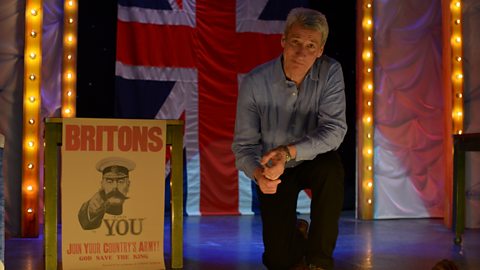
Your country needs you! video
Jeremy Paxman explains Lord Kitchener's iconic recruitment PR campaign of WW1.
Crushing defeat in the first battle of WW1. video
Jeremy Paxman explores how Britain suffered defeat at the Battle of Mons.

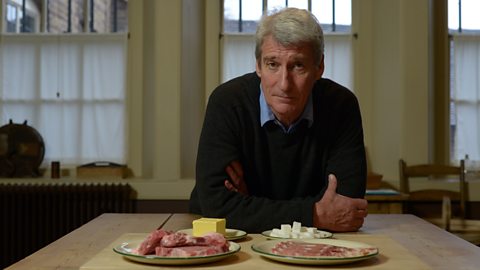
The Home Front. video
Jeremy Paxman explains how German u-boats crippled the country and led to rationing and the Home Front.
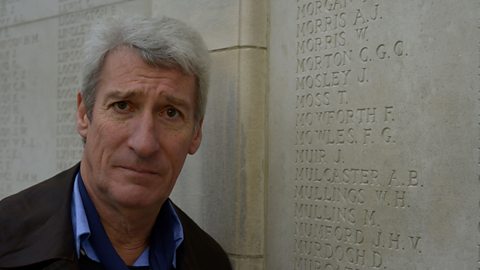
Treating Indian soldiers at Brighton Pavilion. video
Jeremy Paxman explains how a former royal residence became a hospital for injured soldiers in WW1.
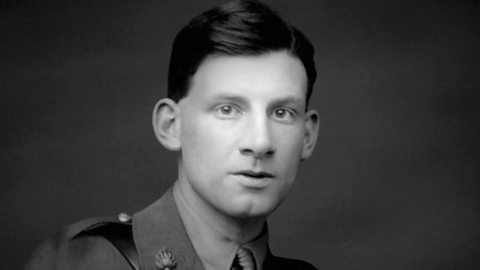
WW1 poetry and shell shock. video
Jeremy Paxman looks at the mental health problems suffered by poet Siegfried Sassoon and soldiers in the First World War.
Air raids and the bombardment of Britain in WW1. video
Jeremy Paxman explains the unprecedented bombardment of Britain in World War One.
How the Britain turned the tide in 1918. video
How the British workforce, the Home Front and the USA joined together to fight back against the German advance in 1918.
1918: the end of the war and Remembrance Day. video
Jeremy Paxman describes the end of the First World War.