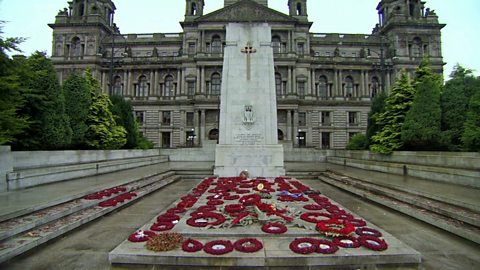
Following the heavy defeat at Mons and subsequent retreat in the autumn of 1914, the drive to recruit more men was led by the most famous soldier alive, Herbert Horatio, Lord Kitchener, the new Minister of War.
He’d realised that Britain could only win the War by creating a massive new army.
Elsewhere in Europe they forced young men into uniform.
Kitchener’s new soldiers would be volunteers and he was the perfect figurehead to rally the men of Britain.
Targeting all able bodied young men over five foot three Kitchener launched a recruitment campaign.
It began with a massive poster offensive, twelve million published in one year alone.
Many appealed to national duty, some to virility, some played on guilt others on fear of invasion. This was an unprecedented campaign of mass persuasion by the State.
Most of the time most of the press were right behind the government. In late August for example an advertisement appeared in The Times, “Wanted, petticoats, for able bodied young men who have not yet joined the Army”.
Recruiting centres were set up all over Britain, joining up was a very public business.
Streets were cordoned off, military bands played, volunteers made speeches, fevered enthusiasm swept the land with 20,000 men volunteering every day.
On the 3rd of September 1914 more young men joined than on any other day of the War, over 33,000 of them heeding Lord Kitchener’s call.
You really can’t fail to be impressed by this massive rush to arms. While nobody knew for certain the full horror that awaited them there were plenty of people who had some idea, yet still they came. They did so for all sorts of reasons, but the most prominent among them seems to have been a sense of patriotic duty.
Before they left Britain for battle volunteers faced at least six months training, but this didn’t turn out as they’d expected.
At first the Army simply couldn’t keep up with the rush of men. Some had to train in their own clothes with caps for helmets or broom handles for rifles. One unit’s practise attack came to a halt when the volunteers went off to pick blackberries, a senior officer claimed they were the laughing stock of every soldier in Europe.
“We were play acting”, said one volunteer, “It required a lot of confidence to remember we were training to face the gigantic German war machine.”
But Kitchener persisted. That autumn, to boost the number of volunteers still further, he bagged a bold new idea, join up with your friends, after all it’d be much less frightening if you knew you were going to War with your pals.
The so-called Pals Battalions were comprised of men from the same area, club, background or profession. There were battalions for artists, for railway men, for city stockbrokers.
There were battalions for men under five foot three, many of them sturdy miners. The first Sportsmen’s Battalion included several county cricketers plus England’s lightweight boxing champion.
But men who joined together often died together and the effect on communities at home would be devastating. The War was about to come to Britain itself and you didn’t have to be in uniform or even an adult to become a casualty.
Video summary
Jeremy Paxman introduces Lord Kitchener's iconic patriotic recruitment campaign and tells us about the Pals regiments, which were formed of men from one local area or of the same profession.
Lord Kitchener was Britain’s most famous living soldier in 1914, and newly appointed Minister of War. He launched a poster campaign on a huge scale, to persuade men to volunteer to fight.
We see what the posters looked like, and hear about the different ways they encouraged men to sign up, inciting duty, fear of invasion and guilt. We see contemporary footage of public recruiting events, and hear how a patriotic mood swept the nation, causing men to enlist at unprecedented speed and scale.
Teacher viewing recommended prior to use in class.
Teacher Notes
Key Stage 3:Pupils could analyse the motivations used in different posters, and design their own to appeal to the public’s guilt, pride or fear._
KS4 / GCSE:Use for context and examples of the recruitment campaign. Complement by analysing a range of different poster techniques used in the poster campaign. Look for examples of such motivations as guilt, pride and fear in the posters. Consider the likely target audiences for the different methods and their likely success._
National 5 / Higher:Students could study recruitment posters from World War One and discuss the methods used to persuade men to sign up. Students could also discuss the motives of young men who joined up, and the negative propaganda which targeted men who had not signed up.
This clip will be relevant for teaching History. This topic appears in at KS3 in England, Wales and Northern Ireland and OCR, Edexcel, AQA and WJEC/Eduqas GCSE/KS4 in England and Wales and CCEA GCSE in Northern Ireland.
How Britain declared war in WW1. video
Jeremy Paxman explores the declaration of war after Germany invaded Belgium in 1914.
Crushing defeat in the first battle of WW1. video
Jeremy Paxman explores how Britain suffered defeat at the Battle of Mons.
The Home Front. video
Jeremy Paxman explains how German u-boats crippled the country and led to rationing and the Home Front.
The dangerous jobs of women in WW1. video
How women entered the workforce and took up dangerous roles to support the war effort.

WW1 poetry and shell shock. video
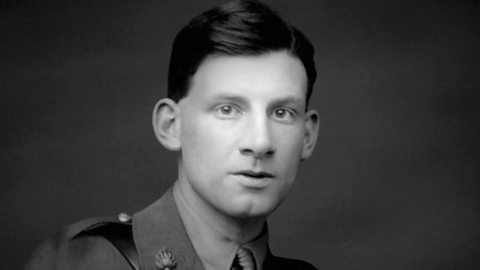
Jeremy Paxman looks at the mental health problems suffered by poet Siegfried Sassoon and soldiers in the First World War.
Treating Indian soldiers at Brighton Pavilion. video
Jeremy Paxman explains how a former royal residence became a hospital for injured soldiers in WW1.
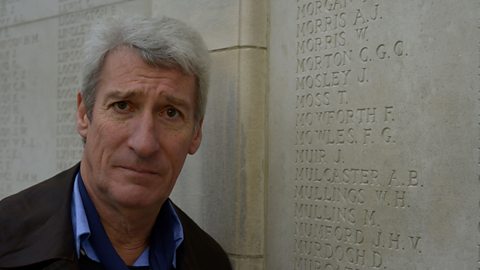
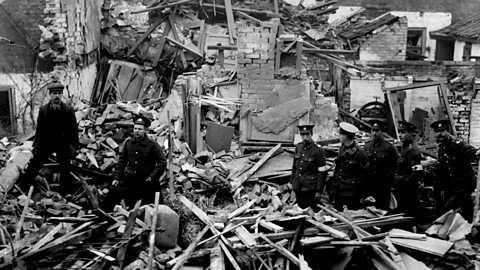
Air raids and the bombardment of Britain in WW1. video
Jeremy Paxman explains the unprecedented bombardment of Britain in World War One.
How the Britain turned the tide in 1918. video
How the British workforce, the Home Front and the USA joined together to fight back against the German advance in 1918.
1918: the end of the war and Remembrance Day. video
Jeremy Paxman describes the end of the First World War.