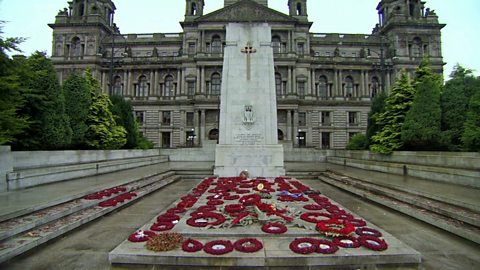
When Britain declared war on Germany on August the 4th 1914 the British public hoped for a quick victory.
By mid August British troops were making their way through France and Belgium towards the enemy, they were often greeted as heroes by the local people.
“It was a blissful period”, remembered one soldier, “roses all the way”, said another.
They were well trained and well equipped, but there were far too few of them. Britain’s regular army was pitifully small, two thirds of it, a mere 80,000 professional soldiers, had crossed the Channel. Side by side with their French allies they were about to clash with the far stronger forces of the invading Germans around the Belgian town of Mons.
In the town square some of the soldiers took a break before battle began. Many of these men would never see their homes again.
The first British soldier to be killed probably shouldn’t have been here at all. Private John Parr was a former golf caddy from North London who joined the army to better himself. He was out on a bicycle reconnaissance patrol when he was killed in an ambush.
That was on August the 21st, two days later World War One began in earnest.
As the Germans launched a full scale assault this canal became part of a long and bloody battle front. The British fought bravely, indeed the first two VCs of the War were won right here, but they were forced back and later that day they had to abandon the town.
What we call The Battle of Mons turned into a long and terrible retreat with Britain’s finest fighting men facing total annihilation.
Pursued by the Germans they pulled back over two hundred miles deep into France. They marched thirteen days and nights, so short of sleep they slept as they marched and they dreamed as they walked.
This gruelling retreat saved the core of the British army from disaster and it gave rise to one of the most famous stories of the War,the miracle of how they were rescued by heavenly guardians, the Angels of Mons blocking the Germans’ path and guiding our boys to safety.
There’s one very simple explanation for the Angels of Mons, exhaustion. “March, march, march for hour after hour without a halt”, one private remembered, “very nearly everyone was seeing things, we were all dead beat.” There was no angel but there had been a humbling defeat.
The British public was about to register the first great shock of World War One. For a week little news of the Battle of Mons had filtered home, all press reports were strictly censored.
But then on August the 30th The Times printed a brutally frank account of the battle and the retreat. “Broken British regiments, German tidal wave. Our losses are very great”, writes the reporter “I have seen broken bits of many regiments”.
Now it was amazing that the Army’s censor had allowed this through, but what was even more astonishing were the words he added afterwards “the first great German offensive has succeeded, the British Army has suffered terrible losses and requires immense and immediate reinforcements, it needs men, men and more men.”
In less than a month it had become clear that World War One would not be ended by a quick victory.
What was less clear to the British people was the huge numbers of men that would be needed to fight this War and the impact it would have on their families and communities. They were about to find out.
Video summary
Jeremy Paxman tells us about the first battle of World War One, the Battle of Mons and private John Parr, the first British soldier killed in World War One, on August 21st 1914.
Following the outbreak of war, two thirds of Britain’s small professional army marched across France to meet the Germans at the Belgian town of Mons.
Britain’s small but well-trained army were quickly overcome by German numbers, and began an exhausting 13 day retreat, marching 200 miles into France.
The myth of the Angel of Mons is attributed to the utter exhaustion of the men. Government censorship prevented the defeat being reported immediately.
We see a copy of The Times newspaper from August 30th, the first to report the terrible result of the battle.
We hear quotes from the article reflecting the depth of national shock, and calls for many more soldiers to increase the ranks of the British army.
Teacher viewing recommended prior to use in class.
Teacher Notes
Key Stage 3:Pupils could listen to optimistic recruitment songs from 1914, then look for evidence of optimism in the scenes. Contrast the optimism with the reality of defeat, listing evidence of the shock of loss. Role play might work to establish empathy. One group might do it as soldiers; another as family members reading news reports._
GCSE:Pupils could write a Ministry of Defence report on the Battle. The report would try to identify why Britain lost. Other pupils could study the Defence of the Realm Act 1914 and apply its censorship provisions to a create guidelines for the reporting of this shock defeat.
National 5/ Higher:Students could examine the reasons for the British army's defeat, and discuss how this affected the public attitude to the war, and the government's response. What was the role of newspapers during the War, and how much did censorship operate? How does this compare with modern conflicts?
This clip will be relevant for teaching History. This topic appears in at KS3 in England, Wales and Northern Ireland and OCR, Edexcel, AQA and WJEC/Eduqas GCSE/KS4 in England and Wales and CCEA GCSE in Northern Ireland. It also appears in National 5 and Higher in Scotland.
How Britain declared war in WW1. video
Jeremy Paxman explores the declaration of war after Germany invaded Belgium in 1914.
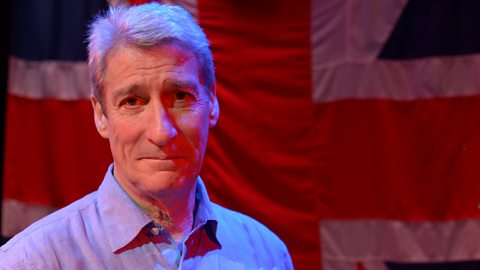
Your country needs you! video
Jeremy Paxman explains Lord Kitchener's iconic recruitment PR campaign of WW1.
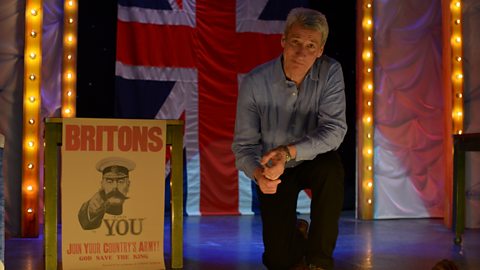
The Home Front. video
Jeremy Paxman explains how German u-boats crippled the country and led to rationing and the Home Front.
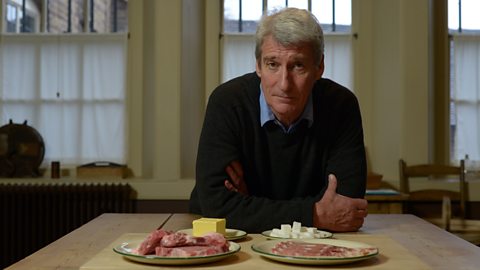
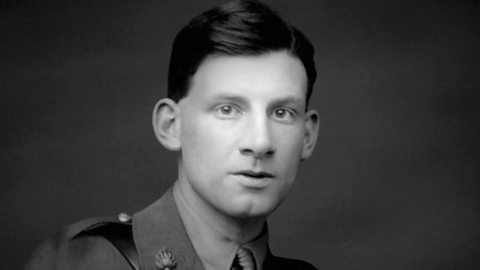
WW1 poetry and shell shock. video
Jeremy Paxman looks at the mental health problems suffered by poet Siegfried Sassoon and soldiers in the First World War.
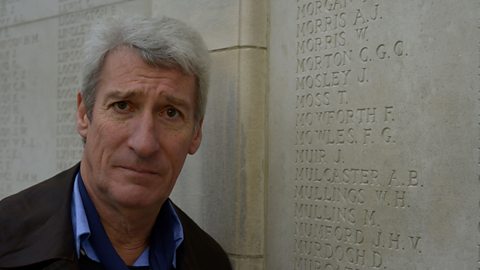
Treating Indian soldiers at Brighton Pavilion. video
Jeremy Paxman explains how a former royal residence became a hospital for injured soldiers in WW1.
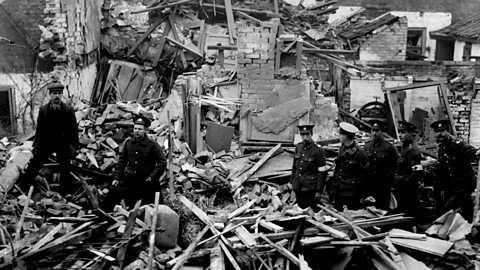
Air raids and the bombardment of Britain in WW1. video
Jeremy Paxman explains the unprecedented bombardment of Britain in World War One.
The dangerous jobs of women in WW1. video
How women entered the workforce and took up dangerous roles to support the war effort.

How the Britain turned the tide in 1918. video
How the British workforce, the Home Front and the USA joined together to fight back against the German advance in 1918.
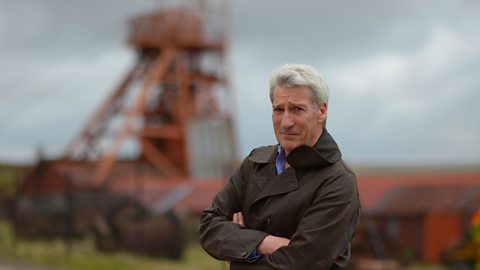
1918: the end of the war and Remembrance Day. video
Jeremy Paxman describes the end of the First World War.