After four terrible years the most devastating war in history came to an end on November the 11th 1918.
In London expectant crowds gathered in Parliament Square and waited for the sound that would prove the War was finally over.
Big Ben had been silenced at the outbreak of war, now at the eleventh hour on the eleventh day of the eleventh month it was about to strike again.
It was the signal for a roar of relief and joy and the start of celebrations which lasted three days.
In The House of Commons the Prime Minister, Lloyd George, addressed the House, “I hope we may say”, he concluded “that thus this fateful morning came an end to all wars.”
In Trafalgar Square revellers climbed on the lions and seized buses.
Australians and Canadians led the way, they tore down the advertising hoardings in Trafalgar Square asking people to buy war bonds and they lit an enormous bonfire right here under Nelson’s Column. The stones were left cracked and blackened as a consequence and you can see the damage still here today, the last physical reminder of that amazing day.
Soldiers recovering in a country hospital were told the news, there the reaction was rather different, one of the men said the announcement was met with silence.
“Our world was gone”, he said “a bloody world, a world of suffering, but also a world of laughter, excitement and comradeship beyond description. Now we were just some of the wreckage left behind.”
Even before the War ended cities, towns and villages all across Britain had begun to build memorials to the dead. Over 5,000 went up in the two years following the Armistice. Some, a few, celebrated victory. Most spoke of sacrifice, men remembering their dead comrades, the ordinary soldier rather than the Commander.
In the village of Bryant’s Puddle, Dorset, the War Memorial was unveiled on November the 12th 1918, the day after the War ended.
At the dedication of this Memorial the Bishop of Salisbury wondered whether there was really any need for further reminders of the War and he answered his own question, “Yes, because there would be future generations who would lead lives crowded with happenings and they needed to be warned lest they forget, lest they forget."
Later generations would contend it had been a futile war. The War was terrible certainly, but hardly futile. It stopped the German conquest of much of Europe and perhaps even of villages like this.
Never before in the nation’s history had a war required the commitment and the sacrifice of the whole population and by and large for four years the British people kept faith with it. It wasn’t a war they had sought and had they known how it would turn out they doubtless wouldn’t have joined in.
But they hadn’t known, they couldn’t have known anymore than the politicians or the Generals could have known and once it had started there was no way of stopping it anymore than you could suddenly make the dead start to walk again.
A century on we should perhaps remember and respect that sacrifice and realise that more than any other event this was the one that made modern Britain.
Video summary
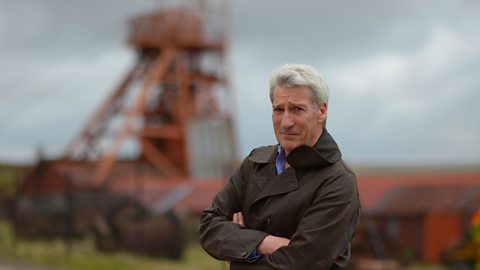
Jeremy Paxman describes the end of the First World War and reflects on whether the popular belief that the war was futile is true, and the influence that this total war had on the creation of modern Britain.
The end of the war in 1918 brought celebration to Britain’s streets and war memorials built across the country.
Footage and photos of the three-day celebration are shown, and Paxman shows where the stones of the Trafalgar Square fountain still bear the marks of a celebratory bonfire.
A wounded soldier recalls silence and sadness in the hospital where he was being treated on hearing the news, with so much loss and the end of the comradeship of the army.
We look at some of the 5000 war memorials erected within two years of the Armistice, mostly remembering the loss and suffering of troops rather than celebrating a victory.
Teacher viewing recommended prior to use in class.
Teacher Notes
Key Stage 3:Use as a stimulus for ideas in the creation of a remembrance and memorial design or poster.
Key Stage 4 / GCSE:Could be used as a starter piece to study memorials for what they suggest about changing attitudes to war and social class after the war, in particular the acknowledgement of ordinary troops as never before.
National 5 / Higher:Use as a starter piece to study memorials for what they suggest about changing attitudes to war and social class after the war. In particular consider the acknowledgement of ordinary troops as never before. Students could look at memorials in their own area and compare these to national monuments. The class could discuss what impact the involvement of people from all classes in the war effort had on the growth of democracy.
This clip will be relevant for teaching History. This topic appears in at KS3 in England, Wales and Northern Ireland and OCR, Edexcel, AQA and WJEC/Eduqas GCSE/KS4 in England and Wales and CCEA GCSE in Northern Ireland. It also appears in National 5 and Higher in Scotland.
How Britain declared war in WW1. video
Jeremy Paxman explores the declaration of war after Germany invaded Belgium in 1914.
Your country needs you! video
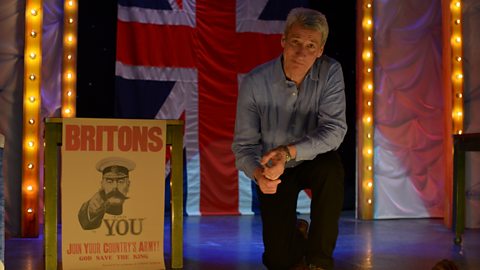
Jeremy Paxman explains Lord Kitchener's iconic recruitment PR campaign of WW1.
Crushing defeat in the first battle of WW1. video
Jeremy Paxman explores how Britain suffered defeat at the Battle of Mons.
The Home Front. video
Jeremy Paxman explains how German u-boats crippled the country and led to rationing and the Home Front.
The dangerous jobs of women in WW1. video
How women entered the workforce and took up dangerous roles to support the war effort.

WW1 poetry and shell shock. video
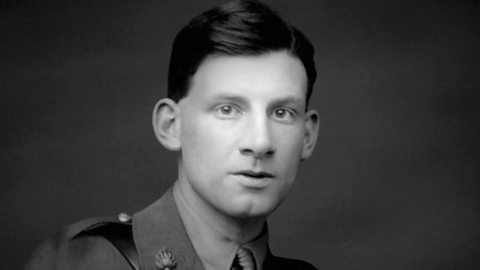
Jeremy Paxman looks at the mental health problems suffered by poet Siegfried Sassoon and soldiers in the First World War.
Treating Indian soldiers at Brighton Pavilion. video
Jeremy Paxman explains how a former royal residence became a hospital for injured soldiers in WW1.
Air raids and the bombardment of Britain in WW1. video
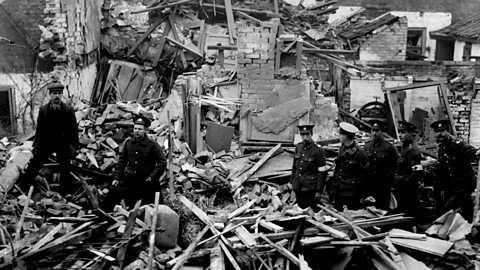
Jeremy Paxman explains the unprecedented bombardment of Britain in World War One.
How the Britain turned the tide in 1918. video
How the British workforce, the Home Front and the USA joined together to fight back against the German advance in 1918.