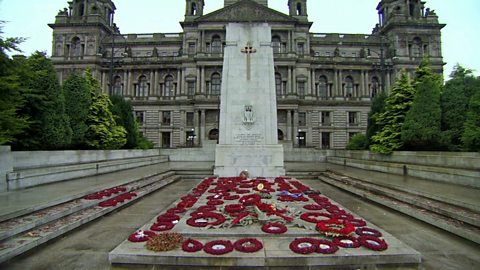
Before 1914 was over the War in Europe had already reached a deadly stalemate.
German and allied forces faced each other across a line of trenches that stretched for over five hundred miles, what become known as the Western Front.
Soon wounded from the Front were arriving on the South coast in tens of thousands.
How long could Britain maintain this level of casualties?
Already the country was calling on soldiers from across The British Empire including men from the Indian army. Many Indian wounded were sent to Brighton to be treated in a very unusual temporary hospital.
The Royal Pavilion had been built long before to evoke India, the jewel in Britain’s Imperial crown. That winter it looked very different.
The Pavilion was filled with badly wounded men, Muslims, Sikhs, Hindus lay in their hundreds beneath the chandeliers of a Royal palace.
Where princes had once dallied and danced, row upon row of Indian soldiers. The huge Georgian kitchen was an operating theatre. The dome nearby was another vast ward complete with khaki lino. All in all some four thousand Indians were treated here.
Every possible care was taken of the men, each religion had its own kitchen and, unheard of then in British India, white women nursed Indians.
One patient wrote to his family in India “Our hospital is in the place where the King used to have his home. The men are tended like flowers.”
In fact the royal family had sold the Pavilion to Brighton Council many years before, but if these troops believed the King had vacated it just for them the authorities didn’t tell them otherwise.
And in January 1915 King George V and Queen Mary honoured them with a visit. King George had come to pay his respects to the men who’d served Britain so bravely so far from home.
World War One had been fought for less than a year. All of the suffering, grief, anxiety and fear endured so far, all of this was just the start.
Video summary
In 1914, the former royal palace at Brighton Pavilion became a hospital to treat injured soldiers from the Indian Army.
Soldiers across the British Empire were asked to enlist, with large numbers coming from India.
A hospital was prepared for injured Indian Army soldiers in the Brighton Pavilion, once a royal palace built to reflect Indian architecture.
Jeremy Paxman tells us the religious differences of Hindus, Muslims and Sikhs were respected, and the soldiers were treated by British nurses, which would not have been allowed in India at the time.
Teacher viewing recommended prior to use in class.
Teacher Notes
In pairs pupils write letters to reflect the new perspectives experienced by British host medical staff and Indian patients, the target being empathy to show the novelty for both parties in the context of 1914.
This clip will be relevant for teaching History. This topic appears in at KS3 in England, Wales and Northern Ireland and OCR, Edexcel, AQA and WJEC/Eduqas GCSE/KS4 in England and Wales and CCEA GCSE in Northern Ireland.
How Britain declared war in WW1. video
Jeremy Paxman explores the declaration of war after Germany invaded Belgium in 1914.
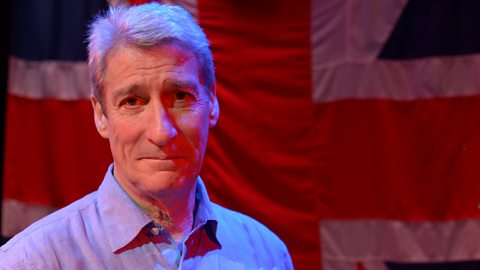
Your country needs you! video
Jeremy Paxman explains Lord Kitchener's iconic recruitment PR campaign of WW1.
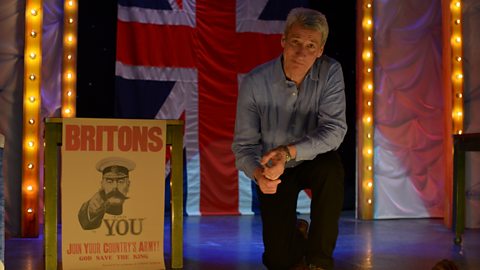
Crushing defeat in the first battle of WW1. video
Jeremy Paxman explores how Britain suffered defeat at the Battle of Mons.
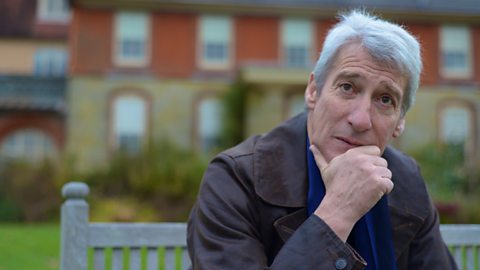
The Home Front. video
Jeremy Paxman explains how German u-boats crippled the country and led to rationing and the Home Front.
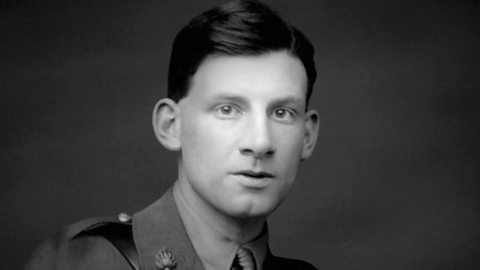
WW1 poetry and shell shock. video
Jeremy Paxman looks at the mental health problems suffered by poet Siegfried Sassoon and soldiers in the First World War.
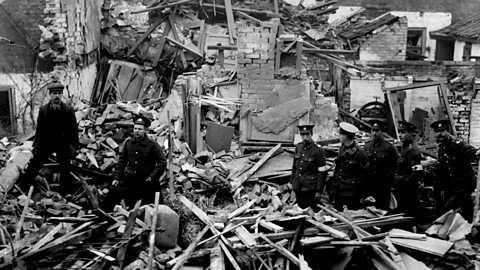
Air raids and the bombardment of Britain in WW1. video
Jeremy Paxman explains the unprecedented bombardment of Britain in World War One.
The dangerous jobs of women in WW1. video
How women entered the workforce and took up dangerous roles to support the war effort.

How the Britain turned the tide in 1918. video
How the British workforce, the Home Front and the USA joined together to fight back against the German advance in 1918.
1918: the end of the war and Remembrance Day. video
Jeremy Paxman describes the end of the First World War.