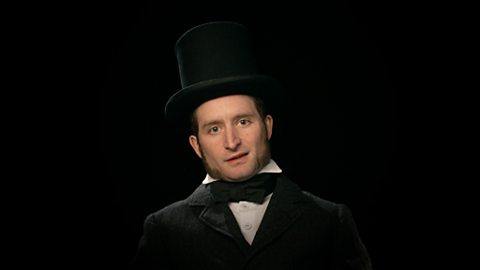
MARY ANNING:I'm going to tell you something about my life.
MARY ANNING:My name's Mary Anning. I was born in the year 1799 to a poor family, in a small town by the sea.
MARY ANNING:It's difficult to know where to start my story, because the truth is I was born once and then, when I was just 15 months old, still a baby, I had my second beginning.
MARY ANNING:'My mother had left me in the charge of three ladies.
MARY ANNING:'They were getting some fresh air when, suddenly, the sky got dark and a storm cloud came rolling across the sky.
MARY ANNING:'As the rain started, they ran to shelter under a tree.
MARY ANNING:'Suddenly, a great bolt of lightning leapt from the sky, striking the tree and the ladies with it.
MARY ANNING:'All three of the poor souls fell to the ground.
MARY ANNING:'My father came running.
MARY ANNING:'They say I was a dull child before, but that after the lightning strike, I was bright. Like the lightning itself had gone into me and brought me fully to life.
MARY ANNING:'I grew up by the sea.
MARY ANNING:'Every day my father would take my brother, Joseph, and I down to the beach, no matter what the weather.
MARY ANNING:'We were looking for these things we called 'curiosities'. They were beautiful things hidden inside the rocks.
MARY ANNING:'I didn't know what they were, these curiosities, but somehow I knew that they came from another world.
MARY ANNING:'You might know them to be fossils. You might know that they are creatures that lived millions of years ago, turned to stone and waiting to be discovered amongst the rocks.
MARY ANNING:'But we didn't know that then.
MARY ANNING:'To us, they were just beautiful, mysterious things.
MARY ANNING:'I learnt how to spot them.
MARY ANNING:'I was good at it.
MARY ANNING:'A keen eye, my father said.
MARY ANNING:'My father taught me how to get the curiosities out of the rock. You have to have such patience.
MARY ANNING:'One hit too hard with a hammer, and the whole thing could be in pieces.
MARY ANNING:'So I learnt to be patient and to find it one tiny chip at a time. To tease it out from where it had been hiding for who knows how long.
MARY ANNING:'Because we were poor, once we got the curiosities out of the rock and cleaned them up, me and Joseph would sell them from a stall on the street.
MARY ANNING:'People thought they were frozen lightning bolts, or the devil's own toenails
MARY ANNING:'We'd sell them for a penny each.
MARY ANNING:'One day, a lady came by, said her name was Elizabeth Philpot.
MARY ANNING:'She showed such special interest in our fossils, and thought we had a fine collection.
MARY ANNING:'She seemed to know more about these things than anyone I'd ever met.
MARY ANNING:'So when she asked if I'd like to see her fossils, I asked Father, and went with her straight away.
MARY ANNING:'I'd never seen anything so fine.
MARY ANNING:'She had them all lined up like little treasures in a special cabinet.
MARY ANNING:'There were things in that cabinet I'd never seen before, things that made my heart beat harder.
MARY ANNING:'Then, she gave me some books to borrow. I was so hungry to see what they said.
MARY ANNING:'I read about all the new ideas coming from the best men in science.
MARY ANNING:'Ideas that were new and strange, that these curiosities were really creatures from another time, that had died and been somehow locked up inside the stone thousands, even millions, of years ago.
MARY ANNING:'I started to see the fossils differently, and imagined them coming to life.'
MARY ANNING:It gave me such a thrill to think of it.
MARY ANNING:It was all I wanted to do. To walk on the beach and stare at stones.
MARY ANNING:It was like an itch or a twitch, just knowing that there were fossils out there waiting to be discovered.
MARY ANNING:But then a terrible thing happened.
MARY ANNING:'My father got very ill.
MARY ANNING:'He had fallen down the cliffs and just wasn't getting better.
MARY ANNING:'I was just 12 years old when my father died.
MARY ANNING:'Now I would have to walk the beach without him.
MARY ANNING:'We were more poor now than ever.
MARY ANNING:'Selling curiosities was our best chance of making money, so every day I went out to look for them.
MARY ANNING:'And besides, the fossils were all I thought about.
MARY ANNING:'It was like an itch, or a twitch, knowing that there were fossils out there just waiting to be discovered.
MARY ANNING:'I grew up and I never stopped looking. I could see the world so clearly now.
MARY ANNING:'I knew what the scientists were saying about what they were, these fossils as they were now called, and I had my own ideas too.
MARY ANNING:'It must be hard for you to imagine, but these were such extraordinary ideas.
MARY ANNING:'People found it hard to believe that the world could really be millions of years old, and that the curiosities were really creatures that had lived all that time ago.
MARY ANNING:'Then one day I was out hunting, eyes scanning the stones and cliffs as usual, and I saw something that made all the hairs on the back of my neck stand up.
MARY ANNING:'It weren't much to see, but there was a hint of something sticking out from a large slab of slate.
MARY ANNING:'I could have walked past it a thousand times,
MARY ANNING:'but this time it was as if I could see beneath the surface, and I just knew that this was something really big.
MARY ANNING:'I'd never lift it on my own. I called some quarrymen who knew me well for all the time I spent on the beach to come and help carry the slab back to my workroom.
MARY ANNING:'I had to calm myself down. I knew it would take a age and that I had to be patient. I started to chip away at the great slab.
MARY ANNING:'Just like my father had taught me, I had to work one tiny chip at a time. Hurry and I could ruin it.
MARY ANNING:'One tiny chip at a time I waited to see what would emerge from the rock.
MARY ANNING:'One tiny chip at a time. I couldn't stop, I couldn't think of anything else.
MARY ANNING:'As it slowly emerged, I knew this was different from anything I had found before.
MARY ANNING:'It took days, weeks, one tiny chip at a time.
MARY ANNING:'Finally, I stood back at looked at what it was that I had found.
MARY ANNING:'It was the skull of some great creature.
MARY ANNING:'A creature like nothing alive.
MARY ANNING:'I ran to fetch Elizabeth.
MARY ANNING:'She came with an important man of science all the way from London.
MARY ANNING:'He said it were like nothing he had ever seen, and that he'd never seen a creature with such an enormous eye.
MARY ANNING:'He said it was important.
MARY ANNING:'He said that all of science would be amazed.
MARY ANNING:'Imagine that!
MARY ANNING:'They called it an ichthyosaur, after the Greek words for fish lizard.
MARY ANNING:'To my astonishment, he gave me £25 for it.
MARY ANNING:'For the first time in my life my family would have no need to worry about money.'
MARY ANNING:My ichthyosaur was just the beginning.
MARY ANNING:I never stopped looking,
MARY ANNING:I found more things the world had never seen.
MARY ANNING:They took my fossils up to London,
MARY ANNING:put them on display in the British Museum.
MARY ANNING:My finds would change the whole way the world was understood.
MARY ANNING:But they never once said who had found them.
MARY ANNING:The men of science wrote their books and forgot all about me.
MARY ANNING:Now though, almost 200 years later, they say I was the greatest fossil hunter ever. How about that?
MARY ANNING:Father would have been so proud.
MARY ANNING:I found many incredible things, but just think, for every fossil I found, how many more may lie undiscovered right beneath your feet.
Video summary
This short film is for teachers and review is recommended before use in class.
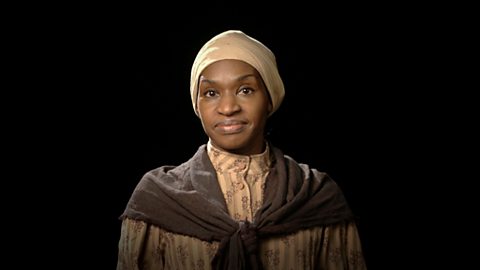
Mary Anning tells the story of her life and her astonishing fossil finds.
Told in the first person, and brought to life with a mix of drama, movement, music and animation.
We see Mary as a baby and then how, when growing up, she and her brother would spend hours on the beach with their father collecting what they called 'curiosities'.
They didn't know that these fascinating stones were really fossilised creatures that had died millions of years ago.
Mary was fascinated and, after meeting fossil expert Elizabeth Philpot, started to learn more about some of the emerging scientific ideas.
One day she made an astonishing discovery: a giant fossil of something the world had never seen before.
Men of science came to see the fossil and take it back to London to display in the British Museum.
This clip is from the series True Stories.
Teacher Notes
Questions to consider whilst watching the film
Depending on the focus of your lesson, you may wish to ask the following questions after the video or pause the short film at certain points to check for understanding.
- What remarkable event happened when Mary Anning was a baby?
- What did Mary Anning learn from her father?
- In what ways was Elizabeth Philpot an important influence on Mary Anning?
- What name was given to Anning’s astonishing discovery, and what did it mean?
- Why do you think the British Museum did not acknowledge Mary Anning as the person who discovered the fossils?
- How did the discovery of fossils change the Victorians’ thinking about the past?
Learning activities to explore after the video
History is a subject which can lend itself to a wide range of cross-curricular links. As a teacher, you will have a greater awareness of how this topic may act as stimulus for learning in other subjects. This topic, in particular, has explicit links to science and teachers may wish to arrange a visit to a local museum with a fossil collection. The suggestions contain both approaches to developing the children’s historical knowledge and understanding, as well as activities more closely related to the science curriculum.
Key Question: How should Mary Anning be remembered?
Historical enquiryThe story of Mary Anning, focusing on her life and achievements, can develop the pupils’ enquiry skills. In addition to this video, BBC Bitesize has a guide on Mary Anning. There is another short video along with visual sources, including photographs of the ichthyosaur and pages from her notebook.
There are also details about other significant discoveries made by her. Her life is becoming better known as historians find out more about the work of forgotten women in the past. The pupils’ learning could be demonstrated by producing their own Blue Plaque for Mary Anning and discussing why she should be remembered.
It is difficult to explore Mary Anning in any further depth without making links to science. This BBC Teach video looks at Mary Anning as a scientist, though in the first half of the clip there is some overlap in the content. However the second half focuses more on her scientific method.
In addition, there is this Live Lesson, which explores ‘how fossils are made and what they can tell us, the story of the real life fossil hunter Mary Anning, and the evolution of animals.’
If you have more curriculum time to devote to this topic, the Hamilton Trust has a series of four sessions, with lesson plans and resources, on Mary Anning and it places her work in the context of fossil hunting and science.
Learning aims or objectives
England
From the history national curriculumPupils should:
- understand the methods of historical enquiry, including how evidence is used rigorously to make historical claims.
Northern Ireland
From the statutory requirements for Key Stage 2: The World Around UsLinks can be made with the other learning areas:
- by researching and expressing opinions and ideas about people and places in the world around us, past, present and future
Scotland
From the Experiences and Outcomes for planning learning, teaching and assessment ofSecond Level Social Studies:
- I can use primary and secondary sources selectively to research events in the past.
- I can discuss why people and events from a particular time in the past were important, placing them within a historical sequence.
Wales
From the new Humanities Area of Learning and ExperienceSchool curriculum design for History should:
- develop understanding of, and respect for, the notion of truth and for people in the past.
- develop rich content across the time periods, through which learners can develop an understanding of chronology through exploring … the use of evidence.
Principles of progressionDescriptions of learning for Progression Step 2
Enquiry, exploration and investigation inspire curiosity about the world, its past, present and future:
- I have been curious and made suggestions for possible enquiries and have asked and responded to a range of questions during an enquiry.
- I have experienced a range of stimuli, and had opportunities to participate in enquiries, both collaboratively and with growing independence.
- I can collect and record information and data from given sources…
Edward Jenner. video
Edward Jenner tells the story of his life and the vaccination against smallpox.
Elizabeth Fry. video
Elizabeth Fry describes how she reformed life for prisoners and their families in prison.
Grace Darling. video
Grace Darling describes the night she and her father rowed out in a boat to save sailors.
Rosa Parks. video
How Rosa Parks refusing to give up her seat changed the rules of American society.
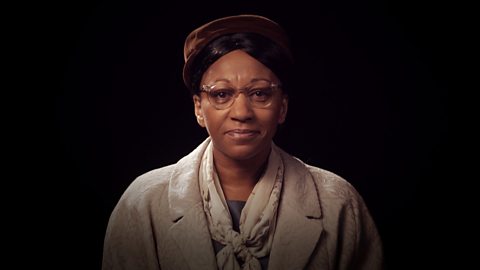
Thomas Barnardo. video
Thomas Barnardo tells the story of setting up his first home for London's street children.
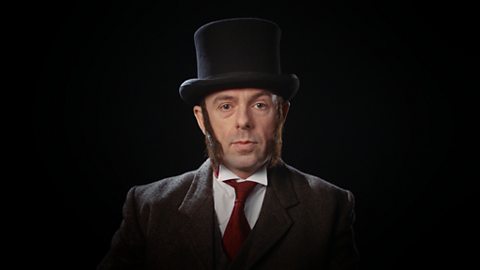
Alexander Graham Bell. video
Alexander Graham Bell tells the story of his life and describes how he invented the telephone.
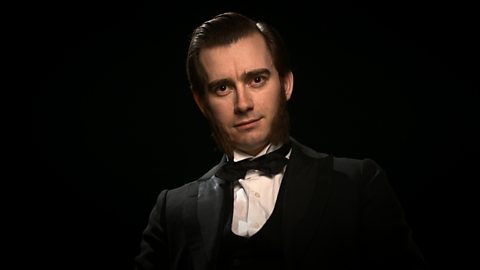
Florence Nightingale. video
Florence Nightingale tells the story of her life and how she grew up to become a nurse.
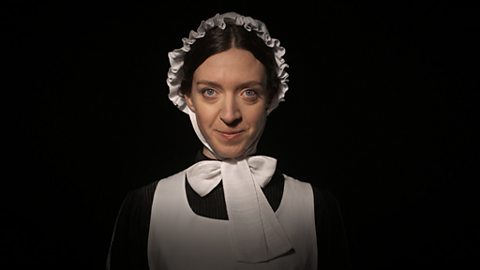
Harriet Tubman. video
Harriet Tubman explains how she escaped slavery and then helped others to do so.
Isambard Kingdom Brunel. video
Isambard Kingdom Brunel shares how he became an engineer and tunnelled through Box Hill.