Hello! (Oh, I can't see you. Um…) Oh! There you are… Hello! I'm Mary, Mary Anning. And welcome to my vlog! So, for you newbies who just subscribed to my channel, I am a paleontologist. I provide a window into the Jurassic past and the creatures that roamed the Earth billions of years ago before us humans. "Paleontologist." It's a pretty big word that, isn't it? What it means is that I'm a curiosity hunter. Curiosities are what I call these! - although I know their official name is a fossil. I've been doing this for quite a long time, and I am one of the first paleontologists to be recognised for it. I used to do it with my father and my bro, but, well, my father died when I was 12 so now I just do it by meself. Do you know, I almost died too when I was a baby. Three women were looking after me when a storm hit. The three of them were struck by lightning and died. God bless their souls. But I survived. Crazy, hey?!
Anyway, I wanted to share with you some of me finds. Now, they've all got strange names. This… is a lady's finger. This one is snake stool. This one is a devil's toenail. Oow! But, even better than all of this, I have found a massive piece of slate which I've been chipping away at, and I think I've found something pretty epic. I'll meet you back in me workshop, where I'll show you exactly what I've found!
Hi! And welcome to me workshop! This is where I spend my time chipping away at fossils. It can take months sometimes to uncover some of these beauties. It's very important for me to carry out the process of excavating slowly and carefully. When I've finally uncovered them I research in my books to find out what creatures they are. Part of me job as a paleontologist is using scientific method, the most important steps being: observation, recording data and concluding. I've recorded all my findings on this fossil so I have a record of where I found it, the date, the size and its species name.
So, this is my biggest find! And I wanted to give you guys a sneak peek before it goes off to London with another scientist who's planning on putting it in the Museum of London! This bad boy is called a plesiosaur. I also discovered ammonite, and belemnite, also an ichthyosaur, and even dinosaur poo. Even poo has a fancy name. It's called coprolite. Finding the plesiosaur has not only been a BIG discovery for science but… it's also made me a pretty penny or two! I got 10 whole pounds for this! Can you believe it!?
My discoveries have helped the scientists reconstruct the history of life on Earth and even give us an insight into not only how many million years' old the Earth is but also what animals once roamed it. I've a feeling that this is the start of BIG things to come. There's another Jurassic creature that I've got my eye on, and it's called the pterosaur. It's a flying dragon-type reptile. If I could find one of those I'd be made up.
Unfortunately, though, being a woman and poor means I aren't actually getting the recognition I should for my discoveries as a paleontologist. They're bought by scientists in London and my name gets forgotten. Well, here's hoping my SciTube channel takes off, and maybe, in years to come, I'll be remembered as the great scientist that I am! Next time you're on the beach why not keep your eye out for some curiosities? Ooh, I mean fossils! Well, that's all from me. So, bye! Bye, me lovelies!
Video summary
This film explores how Mary Anning used her findings to gain an insight into the Jurassic past.
She lived in Dorset in 1823 and used to go fossil hunting in Lyme Regis. She was one of the first palaeontologists and originally worked with her father.
In this vlog style video she explains the scientific method of observing, recording data and concluding.
She also outlines how she uses scientific method and process to think about fossils found in rocks, and how to classify them using recently developed classification systems.
Mary Anning was an early female scientist who had her fossils placed in a museum in London.
She found a large plesiosaur, which means fish lizard, some ammonites and belemnites.
She also found an ichthyosaurus and dinosaur ‘poo’ which is called coprolite. Then a pterosaur which is a flying reptile.
Her work helped scientists gain an insight into how many million years old the earth is, and the animals that roamed the planet.
This clip is from the series Scientists and their discoveries.
Teacher Notes
As a starter to introduce a practical science activity, you could write a simple quiz to encourage pupils to capture the keywords shown in the video.
Pupils can write their own definitions from these words using the internet or science dictionaries to improve their scientific vocabularies.
To consolidate their knowledge, you could get pupils to make booklets that include key information about Mary Anning and her work.
They could define the keywords featured in the film, and find five or more pieces of additional pieces of information about the work of the scientist using books, encyclopedias or the internet.
Suitable for teaching Science at Key Stage 2 in England, Wales and Northern Ireland and at 2nd Level in Scotland. They also have cross-curricular links with History and Literacy.
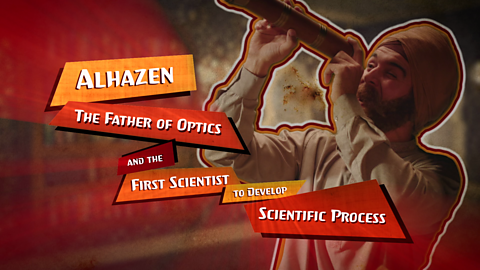
The work of the ‘father of optics’ Alhazen. video
This vlog style film introduces the work of Alhazen, and the scientific discoveries that he made about optics and the eye.
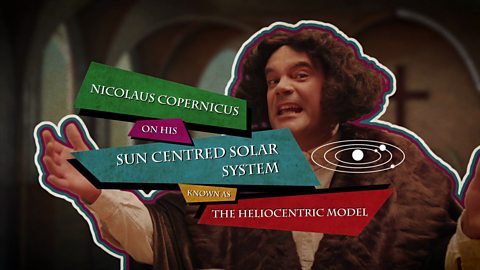
The work of Nicolaus Copernicus. video
This vlog style film introduces the work of Nicolaus Copernicus, and the scientific discoveries he made about the solar system.
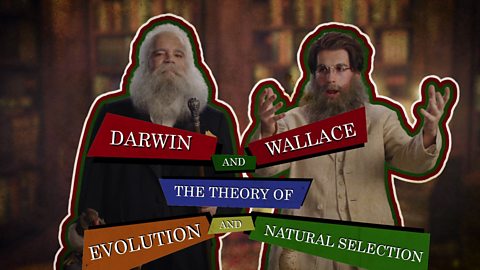
The work of Charles Darwin and Alfred Wallace. video
This vlog style film looks at how Charles Darwin and Alfred Wallace came up with the theory of evolution and natural selection.
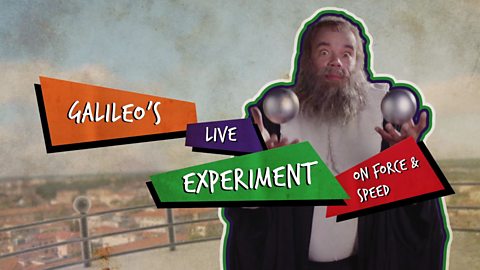
The work of Galileo Galilei. video
This vlog style film explores the work of Galileo Galilei around forces, and how they work.
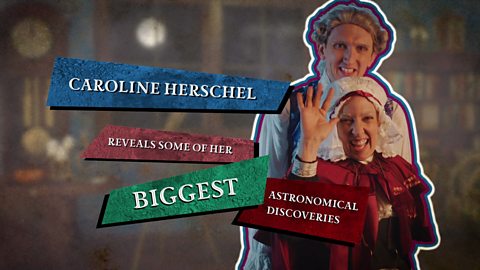
The work of Caroline and William Herschel. video
This vlog style film introduces the work of Caroline Herschel and and her brother William Herschel.
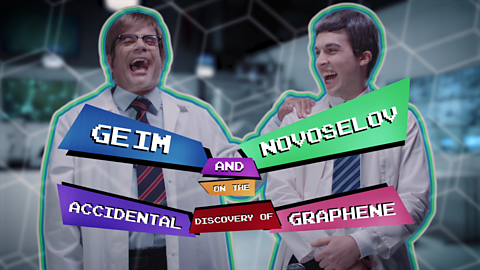
The work of Andre Geim and Konstantin Novoselov. video
This vlog style film explores how two Russian scientists, Geim and Novoselov, accidentally discovered a 'wonder material' called graphene.
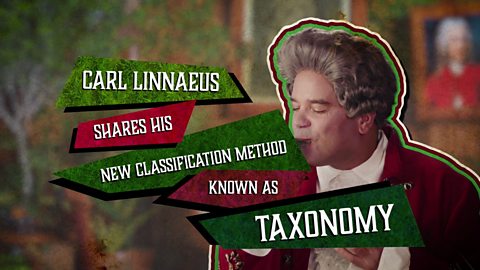
The work of Carl Linnaeus. video
This vlog style film introduces the work of Swedish scientist, Carl Linnaeus. He talks about his scientific method - taxonomy - used for classifying plants, animals and stones.
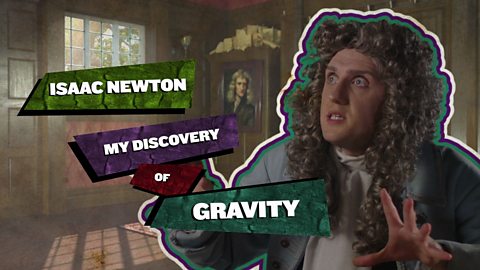
The work of Sir Isaac Newton. video
This vlog style film explores the work of Sir Isaac Newton as a physicist and astronomer, and how he made one of his biggest discoveries - gravity.