CARL LINNAEUS:
What's up, peeps? Oh do you like my relaxation tape? It's called sounds from the jungle.Welcome to my vlog, guys. All the way from my home town here in Sweden. I'm Carl Linnaeus, For those of you who is new to my channel, I am a botanist and zoologist, which basically means not only that I love plants and animals, but that I am a scientist who specialises in the science of plants and animals.
Today I wanted to share with you, my lovely subscribers, my biggest scientific achievement.Taxonomy is a one-stop shop for all the info you need to know about an organism and how to determine what it is. An organism is a single living thing, so it can be an animal, plant, or a single-celled lifeform, got it?
I'll give you some inside info on my scientific method of formally classifying and naming organisms according to their genus and species.I formed the system of taxonomy when I was sent to Lapland on a research expedition. It was there that I started to gather data and samples of plants. I put into practice practical scientific method. This involved the key skill of observation, collecting data and recording my findings.
Prior to my method, it had been difficult to work out which species were related and where new species belonged.So, exclusively for you guys, I am going to tell you the classifications that I have broken down animals into. They are: classis 1 - mammals, classis 2 - birds, classis 3 - amphibians, classis 4 - fish, classis 5 - insects, classis 6 - worms. Pretty ingenious, hey?It also helps that creating this classification has made me pretty popular. Let's just say my subscribers have certainly gone up since I devised it.
My new system means each organism will have a two-part Latin scientific name. The system I devised classified different organisms through hierarchy. Hierarchy meaning how important and powerful each organism is. This determines each organism's ranking.The most amazing thing about what I 've developed is that every plant and animal, including us humans, is classified under a group, so no matter what language you speak and where you are across the world, the group of organisms will always be called the same.Take us humans, for example, we will always be classified as homo sapiens, no matter where someone might be in the world. And a house cat will be felus catus. It's ingenious isn't it. Even if I do say so myself.
I put my findings into a book in 1753 which is called 'The System of Nature'. I'm hoping my book really takes off. It's available now if any of you lovely subscribers want to buy it.
My peeps, so now that I've told you what organisms are classified under, you will be able to put this into practice and test it out for yourselves. Maybe you could use the system of taxonomy to work out what category a dog or a rabbit falls into.I've got to dash as I'm going on another expedition for some petrea samples, oh, and just so you know, petrea are rocks. Bye-eeee!
Video summary
In this vlog style film, Carl Linnaeus, talks about his scientific method of classifying plants, animals and stones.
He explains his new classification system, which is known as taxonomy, and how it helps us determine what an organism is.
The naming is decided by their genus and species.
We learn about how he came up with the idea on a research visit to Lapland.
His scientific process involved observing, recording the information and making conclusions.
He divided animals into seven classes: 1. mammals, 2. Birds, 3.amphibians, 4. Fish, 5. Insects, 6. Worms.
He gave each organism a two part Latin scientific name and used hierarchy, which showed how important each animal was.
The system could be used across the whole world.
Humans are homo sapiens; a house cat would be felus catus.
We learn about a book he wrote book called the System of Nature. He challenges his audience to classify a dog or a rabbit. We learn key scientific terminology and skills throughout the film.
The process shows an example of thinking skills.
This clip is from the series Scientists and their discoveries.
Teacher Notes
As a starter to introduce a practical science activity, you could write a simple quiz to encourage pupils to capture the keywords shown in the video.
Pupils could write their own definitions from these words using the internet, or science dictionaries to improve their scientific vocabularies.
Pupils could use pictures, books and films to identify animals in different locations, like the desert, jungle etc.
Suitable for teaching Science at Key Stage 2 in England, Wales and Northern Ireland and at 2nd Level in Scotland. They also have cross-curricular links with History and Literacy.
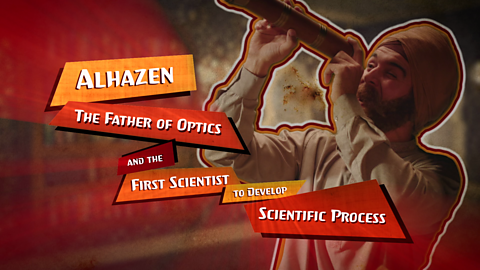
The work of the ‘father of optics’ Alhazen. video
This vlog style film introduces the work of Alhazen, and the scientific discoveries that he made about optics and the eye.
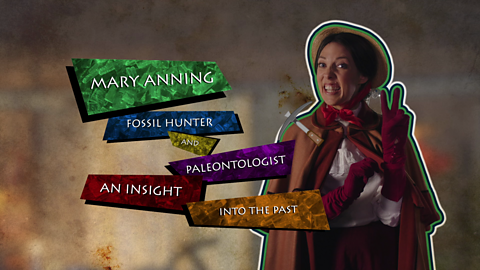
The work of Mary Anning. video
This vlog style film explores the work of Mary Anning; the famous paleontologist and fossil hunter.
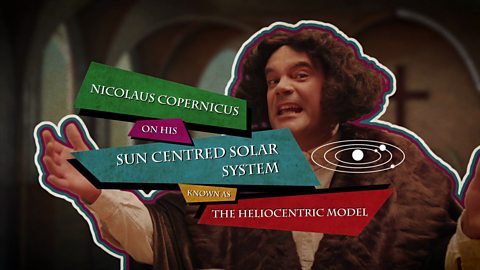
The work of Nicolaus Copernicus. video
This vlog style film introduces the work of Nicolaus Copernicus, and the scientific discoveries he made about the solar system.
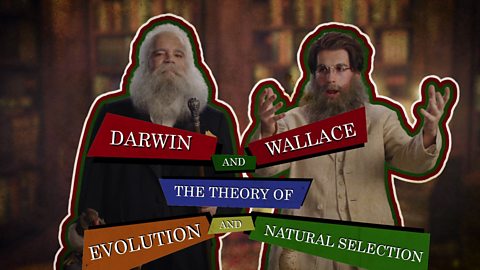
The work of Charles Darwin and Alfred Wallace. video
This vlog style film looks at how Charles Darwin and Alfred Wallace came up with the theory of evolution and natural selection.
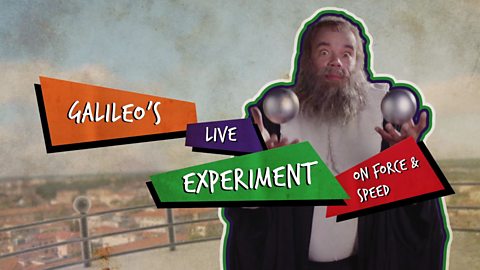
The work of Galileo Galilei. video
This vlog style film explores the work of Galileo Galilei around forces, and how they work.
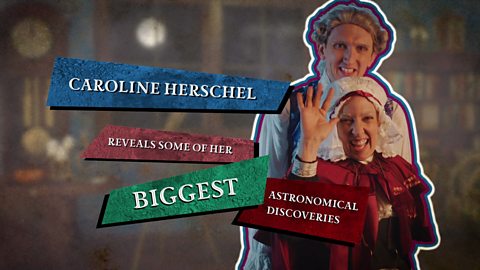
The work of Caroline and William Herschel. video
This vlog style film introduces the work of Caroline Herschel and and her brother William Herschel.
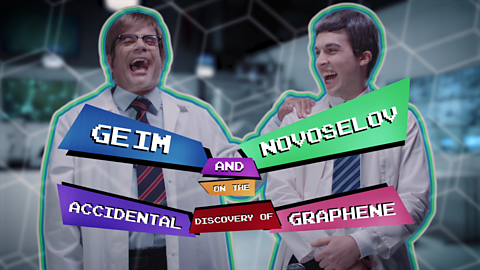
The work of Andre Geim and Konstantin Novoselov. video
This vlog style film explores how two Russian scientists, Geim and Novoselov, accidentally discovered a 'wonder material' called graphene.
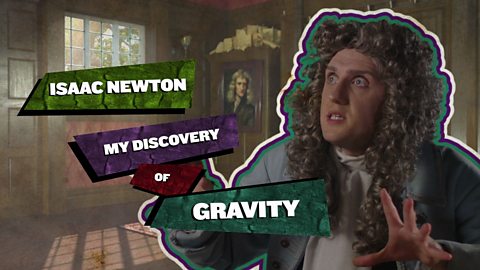
The work of Sir Isaac Newton. video
This vlog style film explores the work of Sir Isaac Newton as a physicist and astronomer, and how he made one of his biggest discoveries - gravity.