ALHAZEN:
Hi guys, for those who are new to my channel, I am Alhazen, also known as the father of modern optics. I'm an Arabic scientist living in Egypt. Not to show off, but it is actually due to me and the scientific discoveries I have made that you are able to watch this film. I created the foundation for cameras through my work in optics.
So you guys are probably thinking, yeah you are a scientist, but what have you actually done? Well my friends, I'm the first scientist in the world to do an actual scientific experiment. I don't just speculate on what I think the science behind something is, like earlier scientists. [coughing] Aristotle, Euclid.
But I actually physically carry out an experiment using scientific processes, to prove or disprove my theories. So I'm just lying low, doing my own thing…The thing is basically being a physicist and a mathematician. You see these things here, well they are my main focus. Lol. [laughs] Focus, you know, eyes, focus.
Optics is the study of light, what I've been trying to work out is exactly how these peepers work, you know those old school Greek philosophers Euclid and Aristotle had different theories on how eyes work.My theory is that I think we are able to see things when light coming from the sun enters our eyes after bouncing off an object. Not when our eyes radiate light sparkles like a lightbulb. Mm p-lease!
So, this is when scientific method comes into play, you first research and carry out observations on existing theories, so in my case, Aristotle's and Euclid's. You then establish your hypothesis.
Once you have done this, it is time to put it to the test, I am so not about abstract reasoning. Science for me is all about experiment. Take eyes for example, I've been investigating them, studying how they work, don't worry, they're not human eyes, I got them from a bull.
I've been cutting them open and uh looking at the structure of them.I wanted to also share with you guys a theory that I've just proven. I started experimenting with how light travels. The experiment I carried out is that I created a small hole outside of one of the rooms letting light in from two lanterns that were placed at different heights. I observed that the two lanterns created two different spots on the wall where the light had travelled to.
What I found really cool is that the light from these holes seem to travel in straight lines, it just goes to show what experimentation can really reveal. Anyway, I've got another… 45 books to write, so I must get on. I'm aiming for… 92 in total before I die, and I’m also pretty busy making observations of the night sky through my telescope.
Remember, when you next look in the mirror and you see your reflection looking back at you, that's because light from the sun is bouncing off your face, off the mirror and into your eyes. Anyway, got to go, SEE ya later. [chuckles] There I go again, I'm so funny!
Video summary
In this vlog style film, Alhazen talks about being a physicist and mathematician, with a specialism in optics and light.
He explains that we see because light bounces off objects into our eyes. He outlines the need for observations and making a hypothesis, not just using abstract reasoning.
He goes on to explain his theory that light travels in straight line, and how he proved this by carrying out an experiment with two lanterns.
This clip is from the series Scientists and Scientific Method.
Teacher Notes
In this vlog style film, Alhazen talks about being a physicist and mathematician, with a specialism in optics and light.
He explains that we see because light bounces off objects into our eyes.
He outlines the need for observations and making a hypothesis, not just using abstract reasoning.
He goes on to explain his theory that light travels in straight line, and how he proved this by carrying out an experiment with two lanterns.
Suitable for teaching Science at Key Stage 2 in England, Wales and Northern Ireland and at 2nd Level in Scotland. They also have cross-curricular links with History and Literacy.
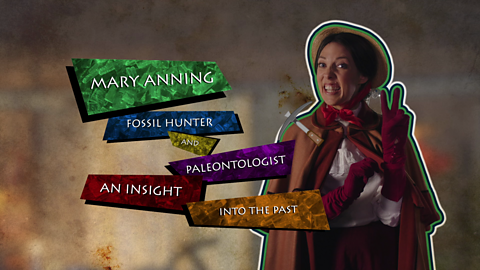
The work of Mary Anning. video
This vlog style film explores the work of Mary Anning; the famous paleontologist and fossil hunter.
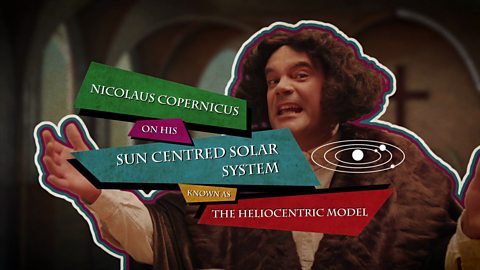
The work of Nicolaus Copernicus. video
This vlog style film introduces the work of Nicolaus Copernicus, and the scientific discoveries he made about the solar system.
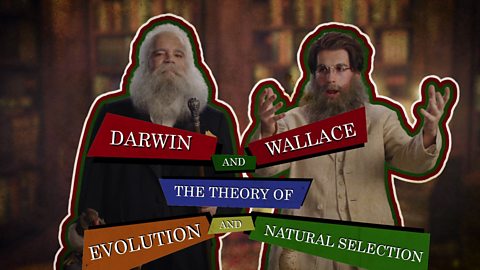
The work of Charles Darwin and Alfred Wallace. video
This vlog style film looks at how Charles Darwin and Alfred Wallace came up with the theory of evolution and natural selection.
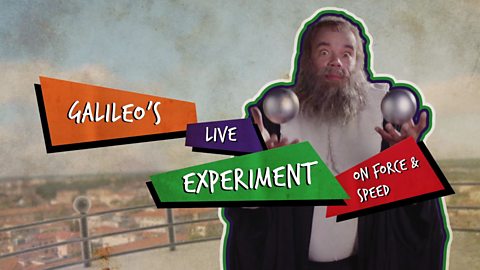
The work of Galileo Galilei. video
This vlog style film explores the work of Galileo Galilei around forces, and how they work.
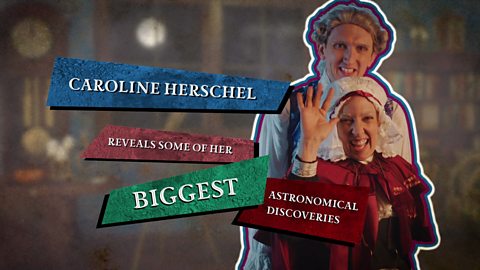
The work of Caroline and William Herschel. video
This vlog style film introduces the work of Caroline Herschel and and her brother William Herschel.
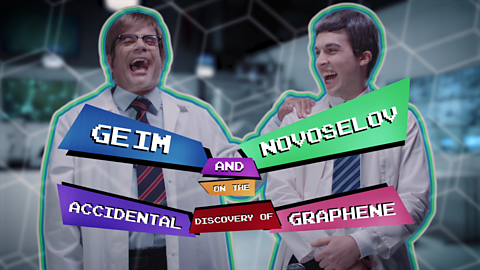
The work of Andre Geim and Konstantin Novoselov. video
This vlog style film explores how two Russian scientists, Geim and Novoselov, accidentally discovered a 'wonder material' called graphene.
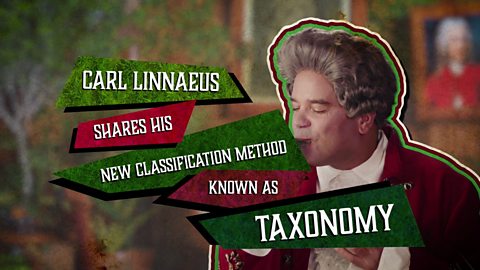
The work of Carl Linnaeus. video
This vlog style film introduces the work of Swedish scientist, Carl Linnaeus. He talks about his scientific method - taxonomy - used for classifying plants, animals and stones.
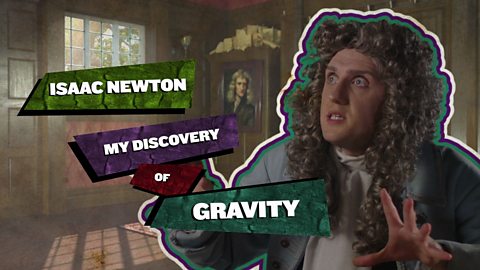
The work of Sir Isaac Newton. video
This vlog style film explores the work of Sir Isaac Newton as a physicist and astronomer, and how he made one of his biggest discoveries - gravity.