GALILEO:
Good morning, guys, I hope you're having a lovely day. I am Galileo Galilei, a scientist from Italy and I am the man who is making some exciting discoveries around force and I am here today to share them with you.I am here at the top of the Leaning Tower of Pisa and I bet you're all wondering what am I doing here, right? Well, it's 1589, and I am here to carry out an experiment about force.
Now force is the push and pull on an object and I'm not so sure that Aristotle's theory around force is correct and people have believed it for well over 1500 years. He reckons that objects that are heavier fall at a faster speed than the light ones, but the experiment that I am about to do, will prove that this is incorrect.
Well, I hear ya, you want to know what experiment I'm going to be doing and what my scientific method is. Well, I'll tell ya! These two steel balls are both different weights and I’m going to drop them from the top of the tower and see which one reaches the bottom first, record my findings and then I'm going to do this a couple of times to make sure my results are accurate. Sounds pretty awesome, hey?
Scientific method is key. First you start by posing, or developing a scientific question, and my scientific question is: does objects of different weights fall at different speed, or do they fall at the same speed?
I then started to carry out research into existing theories. So, Aristotle's workings on the subject of force. Then I made observations and formed my theory or hypothesis. And then it's time to carry out the experiment. But before I do, I want to share with you my hypothesis.
I reckon that Aristotle's theory is going to be blown at the top of this tower. Pow! I reckon that these two balls are going to fall at exactly the same speed, regardless of one being heavier than the other. Only one way to find out. Let's drop these bad boys and see what happens. [yells] I'll have to do it again.
Let's drop these bad boys. [yells] Right, I am ready to do this. Let's drop these bad boys.Out of the way down there. Off they go and they're neck and neck. Oh no, it's hit the side of the building. Ahh one just edged it. One of the skills of scientific method is to improve the experiment you have designed to make it more accurate.
So I will have to carry this out again and again and record my results very, very carefully. Recording data is key to scientific method.They both, as I predicted, fell at the same speed. [laughs] Aristotle was wrong, and I was right. [laughs] Who's the man? I'm the man. The problem with this guy, Aristotle, is that he just didn't carry out any experiments to back his theories, and you can probably tell by now, that I am all about experiment.
And this is my thinking in the law of gravity. Although it still obviously needs a bit of work, but you have my conclusion.I wonder, is force affected by water? Next time you're in the bath, try and drop two objects of different weights into the water and see what happens. That's all for my vlog today, guys. Bye for now. Oh and don't forget to tune in in 1609, to see my 'How To' film on creating your own telescope. Bye-ee!
Video summary
This vlog style film recreates a famous experiment in which Galileo, an Italian scientist, dropped two objects from the Leaning tower of Pisa in 1589.
He explains that he did the experiment to show the pull of gravity on an object is the same, regardless of their different weights.
He explains that force is a push or pull on an object.
He goes on to dispute Aristotle’s theory of force, and introduces the concept of posing a scientific questions (hypothesising) before experimenting.
This clip is from the series Scientists and their discoveries.
Teacher Notes
As a starter to introduce a practical science activity, you could write a simple quiz to encourage pupils to capture the keywords shown in the video.
Pupils can write their own definitions from these words using the internet or science dictionaries to improve their scientific vocabularies.
To consolidate their knowledge, you could get pupils to make booklets that include key information about the work of Galileo Galilei.
They could define the keywords featured in the film, and find five or more pieces of additional pieces of information about the work of the scientists using books, encyclopedias or the internet.
Suitable for teaching Science at Key Stage 2 in England, Wales and Northern Ireland and at 2nd Level in Scotland. They also have cross-curricular links with History and Literacy.
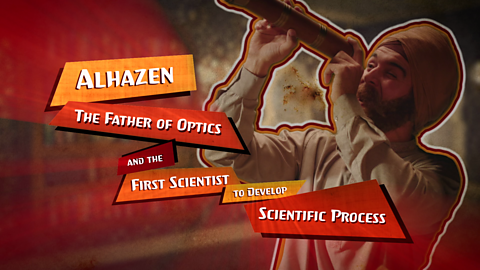
The work of the ‘father of optics’ Alhazen. video
This vlog style film introduces the work of Alhazen, and the scientific discoveries that he made about optics and the eye.
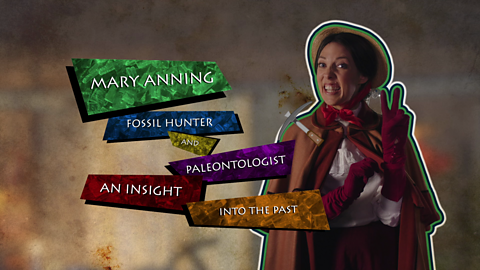
The work of Mary Anning. video
This vlog style film explores the work of Mary Anning; the famous paleontologist and fossil hunter.
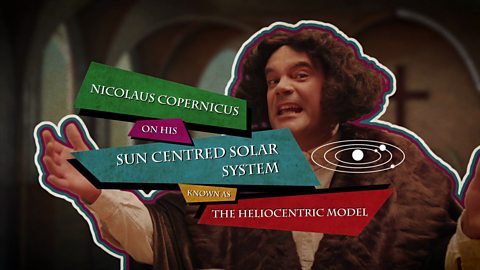
The work of Nicolaus Copernicus. video
This vlog style film introduces the work of Nicolaus Copernicus, and the scientific discoveries he made about the solar system.
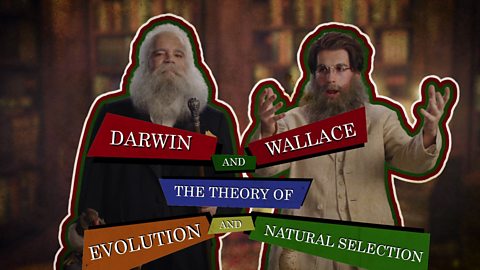
The work of Charles Darwin and Alfred Wallace. video
This vlog style film looks at how Charles Darwin and Alfred Wallace came up with the theory of evolution and natural selection.
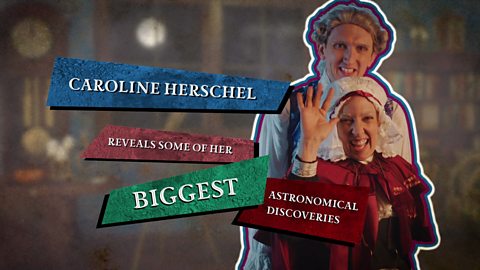
The work of Caroline and William Herschel. video
This vlog style film introduces the work of Caroline Herschel and and her brother William Herschel.
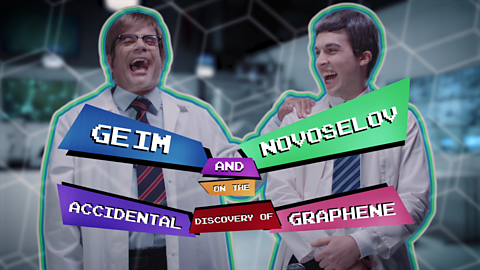
The work of Andre Geim and Konstantin Novoselov. video
This vlog style film explores how two Russian scientists, Geim and Novoselov, accidentally discovered a 'wonder material' called graphene.
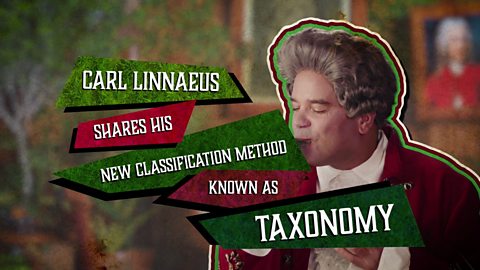
The work of Carl Linnaeus. video
This vlog style film introduces the work of Swedish scientist, Carl Linnaeus. He talks about his scientific method - taxonomy - used for classifying plants, animals and stones.
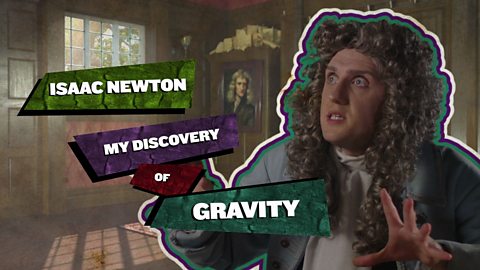
The work of Sir Isaac Newton. video
This vlog style film explores the work of Sir Isaac Newton as a physicist and astronomer, and how he made one of his biggest discoveries - gravity.