CAROLINE HERSCHEL: Are they recording? William, press record will you?
WILLIAM HERSCHEL: We are rolling, Caz, chill out.
CAROLINE HERSCHEL: Oh hello SciTubers! I am Caroline Herschel and this-, this is my brother, William Herschel.
WILLIAM HERSCHEL: Sir William Herschel.
CAROLINE HERSCHEL: We are astronomers, originally from Germany but living in England. So basically we study planets and the solar system and stuff like that, don't we Will?
WILLIAM HERSCHEL: Yes, we do. [chuckles]
CAROLINE HERSCHEL: So, I just discovered a comet. And I get it named after me, check me out.
WILLIAM HERSCHEL: And I just discovered the planet, Uranus.
CAROLINE HERSCHEL: Will, this is my channel, Will. Can you stop talking about your stuff?
CAROLINE HERSCHEL: [chuckles] So let me tell you about my comet discovery. So I'm in Slough, yeah, observing the night sky through my telescope when I spot a difference. There was a slow moving object, that object only turns out to be… a comet!Comets are huge lumps in space made of gas and ice. This discovery makes me the first woman in science to ever spot a comet. And I've only gone and named it after myself haven't I? It's the 35P/Herschel-Rigollet comet.
CAROLINE HERSCHEL: So, I've been pretty busy since my last vlog, if you haven't seen that one, it's about me being officially appointed as William’s assistant and becoming the first ever woman in science to be paid. I now get 50 whole pounds, that's equivalent of around 3000 pounds in your times. Ka-ching!
CAROLINE HERSCHEL: Anyways, whilst I’ve been helping Will, I have made lots of observations and documented a lot of findings.
WILLIAM HERSCHEL: A lot!
CAROLINE HERSCHEL: We recorded 2500 nebulae. Nebulae are huge clouds in space made of dust and gases.
WILLIAM HERSCHEL: We are good, aren't we? And the list we have created documenting them all is called-
CAROLINE HERSCHEL: 'The Catalogue of Nebulae and Clusters of Stars.' Or for short…
WILLIAM HERSCHEL: The CN.
CAROLINE HERSCHEL: This catalogue is the result of the key skills of scientific method used in astronomy.
CAROLINE HERSCHEL: This involves making real observations of the night sky, night after night, and looking for changes or variations. You need to have a lot of patience and a keen eye for detail as sometimes the changes are subtle.
WILLIAM HERSCHEL: Caroline then records the findings precisely.
CAROLINE HERSCHEL: I draw the position of the comets and the nebulae, like this. I am rocking this astronomy; I might even win a gold medal from the King of Prussia. Or from the Royal Astronomical Society. How jealous would you be then, William?
WILLIAM HERSCHEL: Yes, not jealous at all, you only have this many followers and subscribers 'cause of me anyway.
CAROLINE HERSCHEL: Will, lol. Please.
CAROLINE HERSCHEL: Each time you look up at the night sky, try and see if anything has changed and you might just spot something incredible.
WILLIAM HERSCHEL: After all, many scientists believe there are countless planets in our solar system that are still waiting to be discovered.
CAROLINE HERSCHEL: And how awesome would it be to have a planet you discovered named after you. Anyway, bye for now, love you guys. [together] Bye-bye. Bye.
WILLIAM HERSCHEL: What are you doing? [chuckling] Bye. Why y-, why you do this? Why you always do this every time we-? I am not doing it. I am not do-, don't touch me!
CAROLINE HERSCHEL: Bye.
Video summary
This vlog style film introduces Caroline Herschel and her brother William.
Caroline talks about their work studying the planets and the solar system, and shares her astronomical discoveries, including comets and nebulae.
She also explains how she was the first woman to discover a comet, which was subsequently named after her, 35 P Herschel-Rigollet.
William talks about how he discovered the planet Uranus.
After being made an assistant to her brother, Caroline Herschel was the first woman to be paid for scientific work.
She made many observations and found 2500 nebulae, summarised in a list called the catalogue of nebulae and clusters of stars – abbreviated to CN.
She recorded her findings precisely by drawing the nebulae.
This clip is from the series Scientists and their discoveries.
Teacher Notes
As a starter to introduce a practical science activity, you could write a simple quiz to encourage pupils to capture the keywords shown in the video.
Pupils can write their own definitions from these words using the internet or science dictionaries to improve their scientific vocabularies.
To consolidate their knowledge, you could get pupils to make booklets that include key information about the work of Caroline and William Herschel.
They could define the keywords featured in the film, and find five or more pieces of additional pieces of information about the work of the scientists using books, encyclopedias or the internet.
Suitable for teaching Science at Key Stage 2 in England, Wales and Northern Ireland and at 2nd Level in Scotland. They also have cross-curricular links with History and Literacy.
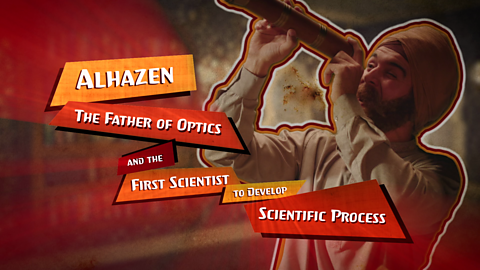
The work of the ‘father of optics’ Alhazen. video
This vlog style film introduces the work of Alhazen, and the scientific discoveries that he made about optics and the eye.
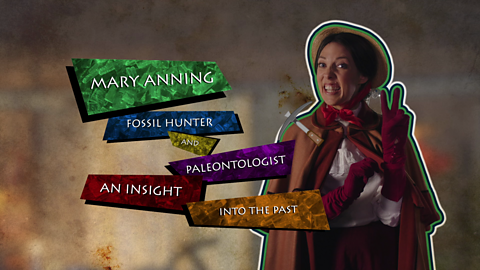
The work of Mary Anning. video
This vlog style film explores the work of Mary Anning; the famous paleontologist and fossil hunter.
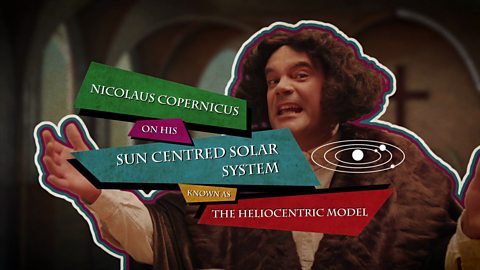
The work of Nicolaus Copernicus. video
This vlog style film introduces the work of Nicolaus Copernicus, and the scientific discoveries he made about the solar system.
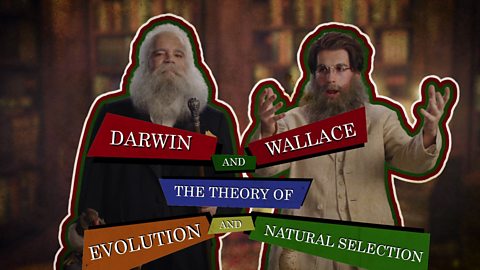
The work of Charles Darwin and Alfred Wallace. video
This vlog style film looks at how Charles Darwin and Alfred Wallace came up with the theory of evolution and natural selection.
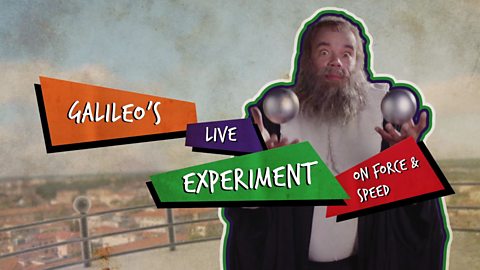
The work of Galileo Galilei. video
This vlog style film explores the work of Galileo Galilei around forces, and how they work.
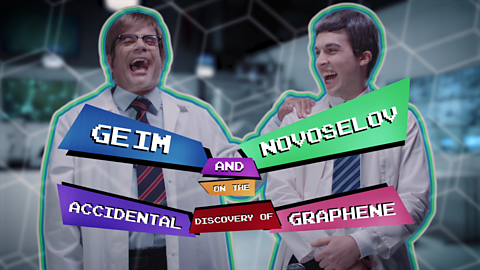
The work of Andre Geim and Konstantin Novoselov. video
This vlog style film explores how two Russian scientists, Geim and Novoselov, accidentally discovered a 'wonder material' called graphene.
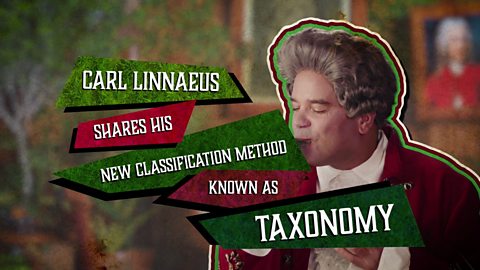
The work of Carl Linnaeus. video
This vlog style film introduces the work of Swedish scientist, Carl Linnaeus. He talks about his scientific method - taxonomy - used for classifying plants, animals and stones.
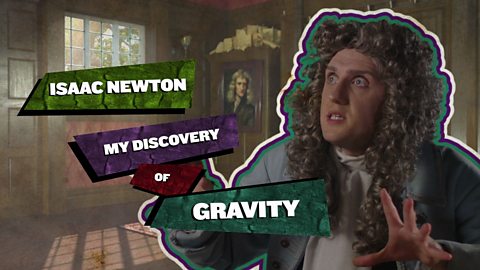
The work of Sir Isaac Newton. video
This vlog style film explores the work of Sir Isaac Newton as a physicist and astronomer, and how he made one of his biggest discoveries - gravity.