ANDRE GEIM: We are rolling.
KONSTANTIN NOVOSELOV: Action! I've always wanted to shout that.ANDRE GEIM: [laughs]
ANDRE GEIM: Hi, guys, Andre Geim here, the German Russian physicist from Manchester University and…
KONSTANTIN NOVOSELOV: And Konstantin Novoselov, another Russian physicist also from Manchester Uni. We wanted to share with you one of the biggest discoveries in modern science, which is pretty impressive.
ANDRE GEIM: Very, very impressive.
KONSTANTIN NOVOSELOV: We discovered the one and only-
ANDRE GEIM: -graphene. One of the strongest and most versatile materials in the world. So, how did we make this epic discovery? Through experimentation and the change in our scientific method.
ANDRE GEIM: One Friday afternoon in October, 2004, we were carrying out an experiment; we were tinkering with some graphite.
KONSTANTIN NOVOSELOV: Graphite is the material found in pencil lead, it is used in lots of experiments and-
ANDRE GEIM: -we were exploring its electrical properties and, as normal, towards the end of our experiment, we pulled out this old trusty favourite.
KONSTANTIN NOVOSELOV: Our sticky tape!
ANDRE GEIM: We used it to clean the graphite as it removes any leftover atoms off the rocks.
KONSTANTIN NOVOSELOV: Then, we usually peel it off and then sling it straight in the bin.
ANDRE GEIM: We then usually crack on and use the rock for another experiment.
KONSTANTIN NOVOSELOV: Only this time, we didn't. We changed our scientific process.
ANDRE GEIM: We throw the graphite and kept the sticky tape. [both laugh]
ANDRE GEIM: We thought we would experiment with the sticky tape so we put the tape under the microscope observing the flakes of graphite, and we noticed that there were layers that were different thicknesses.
KONSTANTIN NOVOSELOV: And then we had a eureka moment where we devised a new hypothesis and began a new experiment.
ANDRE GEIM: Which was if we kept using pieces of sticky tape and repeated the process of peeling back another layer.
KONSTANTIN NOVOSELOV: Until the thinnest layer possible, we could get it down to one layer thick.
ANDRE GEIM: And then finally, graphene-
KONSTANTIN NOVOSELOV: -was born. We had proven our hypothesis was right! [both laugh]
ANDRE GEIM: Graphene is only one atom thick, so put that into perspective, it is 100,000 times thinner than one human hair.
KONSTANTIN NOVOSELOV: We made this material as thin as possible inside it is shaped like honeycomb. Graphene is extremely strong being the strongest material ever discovered. It also has lots of other amazing properties such as…
ANDRE GEIM: Being a great conductor of heat,KONSTANTIN NOVOSELOV: And electricity.
ANDRE GEIM: It's very, very dense.
KONSTANTIN NOVOSELOV: But is also very lightweight and flexible.
ANDRE GEIM: And not to mention, transparent. It has been used in tyres.
KONSTANTIN NOVOSELOV: In microchips for computers.
ANDRE GEIM: In LED lamp.
KONSTANTIN NOVOSELOV: And phone batteries.
ANDRE GEIM: Although people have started to use graphene for new products, we as scientists are still open to some suggestions.
KONSTANTIN NOVOSELOV: Any ideas spring to mind of how it can be used?
ANDRE GEIM: We have just been nominated for the 2010 Nobel prize for physics! [both laugh] There we go!
ANDRE GEIM: You could one day win a Nobel prize using pencil lead and sticky tape, all it takes is for you to have a seed of an idea and lots of enthusiasm. Anyway, we can't hang around.
KONSTANTIN NOVOSELOV: You know how it is, places to go,
ANDRE GEIM: People to see. [both laugh] [coughs]
KONSTANTIN NOVOSELOV: Bye-e!
Video summary
This vlog style film introduces two Russian scientists, Andre Geim and Konstantin Novoselov, working at Manchester University.
They talk about the experiment they were carrying out when they accidentally discovered the process for extracting an amazing material called graphene in 2004.
They talk about their scientific method and hypothesis, and how, by stripping away layers of graphite with strips of sticky tape, they made their discovery.
They talk about how they carried out the experiment by examining the sticky tape under a microscope, to see the flakes of graphite and noticed there were layers of different thicknesses.
They repeated the experiment over and over again until the graphite was one layer thick.
They explain how Graphene has many unusual properties.
We learn that they were awarded the 2010 Nobel Prize in Physics for their pioneering research.
This clip is from the series Scientists and their discoveries.
Teacher Notes
As a starter to introduce a practical science activity, you could write a simple quiz to encourage pupils to capture the keywords shown in the video.
Pupils can write their own definitions from these words using the internet or science dictionaries to improve their scientific vocabularies.
To consolidate their knowledge, you could get pupils to make booklets that include key information about the work of Sir Issac Newton.
They could define the keywords featured in the film, and find five or more pieces of additional pieces of information about the work of the scientists using books, encyclopedias or the internet.
Suitable for teaching Science at Key Stage 2 in England, Wales and Northern Ireland and at 2nd Level in Scotland. They also have cross-curricular links with History and Literacy.
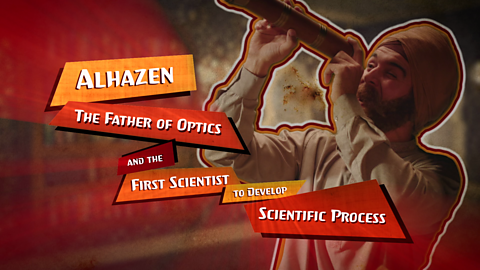
The work of the ‘father of optics’ Alhazen. video
This vlog style film introduces the work of Alhazen, and the scientific discoveries that he made about optics and the eye.
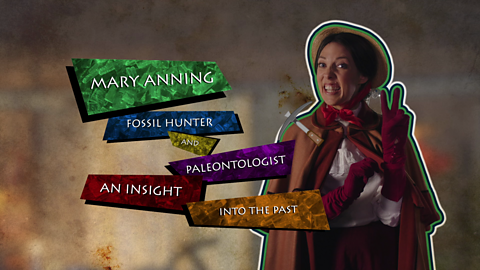
The work of Mary Anning. video
This vlog style film explores the work of Mary Anning; the famous paleontologist and fossil hunter.
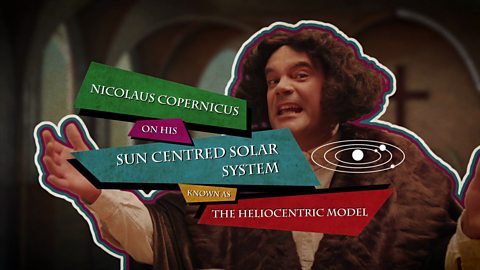
The work of Nicolaus Copernicus. video
This vlog style film introduces the work of Nicolaus Copernicus, and the scientific discoveries he made about the solar system.
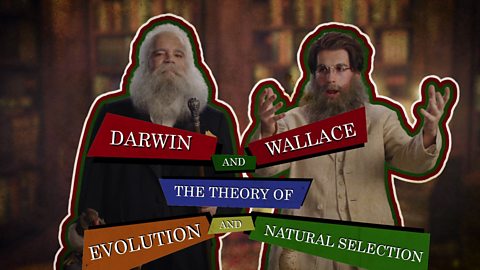
The work of Charles Darwin and Alfred Wallace. video
This vlog style film looks at how Charles Darwin and Alfred Wallace came up with the theory of evolution and natural selection.
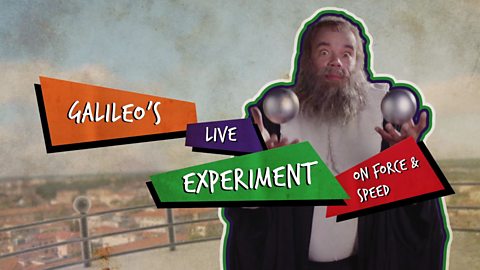
The work of Galileo Galilei. video
This vlog style film explores the work of Galileo Galilei around forces, and how they work.
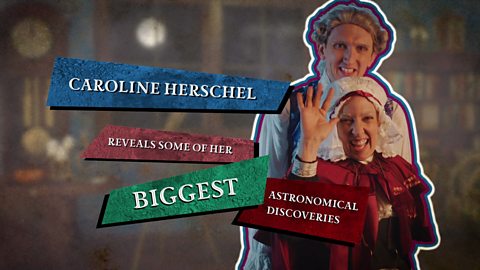
The work of Caroline and William Herschel. video
This vlog style film introduces the work of Caroline Herschel and and her brother William Herschel.
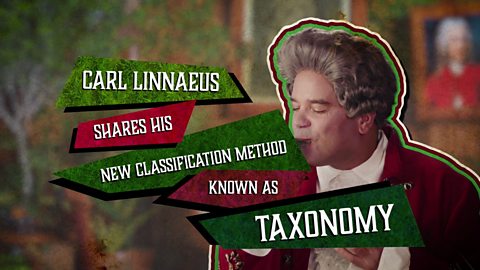
The work of Carl Linnaeus. video
This vlog style film introduces the work of Swedish scientist, Carl Linnaeus. He talks about his scientific method - taxonomy - used for classifying plants, animals and stones.
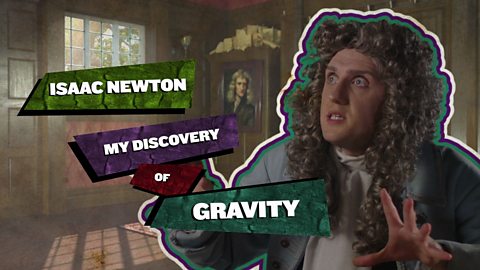
The work of Sir Isaac Newton. video
This vlog style film explores the work of Sir Isaac Newton as a physicist and astronomer, and how he made one of his biggest discoveries - gravity.