ISAAC NEWTON:
Yo, yo, yo, I'm Isaac Newton and the year is 1667. If you don't know who I am, well then you should. I'm only one of the biggest scientists of all time. [chuckles] I'm a famous astronomer and physicist, who has only gone and made the biggest, yes, the biggest discovery of science so far. I've just worked out, wait for it, gravity. Boom-ya!
In fact, I'm that famous that I'll be getting a knighthood, yes, me, a knighthood. And yes, I'm the first British scientist to get one, check me out. Also I'm building up quite the fan base with my followers, the Newtonians.
Anyway, let me tell you a bit more about me, I've been busy studying at Cambridge University, but that darn Black Plague has caused the university to shut, but all is not lost. 'Cause I've been using my time wisely, and this is when I discovered gravity.So yes, it might not be such a surprise that someone as intelligent as me might make this discovery, but let me tell you how it actually came about.
I was just sat there, you know, pondering thoughts, thinking about science, whilst drinking some tea, then all of a sudden this apple falls perpendicular, you know, straight down, and has legend has it, hits me on the head. Doh! [moans] Here, right on the head.So I picked up the apple, and kept dropping it, and observing it, watching it fall straight down. And then I, like, sat there, contemplating it for a while, questioning why it didn't fall sideways or upwards, but straight down.
And that's when it dawned upon me and I formulated my hypothesis. This being that the earth must have a force in its centre that pulls it there. I mean, it's not like a force pulls it to the left, or to the right, but straight down. So, the apple attracts the earth and the earth attracts the apple - amazing!
I'd already followed some scientific method when thinking about forces. Most scientists look at the theories of other scientists before us and research them in order to formulate their hypothesis. I explored the forces between the moon and the earth, looking at the work of the scientist, Galileo. I also carried out my own observations on the solar system.
I came up with the idea that all objects attract other objects; big objects, like the Earth, attract more. There was a lot of maths involved and it was all very complicated, but thanks to some solid observations by me, as I am a bit of a genius, it all worked out. I could explain it to you but I’ll save that for another vlog.
Right peeps, I need to finish writing this up into my first book, which will be called 'The Mathematical Principles of Natural Philosophy', I reckon this could end up being a best seller, and maybe the most important and influential book on physics of all time. Imagine the possibilities of what I have discovered.
Who knows, far into the future, we may find a way to calculate how much energy we would need to break free from the pull of gravity on earth and travel into space. Next time you accidentally drop something, think about gravity pulling it down and the force that causes this to happen.
Oh and uh, do tune into my next SciTube film, where I’ll be making another huge discovery. My laws of motion and my theories on optics and the eye. [sniggers] Okay, it might not be for another twenty years, but uh do watch this space! [chuckles] [amused] This space. I'm so funny. [chuckles] Bye-e! SIR Isaac Newton, over and out.
Video summary
In this vlog style film for primary schools Sir Isaac Newton explains how he discovered gravity when an apple fell from a tree and (as legend has it) hit him on the head.
He outlines how he used scientific method and process to think about gravity; questioning why things fall straight down, not sideways or upwards.
He talks about how he carried out his own observations, as well as discussing his famous book on the subject.
This short film is from the BBC series, Scientists and their discoveries.
Teacher Notes
As a starter to introduce a practical science activity, you could write a simple quiz to encourage pupils to capture the keywords shown in the video.
Pupils can write their own definitions from these words using the internet or science dictionaries to improve their scientific vocabularies.
To consolidate their knowledge, you could get pupils to make booklets that include key information about the work of Sir Isaac Newton.
They could define the keywords featured in the film, and find five or more pieces of additional pieces of information about the work of the scientists using books, encyclopedias or the internet.
Suitable for teaching Science at Key Stage 2 in England, Wales and Northern Ireland and at 2nd Level in Scotland. They also have cross-curricular links with History and Literacy.
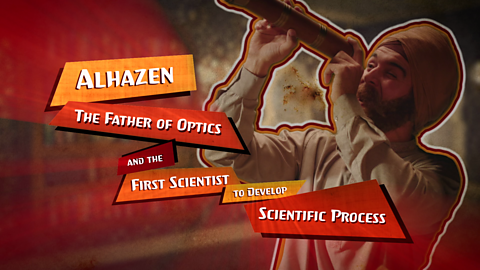
The work of the ‘father of optics’ Alhazen. video
This vlog style film introduces the work of Alhazen, and the scientific discoveries that he made about optics and the eye.
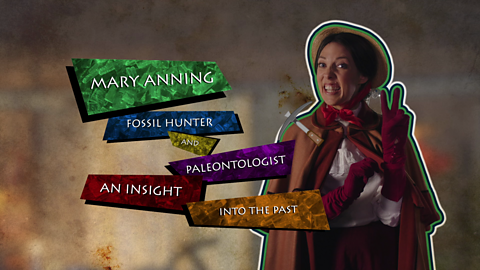
The work of Mary Anning. video
This vlog style film explores the work of Mary Anning; the famous paleontologist and fossil hunter.
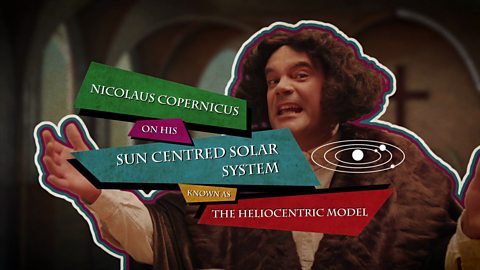
The work of Nicolaus Copernicus. video
This vlog style film introduces the work of Nicolaus Copernicus, and the scientific discoveries he made about the solar system.
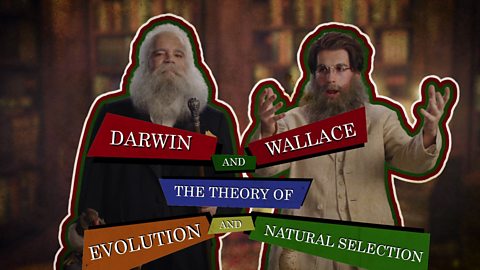
The work of Charles Darwin and Alfred Wallace. video
This vlog style film looks at how Charles Darwin and Alfred Wallace came up with the theory of evolution and natural selection.
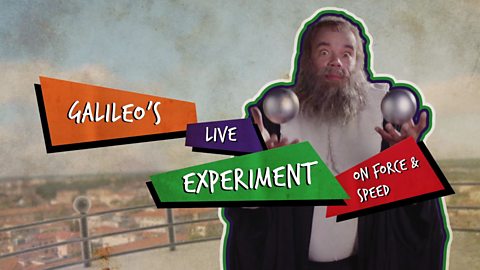
The work of Galileo Galilei. video
This vlog style film explores the work of Galileo Galilei around forces, and how they work.
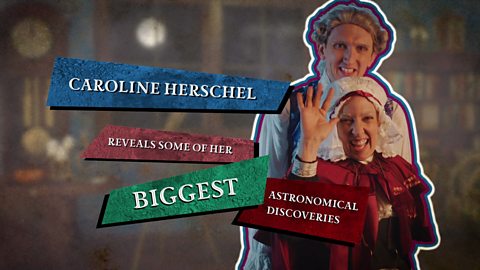
The work of Caroline and William Herschel. video
This vlog style film introduces the work of Caroline Herschel and and her brother William Herschel.
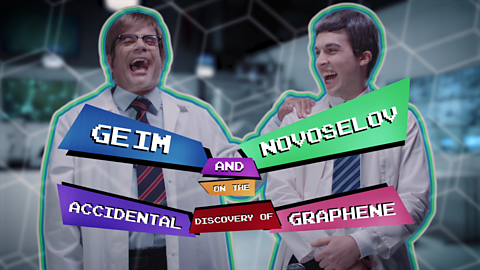
The work of Andre Geim and Konstantin Novoselov. video
This vlog style film explores how two Russian scientists, Geim and Novoselov, accidentally discovered a 'wonder material' called graphene.
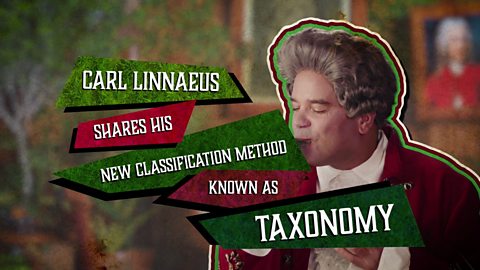
The work of Carl Linnaeus. video
This vlog style film introduces the work of Swedish scientist, Carl Linnaeus. He talks about his scientific method - taxonomy - used for classifying plants, animals and stones.