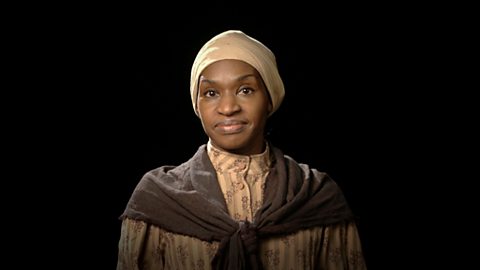
ISAMBARD KINGDOM BRUNEL:I'm going to tell you something about my life.
ISAMBARD KINGDOM BRUNEL:My name is Isambard Kingdom Brunel.
ISAMBARD KINGDOM BRUNEL:I was born in the year 1806, before motor cars and mobile phones, before aeroplanes and passenger trains and television.
ISAMBARD KINGDOM BRUNEL:I was an engineer. It was my job to work out how to build things.
ISAMBARD KINGDOM BRUNEL:'The seeds of the story I will tell you were sown when I was just a child.
ISAMBARD KINGDOM BRUNEL:'From the age of four, my father insisted on teaching me himself. He worked as an engineer and wanted me to become one too.
ISAMBARD KINGDOM BRUNEL:'He believed a good engineer should be able to get things exactly right, so he made me sit at the long desk in the study and draw circles.
ISAMBARD KINGDOM BRUNEL:'I drew circle after circle, over and over. Sometimes it felt like I couldn't stop.
ISAMBARD KINGDOM BRUNEL:'Circle after circle, over and over, until I completely filled the page.
ISAMBARD KINGDOM BRUNEL:'I learnt to never stop until something was just right. I learnt that getting something right was the most important thing.
ISAMBARD KINGDOM BRUNEL:'By the time I'd grown up, I could draw anything. I could build anything too.
ISAMBARD KINGDOM BRUNEL:'I did become an engineer as my father had hoped.
ISAMBARD KINGDOM BRUNEL:'If they needed a bridge over a river, I could build it. If they needed a new pier or harbour wall, I could build it.'
ISAMBARD KINGDOM BRUNEL:But what I wanted was to do something really big.
ISAMBARD KINGDOM BRUNEL:Something bigger and better than the world had ever seen.
ISAMBARD KINGDOM BRUNEL:I wanted to prove that there was nothing good engineering could not achieve.
ISAMBARD KINGDOM BRUNEL:And finally, my chance arrived.
ISAMBARD KINGDOM BRUNEL:I was to be chief engineer on a brand new railway, the Great Western Railway.
ISAMBARD KINGDOM BRUNEL:It was to be a new kind of track to take a new kind of train.
ISAMBARD KINGDOM BRUNEL:'Now here was a project to put all my engineering skills to the test. It would be the first of its kind. Something the world had never seen.
ISAMBARD KINGDOM BRUNEL:'A railway built to transport not coal and bricks and other stuff, but designed to carry people, passengers, from place to place.
ISAMBARD KINGDOM BRUNEL:'It would run from the capital city, London, to the smaller city of Bristol, more than 100 miles away.
ISAMBARD KINGDOM BRUNEL:'As chief engineer, I would need to work out the route, and build a track to take a train that would run faster than any train had ever run before. I wanted to plan every part of the route myself.
ISAMBARD KINGDOM BRUNEL:'I needed to see for myself what obstacles lay in the way. What problems there were to be solved.
ISAMBARD KINGDOM BRUNEL:'I walked and walked.
ISAMBARD KINGDOM BRUNEL:'Now here's a thing you might not know, I suspect you don't wear top hats.
ISAMBARD KINGDOM BRUNEL:'There were considerable advantages to the big hats popular in my day. They could make a short man look taller, and it could also double as a convenient place to store one's lunch.
ISAMBARD KINGDOM BRUNEL:'My aim was to build a track to take a train that could travel the 100 miles from London to Bristol and take no longer than four hours.
ISAMBARD KINGDOM BRUNEL:'I knew, for the journey to be that quick, the train would need to run fast. And I knew that, for the train to run fast, the track that it ran on would need to run straight.
ISAMBARD KINGDOM BRUNEL:'For the train to run fast, and the track to run straight, it would need to cut through or cross over anything that lay in its way.
ISAMBARD KINGDOM BRUNEL:'I walked and walked. I would not rest, and I would not waver.
ISAMBARD KINGDOM BRUNEL:'I surveyed the countryside by day, and at night I worked in my carriage.
ISAMBARD KINGDOM BRUNEL:'I had my measurements, I did my sums, I drew my plans.
ISAMBARD KINGDOM BRUNEL:'If there was a river, I would build a bridge over it. If there was a hill, I would build a tunnel through it.
ISAMBARD KINGDOM BRUNEL:'There was no problem that engineering could not solve, and I would not rest until my work was done.'
ISAMBARD KINGDOM BRUNEL:But it wasn't just the hills, and the valleys and the rivers that I had to overcome,
ISAMBARD KINGDOM BRUNEL:there was another obstacle that lay in the way. It was a problem I hadn't even thought of. People were terrified of trains.
ISAMBARD KINGDOM BRUNEL:'The train was still a new machine. Most people had never even seen one. I had to persuade them the railway was a good idea, that it could change their lives for the better.
ISAMBARD KINGDOM BRUNEL:'The fastest most people had ever travelled was the speed of a carriage or a trotting horse.
ISAMBARD KINGDOM BRUNEL:'Some people even thought that if you travelled that fast, the train would boil your brain. A ridiculous idea, of course.
ISAMBARD KINGDOM BRUNEL:'But I knew a passenger train would be useless without passengers. So I did my best to convince them they need not be afraid.
ISAMBARD KINGDOM BRUNEL:'I didn't know if, when the track was finished, the passengers would come. But for now, I had other things to think about.
ISAMBARD KINGDOM BRUNEL:'The biggest challenge of all was a great big hill called Box Hill. An enormous hill, two miles wide, solid rock.
ISAMBARD KINGDOM BRUNEL:'To build a tunnel through this would take a tunnel longer than any that had ever been built before.
ISAMBARD KINGDOM BRUNEL:'This was the big opportunity I'd been waiting for.
ISAMBARD KINGDOM BRUNEL:'To halve the time it would take to build the tunnel, I would have workers digging from East and West, either side of the hill.
ISAMBARD KINGDOM BRUNEL:'This is where my measurements would need to be exact. My sums would need to be spot-on, and my plans would need to be perfect, so the two halves would meet in the middle.
ISAMBARD KINGDOM BRUNEL:'Get it wrong, and it would be a disastrous waste of time.
ISAMBARD KINGDOM BRUNEL:'I employed 1,500 men. Half of them worked through the day, half of them all through the night.
ISAMBARD KINGDOM BRUNEL:'Even with this many men, it would take five years to build. It would cost thousands and thousands of pounds.
ISAMBARD KINGDOM BRUNEL:'Week after week they dug and dug. Day and night, chipping away at the solid rock. Tonne after tonne of rock was removed, the two parts of the tunnel edging closer and closer together.
ISAMBARD KINGDOM BRUNEL:'Finally, the moment of truth arrived. The digging was nearly finished, but had it worked?
ISAMBARD KINGDOM BRUNEL:'I had to be there to see for myself if I got it right.'
CHEERING AND APPLAUSE
ISAMBARD KINGDOM BRUNEL:'I'd done it. My sums were good. The two halves of the tunnel were perfectly lined up.'
ISAMBARD KINGDOM BRUNEL:Finally, the line between London and Bristol could open.
ISAMBARD KINGDOM BRUNEL:And a very straight line it was too.
ISAMBARD KINGDOM BRUNEL:I'd shown the world that engineering could achieve great things.
ISAMBARD KINGDOM BRUNEL:Now I could show that it could evenchange the way people travelled.
ISAMBARD KINGDOM BRUNEL:'To my great relief, people came. For the first time ever, passengers waited on the platform for the train.
ISAMBARD KINGDOM BRUNEL:'Although some of them were still afraid, as they boarded the train, they were making history.
ISAMBARD KINGDOM BRUNEL:'I was proud to standon the footplate of the train and feel the wind on my face as we sped, just as I'd planned, between London and Bristol.
ISAMBARD KINGDOM BRUNEL:'I was there. I'd made this happen. Nobody's brain boiled, and a new era in transportation was born.'
TRAIN WHISTLE BLOWS
ISAMBARD KINGDOM BRUNEL:For me, now I'd done this, I wanted to do something even bigger.
ISAMBARD KINGDOM BRUNEL:I wanted to build an enormous steamship to take people from Bristol across the Atlantic Ocean to New York. I was determined to succeed. I would not rest and I would not waver.
ISAMBARD KINGDOM BRUNEL:But that's another story.
Video summary
This short film is for teachers and review is recommended before use in class.
Isambard Kingdom Brunel tells the story of his life. He shows how he became an engineer and tunneled through Box Hill to build the Great Western Railway.
The story is told in the first person, and brought to life with a mix of drama, movement, music and animation.
We see Brunel as a child being taught by his father, following his dream to become an engineer.
Brunel becomes chief engineer on a brand new railway, one that will for the first time transport people from place to place.
This gives Brunel the chance to prove to the world what he and engineering can achieve.
We see how a tunnel is dug through Box Hill, the two sides meeting in the middle perfectly.
We see the first time passengers board the train from London to Bristol.
Teacher Notes
Before watching the film
When using this film, it may be helpful to observe that the Great Western Railway between London and Bristol was not the first passenger route, as this fact is not included. Eight years earlier than the opening of the Great Western Railway, in 1830, the first inter-city passenger service opened between Liverpool and Manchester. However, given the main activity suggested below, you may wish to withhold that information from the class initially and only disclose it in during the concluding phase of the lesson.
Questions to consider whilst watching the film
Depending on the focus of your lesson, you may wish to ask the following questions after the video or pause the short film at certain points to check for understanding.
- What lesson did Brunel learn from his father?
- Brunel was the Chief Engineer on the Great Western Railway. What did this mean he had to do?
- Why were people at the time reluctant to travel by railway?
- Why was the Box Hill tunnel such a great achievement for Brunel?
Learning activities to explore after the video
History is a subject which can lend itself to a wide range of cross-curricular links. As a teacher, you will have a greater awareness of how this topic may act as stimulus for learning in other subjects. However, the suggestions below relate solely to ways of developing the children’s historical knowledge and understanding.
Key Question: Which of Brunel's achievements was the greatest?
Historical enquiry
This short film concentrates mainly on just one of Brunel’s achievements: the building of the Great Western Railway. However, that is but one of his many successes. There is another BBC Teach video on Brunel, which complements this one, particularly in the final section describing the SS Great Britain. Any classroom follow-up will provide an opportunity for pupils to develop their research skills by exploring some of Brunel’s other engineering feats.
The Royal Museum Greenwich has a brief biography of Brunel. This identifies a number of possible topics for further research:
- Thames Tunnel
- Clifton Suspension Bridge
- Paddington Station
- Steamships: SS Great Western and SS Great Britain
The class could be divided into groups to research one of these achievements and present their findings to the class. It would be helpful for the pupils to have a guide of what they need to cover before researching:
- Describe Brunel’s achievement.
- In what ways was this better than whatever existed before Brunel’s work?
- Who would have benefited from this achievement?
- For how long was this achievement used?
Once the class has all the information about Brunel’s achievements, these four (noted above), plus the Great Western Railway, could be ranked to decide which was his greatest achievement. When making decisions such as these, it is important to have clearly understood criteria. For this topic, there are two possible criteria, intimated in the questions above, though as a teacher you may wish to focus on just one:
- Innovation - to what extent was Brunel’s achievement original? Here the pupils are deciding whether Brunel was doing something which others had also done or whether he is attempting something not achieved before.
- Effects - would this achievement be for the benefit of just local people, or would it affect people nationally or even internationally. Was the achievement long lasting, continuing over a period of decades and is it still in use today?
Learning aims or objectives
England
From the History national curriculumPupils should:
- understand the methods of historical enquiry, including how evidence is used rigorously to make historical claims.
Northern Ireland
From the statutory requirements for Key Stage 2: The World Around UsLinks can be made to other Learning Areas:
- by researching and expressing opinions and ideas about people and places in the world around us, past, present and future.
Teaching should provide opportunities for children as they move through Key Stages 1 and 2 to progress:
- from making first hand observations and collecting primary data to examining and collecting real data and samples from the world around them.
Scotland
From the Experiences and Outcomes for planning learning, teaching and assessment ofSecond Level Social Studies:
- I can use primary and secondary sources selectively to research events in the past.
Wales
From the new Humanities Area of Learning and ExperienceSchool curriculum design for History should:
- develop historical … source-based skills.
- develop rich content across the time periods, through which learners can develop an understanding of chronology through exploring … change and continuity.
Principles of progressionDescriptions of learning for Progression Step 2
Enquiry, exploration and investigation inspire curiosity about the world, its past, present and future:
- I have been curious and made suggestions for possible enquiries and have asked and responded to a range of questions during an enquiry.
- I have experienced a range of stimuli, and had opportunities to participate in enquiries, both collaboratively and with growing independence.
- I can collect and record information and data from given sources…
Mary Anning. video
Mary Anning describes how her astonishing fossil finds changed scientific thinking.
Edward Jenner. video
Edward Jenner tells the story of his life and the vaccination against smallpox.
Elizabeth Fry. video
Elizabeth Fry describes how she reformed life for prisoners and their families in prison.
Grace Darling. video
Grace Darling describes the night she and her father rowed out in a boat to save sailors.
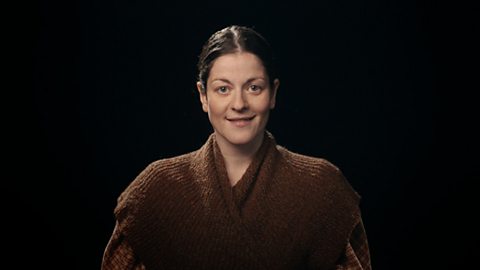
Rosa Parks. video
How Rosa Parks refusing to give up her seat changed the rules of American society.
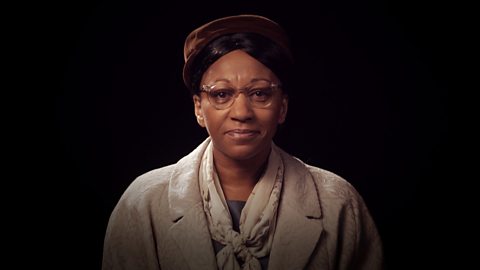
Thomas Barnardo. video
Thomas Barnardo tells the story of setting up his first home for London's street children.
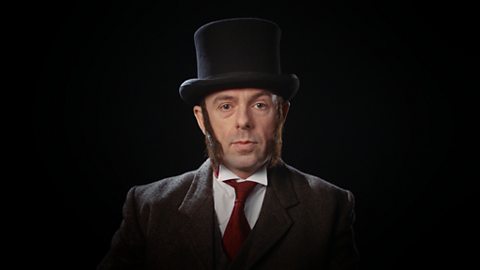
Alexander Graham Bell. video
Alexander Graham Bell tells the story of his life and describes how he invented the telephone.
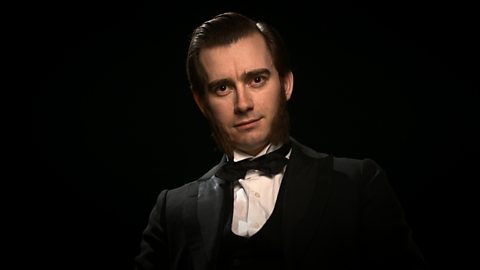
Florence Nightingale. video
Florence Nightingale tells the story of her life and how she grew up to become a nurse.
Harriet Tubman. video
Harriet Tubman explains how she escaped slavery and then helped others to do so.