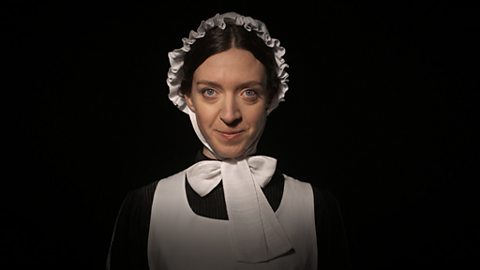
HARRIET TUBMAN:I'm going to tell you something about my life.
HARRIET TUBMAN:My name is Harriet Tubman.
HARRIET TUBMAN:I was born in the United States of America in the year 1820.
HARRIET TUBMAN:My story starts when I was just a child.
HARRIET TUBMAN:I was born into a family of slaves.
HARRIET TUBMAN:My mother and father were from Africa,
HARRIET TUBMAN:but they were snatched up from their homes and brought to America on a ship, to work for a rich landowner.
HARRIET TUBMAN:'Being a slave meant that we were owned by our master and he got to decide everything we did. And most of what we did was working in his cotton fields.
HARRIET TUBMAN:'The seasons turned, one into the next, and every year it was the same.
HARRIET TUBMAN:'We hoed the field to sow the seed, to pick the cotton. Then hoed the field to sow the seed to pick the cotton. Over and over. Till our hands were raw, our backs ached, our spirits worn down by the endless toil.
HARRIET TUBMAN:From the age of six, my job was to carry buckets of water out to the field.
HARRIET TUBMAN:'The bucket was heavy, and sometimes I could barely lift it off the ground.
HARRIET TUBMAN:'We got no money.
HARRIET TUBMAN:'We were given just about enough food to keep us from starving.
HARRIET TUBMAN:'The landowner lived in a giant house on the hill, with a view over all his land.
HARRIET TUBMAN:'We slept in a small hut in the forest.
HARRIET TUBMAN:'We had no furniture, and we slept on the floor, lined up like sardines.
HARRIET TUBMAN:'But still I loved the hut. Loved us all lined up together keeping each other warm.
HARRIET TUBMAN:'My father snored loudest, but it was so familiar it helped me sleep.
HARRIET TUBMAN:'Sometimes, my father would take me into the forest that surrounded our hut and tell me things.
HARRIET TUBMAN:'He told me how moss always grew on the north side of a tree.
HARRIET TUBMAN:'How birds made their nests.
HARRIET TUBMAN:'I loved watching the birds.
HARRIET TUBMAN:'I tried to imagine what it would feel like to fly anywhere you felt like. High above the treetops. Looking down on everything.
HARRIET TUBMAN:'And that's how I grew up, knowing only the small world of the forest around our hut and the field we worked in.
HARRIET TUBMAN:'As soon as I was old enough, I was put to work alongside the other slaves in the field. I spent years that way.
HARRIET TUBMAN:'Until my hands were raw, my back ached, and my spirit was worn down by the endless toil. Still I watched the birds.
HARRIET TUBMAN:'The slave master could keep my back bent towards the earth, but he couldn't stop me from imagining what it might feel like to be free.
HARRIET TUBMAN:'Then one day we were working in the field like every other day,
HARRIET TUBMAN:'and all of a sudden, one of the slaves made a run for it.
HARRIET TUBMAN:'The slave master bid me go after him, but I just stood still and watched, admiring how brave he was. Willing him to magically take flight and leave the ground. The master was furious.'
HARRIET TUBMAN:From that day on, I had dizzy spells and would fall asleep without warning.
HARRIET TUBMAN:But the strange thing was, that that blow to the head also made something clear to me. Like I'd suddenly woken up.
HARRIET TUBMAN:I knew I had to escape.
HARRIET TUBMAN:I had to do more than just look at the birds and dream of being free.
HARRIET TUBMAN:In the moment that rock hit my head, I knew I just needed to be brave.
HARRIET TUBMAN:'Early one morning, I woke before the others.
HARRIET TUBMAN:'The time had come.
HARRIET TUBMAN:'I wrapped what little I had and a small amount of food into a shawl.
HARRIET TUBMAN:'Then I took one last look at my family sleeping like sardines, and at the space where all these years I had slept between them, and I left.
HARRIET TUBMAN:'I headed straight into the forest.
HARRIET TUBMAN:'Soon, I had walked further and gone deeper into the forest than I had ever been before.
HARRIET TUBMAN:'I headed north, knowing that way lay the border with Pennsylvania where there was no slavery. And where, if I could get there, I could be free.
HARRIET TUBMAN:'When night approached, and the forest grew dark, I remembered what my father had taught me. That moss always grows on the north side of the trees.
HARRIET TUBMAN:'I wasn't afraid of the forest, or the dark, or the creatures that lived in the night,
HARRIET TUBMAN:'but I was afraid of the slave catchers.
HARRIET TUBMAN:'Runaway slaves were worth money if they were caught.
HARRIET TUBMAN:'And there were slave-catchers out there who made it their business to hunt runaways like me down.
HARRIET TUBMAN:'I had to keep my wits about me, I had to keep moving, stay quiet, and remember to be brave.
HARRIET TUBMAN:'I trod carefully, and didn't stop to rest or sleep.
HARRIET TUBMAN:'After weeks of walking,
HARRIET TUBMAN:'I found myself at the border with Pennsylvania.
HARRIET TUBMAN:'A state where there was no slavery.
HARRIET TUBMAN:'A place where I could be something other than a slave.
HARRIET TUBMAN:'I looked at my hands to see if I was the same person now I was free.
LAUGHS
HARRIET TUBMAN:'I felt my lungs fill with air, as if for the first time.'
CHEERS
CHEERS
HARRIET TUBMAN:I was free!
HARRIET TUBMAN:It was a feeling of such lightness.
HARRIET TUBMAN:I thought again of the birds I'd spent all that time dreaming about.
HARRIET TUBMAN:I chose where I walked, where I worked, I looked at the world around me with wide open eyes.
HARRIET TUBMAN:But I couldn't settle.
HARRIET TUBMAN:Less than a year after reaching freedom, I knew I had to go back.
HARRIET TUBMAN:'I went back the way I had come.
HARRIET TUBMAN:'To the place where I was a wanted runaway with a price on my head.
HARRIET TUBMAN:'But I knew I had to return and lead my family to freedom.
HARRIET TUBMAN:'Now I wasn't just responsible for myself.
HARRIET TUBMAN:'But I knew if they were scared, that I could be brave for them too.
HARRIET TUBMAN:'I knew now that there was a network of people who wanted to help runaways like us escape.
HARRIET TUBMAN:'Their homes were called safehouses.
HARRIET TUBMAN:'And they all had a sign they would hang outside to show that it was safe to call.
HARRIET TUBMAN:'It was a secret held dear by all those that helped.
HARRIET TUBMAN:'And to keep the secret safe, we called the network of safehouses the Underground Railroad.
HARRIET TUBMAN:'It was neither a railroad nor underground. But the runaways were called passengers, and the people who helped or took people in were called conductors.
HARRIET TUBMAN:'They would feed us and send us on our way.
HARRIET TUBMAN:'We travelled at night, trying to stay one step ahead of the slave catchers.
HARRIET TUBMAN:'I wasn't afraid of the forest, or the dark, or the creatures that lived in the night.
HARRIET TUBMAN:'I had to make sure we all made it to the border so that my family too would know the taste of freedom.
HARRIET TUBMAN:'Finally, after weeks in the forest, we reached the border with Pennsylvania.' CHEERING
HARRIET TUBMAN:'I felt a happiness even greater than the first time I crossed this State line.'
CHEERING
HARRIET TUBMAN:'I could imagine no greater joy than the joy I felt watching my family rejoice.'
HARRIET TUBMAN:When I saw what joy their freedom brought them
HARRIET TUBMAN:I knew then that I would have to go back. I knew then that this was what my life was for.
HARRIET TUBMAN:To help more slaves know what it was like to be free.
HARRIET TUBMAN:I went back time and time again.
HARRIET TUBMAN:And I led more than 70 slaves across the Underground Railroad to freedom.
HARRIET TUBMAN:Later, they said I was a hero.
HARRIET TUBMAN:That I had done great things.
HARRIET TUBMAN:But I knew all I needed to do was to be a little brave.
Video summary
This short film is for teachers and review is recommended before use in class.
Harriet Tubman tells the story of her life and how she escaped slavery.
Told in the first person, and brought to life with a mix of drama, movement, music and animation, the story begins when Harriet was a child.
Born into slavery in 1820, she grew up working in the cotton fields.
She witnessed another enslaved person escape and when she was older, escaped herself.
It was a long and lonely journey to freedom.
However, when she reached the border with Pennsylvania, she realised she needed to help others escape too.
A network of helpers, known as 'The Underground Railroad', helped enslaved people on their way to freedom.
We see Harriet take groups of enslaved people through the forest to freedom and hear how throughout her life she helped to free over 70 enslaved people.
This clip is from the series True Stories.
Teacher Notes
Questions to consider whilst watching the film
Depending on the focus of your lesson, you may wish to ask the following questions after the video, or pause the short film at certain points to check for understanding.
- Where were Harriet Tubman’s parents from and why was she born in the United States of America?
- What does it mean to be a ‘slave’ or an 'enslaved person'?
- What work was done by the enslaved people?
- What were the homes of the enslaved people like?
- Why did Harriet Tubman want to escape to Pennsylvania and why would that be a dangerous journey?
- How did the lessons her father taught her help Harriet Tubman?
- What did we learn about the Underground Railroad?
- Why is Harriet Tubman remembered today?
Learning activities to explore after the video
History is a subject which can lend itself to a wide range of cross-curricular links. As a teacher, you will have a greater awareness of how this topic may act as stimulus for learning in other subjects. However, the suggestions below relate solely to ways of developing the children’s historical knowledge and understanding.
Key Question: How does the story of Harriet Tubman help us to understand slavery in the 19th century?
Diversity of society and a wider historical perspectiveThe story of Harriet Tubman provides opportunities for teachers to teach a more diverse and inclusive history. This is important; as the Historical Association states, in its guidance on teaching emotive and controversial history:
“The study of history can be emotive and controversial where there is actual or perceived unfairness to people by another individual or group in the past. This may also be the case where there are disparities between what is taught in school history, family/community history and other histories. Such issues and disparities create a strong resonance with students in particular education settings.”
It is equally important not to teach the story of Harriet Tubman in isolation; beside the criticism of tokenism, this is a topic which critically needs to be placed in a wider historical perspective. Ideally, before studying Harriet Tubman and the Underground Railroad, the pupils would have some background knowledge on slavery. This can be a challenging, though ultimately rewarding, topic to teach and before doing so, there is some helpful advice on the Historical Association website, especially the checklist of 'Dos and Don’ts'.
Another approach to take is to begin with this film as an initial stimulus before asking the pupils to suggest what questions they may have about the topic which have not been answered. The teacher could steer the discussion beyond the actual story of Harriet Tubman so as to place her in a wider historical context. The questions from the class will be the basis for further study.
How much content can be covered will be dependent on the curriculum time available, but this could be a major topic for study. BBC Bitesize has seven learner guides on slavery; two of those are specifically about the links between Belfast and slavery. Although aimed at Key Stage Three, much of the text would be accessible to primary pupils, though some of the content may be upsetting and a teacher will need to use their professional judgement when using in their classroom. Also, the focus in these guides tends towards the British colonies in the Caribbean rather than the southern states of America (where Harriet Tubman lived), but there are clear parallels in the slave experience and this study would enable the class to appreciate that slavery was not just confined to one country. It is also critical to understand Britain’s role in the slave trade. These guides would enable a wider study of the history of precolonial Africa, the transatlantic slave trade and the experiences of the enslaved people. If time allows, these three topics could be covered before studying the Harriet Tubman film.
Case Study of Harriet Tubman and the Underground RailroadThe most important source for teaching about the Underground Railroad is a map; often an underused source in a history classroom. The National Geographic website has a map of the routes of the Underground Railroad. This map would enable the pupils to distinguish between the slave owning southern states and the northern ‘free’ states.
The pupils will see that there was not just one underground railroad, but dozens of routes from all the slave states to the north and also into Canada. For information, Harriet Tubman was born in Maryland and this small state is marked MD on the map, adjacent to, and south of, Pennsylvania. Compared with her journey, many of the other routes would have been considerably longer and so correspondingly more dangerous. The children will realise the level of organisation needed for these routes to be successful. In addition, this website also has some of the rich vocabulary of the Underground Railroad, a code to keep outsiders confused. This could be a stimulus for some creative writing.
The whole enquiry could be concluded with some extended writing in a genre of the teacher’s choosing, using the key question of, 'How does the story of Harriet Tubman help us to understand slavery in the 19th century?'
Learning aims or objectives
England
From the History national curriculum
Pupils should:
- develop perspective and judgement.
- gain historical perspective by placing their growing knowledge into different contexts.
Northern Ireland
From the statutory requirements for Key Stage 2: The World Around Us
To provide a balance of experiences in History pupils could study:
- Places then and now and how our identity, way of life and culture has been shaped by influences from the local and wider world.
Scotland
From the Experiences and Outcomes for planning learning, teaching and assessment of
Second Level Social Studies:
- I can compare and contrast a society in the past with my own and contribute to a discussion of the similarities and differences.
Wales
From the new Humanities Area of Learning and Experience
School curriculum design for History should:
- develop rich content across the time periods.
- expose learners of all ages to a range of historical periods on a local, national and global scale.
Principles of progression
Descriptions of learning for Progression Step 2
Human societies are complex and diverse, and shaped by human actions and beliefs:
- I have explored and am aware of diversity in communities.
Isambard Kingdom Brunel. video
Isambard Kingdom Brunel shares how he became an engineer and tunnelled through Box Hill.
Mary Anning. video
Mary Anning describes how her astonishing fossil finds changed scientific thinking.
Edward Jenner. video
Edward Jenner tells the story of his life and the vaccination against smallpox.
Elizabeth Fry. video
Elizabeth Fry describes how she reformed life for prisoners and their families in prison.
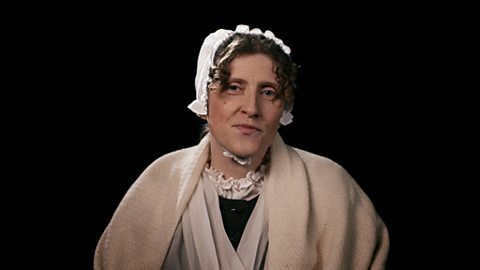
Grace Darling. video
Grace Darling describes the night she and her father rowed out in a boat to save sailors.
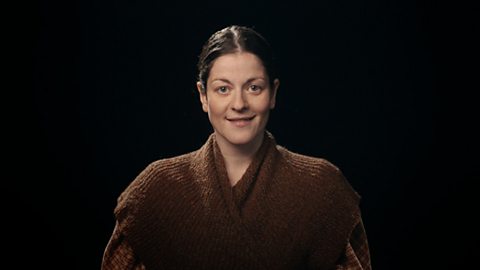
Rosa Parks. video
How Rosa Parks refusing to give up her seat changed the rules of American society.
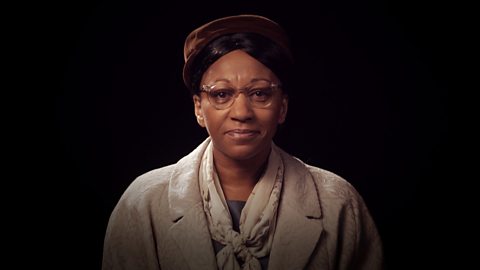
Thomas Barnardo. video
Thomas Barnardo tells the story of setting up his first home for London's street children.
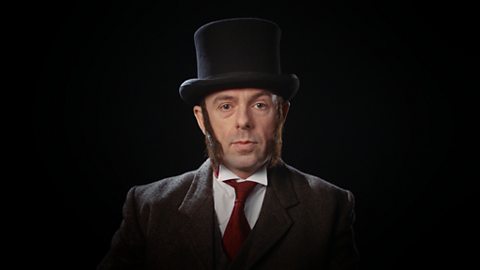
Alexander Graham Bell. video
Alexander Graham Bell tells the story of his life and describes how he invented the telephone.
Florence Nightingale. video
Florence Nightingale tells the story of her life and how she grew up to become a nurse.