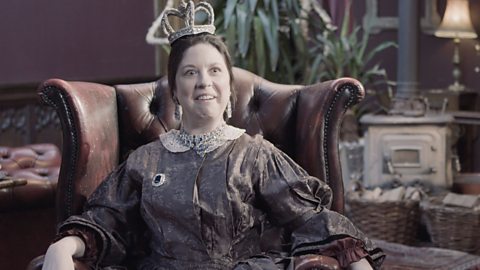
Scherrikar Bell:
Who built Victorian Britain?
Scherrikar Bell:
Well, that's quite a big question, obviously. But if you think of something that was built in the Victorian era from boats, trains, bridges and tunnels to palaces to hospitals and towns, yes, towns, then the chances are, this guy had something to do with it.
Isambard Kingdom Brunel:
Isambard Kingdom Brunel.
Scherrikar Bell:
This giant of engineering was born in Portsmouth on the 9th of April 1806 and lived to the grand old age of 53. That's thirteen years longer than the average life expectancy at the time. And as you may have noticed, he had a bit of a stand out name. Well, as per usual, that was thanks to his parents. Young Isambard was quite the talent. At four, he had learned basic observation and drawing skills and by eight, he had nailed geometry. Yes, the B man developed an understanding of maths from a very young age. He understood how maths impacted the world around him.
Isambard Kingdom Brunel:
There's a connection between maths and art, maths and music, maths and beauty and maths, architecture and engineering.
Scherrikar Bell:
For example, music and dance works on patterns of numbers in different sequences. Design uses symmetry to make things that look pleasing to the eye. And architecture combines all of these elements and others like shapes and tessellations to create buildings that are practical and beautiful. But sometimes you just need good old fashioned maths to solve a problem. Like when you need to…
Isambard Kingdom Brunel:
Dig the world's longest tunnel through a hill made of solid rock, drilling from both ends at the same time and meeting perfectly in the middle.
Scherrikar Bell:
Yes, Izzy had to apply all of his mathematical knowledge of shapes, angles and numbers to this real life problem and make sure that the tunnels met at exactly the right point deep in the middle of the hill. And, of course, they did. But why was he digging through a hill in the first place? Well, because he wanted to but also so that the railway track he was building would…
Isambard Kingdom Brunel:
Run on ground that was as flat as possible.
Scherrikar Bell:
Not only was Brunel a maths and engineering ace, he also knew about geography, both human and physical geography. Human geography is about people and how our activity is affected or influenced by the earth's surface, like how we move around and where we live. Have you ever noticed how lots of the biggest cities in the UK are built around rivers? That's because of human geography and the way people use rivers for transport, trade and access to the sea. Physical geography is about natural features, things that people haven't made like rivers, hills, mountains and coasts.
Isambard Kingdom Brunel:
People want to get to places quickly but there are hills and stuff in the way. So we need to do something about that.
Scherrikar Bell:
Box tunnel between Bath and Chippenham is just one example of where Brunel overcame a challenge posed by physical geography to aid human geography.
Scherrikar Bell:
This time the physical geography feature that Brunel needed to help people overcome, was the Atlantic Ocean. And he did it by building three ships including the first steel hold, steam engined, propellor-powered ship, the SS Great Britain which you can still visit in Bristol Harbour today. Now building boats is a science in itself. You would think that building something out of metal that needs to float on the sea is probably not the best idea but that's where Brunel's understanding of physics came into play. Brunel knew…
Isambard Kingdom Brunel:
There's one main thing that you need to consider when you're making a boat and that's buoyancy.
Scherrikar Bell:
The buoyant force is the force that makes things float. Floating something in water, for example, pushes the water out of the way and so the water pushes back and that makes things float. If something doesn't move enough water to resist it's own weight, that's when it sinks. Brunel knew that a steel hold ship would still float and would be a safer, stronger and longer lasting ship to transport people across the Atlantic Ocean. One of the most famous images of Brunel is of him at the launching chains of the SS Great Eastern and you can see just how huge the ship must have been by the size of its chains. You can also see how Brunel used to wear a large top hat to make himself look taller. Isambard Kingdom Brunel: was a problem solving, nation growing, public transport providing, industry leading, ingenious inventor and engineer who practically designed and built Victorian Britain single-handedly. And that's why he's a total genius of engineering.
Video summary
Who built Victorian Britain? Well if there’s a famous Victorian building, structure or mode of transport, the odds are that Isambard Kingdom Brunel had something to do with it.
This short film explores how this genius honed his skills from a young age to become the great builder that he is known as today.
We see our narrator Scherrikar Bell tell us all about Mr Brunel and how he built his way around Britain and helped people to move around the country too.
The film discusses Brunel’s mathematical genius with his geometry skills, as well as his buoyancy theory, before explaining how Brunel was the engineer behind three large ships, the SS Great Western, The SS Great Eastern and the SS Great Britain.
This short film is from the BBC series, The Victorians.
Teacher Notes
These short films introduce a character that can be used as a jumping off point for cross-curricular learning. This can be applied to a variety of subjects across the Key Stage 2 curriculum.
This series of films is designed to introduce real historical figures in an engaging context that can be explored by both students and teachers to help understand a variety of subjects.
The format runs through a few key stories or elements from the lives of the historical figures and applies them to a subject that can be discussed or explored in the classroom. The films act as a catalyst to kick-start ideas and introduce students to a world that can cover all kinds of subjects.
Each short film should offer you lots of opportunities to create activities and schemes of work that take an element of the film and expand on it in the classroom with a curriculum-based learning objective in mind.
The films should leave the students feeling like they have both a basic knowledge of the Victorian character and that they are engaged with the fun personalities that the film portrays.
The aim is give students a context to understand a variety of subjects that co-exist in real scenarios.
Before Watching
Before getting started with the film, you could introduce your students to the Victorian era. Roughly when it took place historically, what it was like to live in that time and how it’s different from today.
Another useful approach would be to give the students a short introduction to the character, just sticking to the key points to peak their interest.
Before playing the film you should ask the children to keep an eye out for the different subjects, ideas, and objects that are spoken about in the film. At the end of the film you could ask the class to speak about what they’ve seen. This should bring up plenty of jumping off points for you to expand on.
To really bring the history to life you could set a themed day and ask students to wear costumes or adopt a special timetable to reflect the Victorian classroom.
You could ask the students what they already know about the character that features in the film to get a feel for their understanding. Then if the film mentions something they know and have mentioned they’ll feel affirmed in their knowledge and engaged with the film, but also any new information will help them to feel like their understanding has improved.
After watching
Following the film there should be activities lined up to take the learning in the film further. Introducing more detail to the stories and developing the understanding of the elements that have been touched up in the film.
These could be based around a subject. For example, the film talks about physical and human geography; a simple walk around the local area to explore the geographical features could help your students understand the difference between the two.
Brunel’s film also talks about buoyancy. An understanding of buoyancy can be a scientific gateway to larger subjects like density and material properties. All of which can be explore with simple classroom experimentation.
The film also starts to make connections between mathematics and more abstract applications like design and engineering. This could really help to give maths a place in the real-world for your students and could be explored further.
Next Steps
The next step should be to take the understanding of the subject that is in the Victorian context in the film and develop it into a deeper understanding of the subject that is required by the curriculum.
This short film is suitable for teaching at Key Stage 2 in England, Wales and Northern Ireland and Curriculum for Excellence First and Second Level in Scotland.
Charles Darwin – The biggest name in Victorian science. video
A short film exploring the life and work of Charles Darwin and explaining his theory of evolution.
Pablo Fanque – The greatest Victorian showman. video
A short film about the life and work of Pablo Fanque, a famous equestrian performer from the Victorian era.

Florence Nightingale – The founder of modern nursing. video
A short film about Florence Nightingale and the work she did to transform nursing during the Victorian era.
Queen Victoria – The ultimate Victorian. video
A short film about Queen Victoria, explaining the curiosities and inventions that arose during her reign as well as what made her a brilliant monarch.