Scherrikar Bell:
He proposed a brand new idea to explain the origin of all species on earth and wrote it all down in a book called, "On the Origin of Species." Yep, this guy.
Charles Darwin:
Charles Darwin.
Scherrikar Bell:
Adventurer, writer, scientist and big beard fan.
Scherrikar Bell:
Charles Robert Darwin was born on the 12th February 1809 in Shrewsbury and lived in a massive house called The Mount. From a young age Charlie had an interest in natural history and collecting things. But the theory that made Darwin famous didn't come to him overnight, he didn't have an Isaac Newton moment where a bird flew into his face and he was like,
Charles Darwin:
Ah! You know what? These birds have changed over many years based on their environment
Scherrikar Bell:
It was in fact extensive research and life experience that helped him make one of the biggest scientific discoveries of the Victorian age, or of any age, really. So, we need to tell the whole story starting with The Beagle. No, not the dog. Although, yes, I'm sure beagles are a part of Darwin's theory too, but in this case, The Beagle is the name of a ship, a ship that Darwin found himself on in 1831, a few years before the Victorian era technically began, but stay with me. The voyage was only supposed to last for two years but then the captain was like, "Yep, we're running a tad late."
Charles Darwin:
"How late?" .
Scherrikar Bell:
Well, we're about three years behind schedule.
Charles Darwin:
Oh.
Scherrikar Bell:
But that did mean more time to collect samples from exotic islands which Darwin was pretty happy about. Some of the most important and beautiful islands that Darwin visited were the Galapagos Islands. A small cluster of tropical islands just off the coast of North South America. North South? A small cluster of islands west of Ecuador. There. The Galapagos Islands are so important David Attenborough made a TV show about them. The islands are in the Pacific Ocean, the largest ocean on earth. They're tropical and very close to the equator, the imaginary line that runs across the centre of the earth. This means they have a warm climate and a rainy season: great conditions for all sorts of life. While Darwin was exploring the Galapagos Islands, he made lots of observations, running around like…
Charles Darwin:
Ooh, look at that. That's an interesting animal. Oh, another interesting thing. Well, I'll be, an interesting plant. I love it here!
Scherrikar Bell:
Darwin collected samples and made drawings in his notebook of the animals and plants that he saw on his travels, noting down the smallest details and being scientifically thorough. Recording observations is all part of the scientific method.
Scherrikar Bell:
The scientific method is a system that helps scientists to find out if their ideas are correct. It's broken down into simple steps. First, you have to come up with a theory called a hypothesis, then do some research and record your observations, then develop your theory more and then see if it makes sense in different scenarios. After all that, you'll know if your theory or hypothesis works and if you need to make adjustments. While Darwin was on the Galapagos Islands, he was researching a new hypothesis.
Charles Darwin:
Why do we find different kinds of birds and animals in different parts of the world?
Scherrikar Bell:
He did some research, made some observations and drew some drawings of birds. And after much thought, he realised…
Charles Darwin:
The birds on each island are all finches. But they have different beaks.
Scherrikar Bell:
Then Charlie had a brainwave. His research had lead him to a new theory: evolution through natural selection.
Charles Darwin:
Natural selection works on the principle of survival of the fittest, meaning, the animal most fit for survival will live and pass on the traits that help it to survive.
Scherrikar Bell:
Like, if you're a lizard and you need to run away from something because it's trying to eat you, if you run faster than all your mates, you'll survive. Soz mates. And then you can run off and pass on your speedy running skills to the next generation of lizards. Darwin figured…
Charles Darwin:
That's why the birds have different beaks, they all eat different things and so to survive they need different beaks and that's what gets passed on.
Scherrikar Bell:
He was on to something so he wrote it all down in a book called, "On the origin of species." And on the 24th November 1859 it was published. The book was a big hit but not everyone agreed with Darwin's theories and it sparked mass debates amongst scientists, the public and the Church. Today, Darwin's theory is widely accepted as the explanation for evolution worldwide. Darwin revolutionised the way we understand life on earth and how it changes. It helped us understand how humans can have an impact on animals by changing their environment. It also helped us to understand something called selective breeding. Selective breeding is where humans choose to develop certain traits over others, like how we domesticated animals into pets. That's why German Shepherds are so big, we wanted them that way. Charles Darwin: is one of the biggest names in history. He was an island exploring, diagram drawing, bird watching, book writing, world changing scientist who helped to explain more about life on earth than any other scientist before him. And that's why he is the biggest name in Victorian science.
Video Summary
Charles Darwin is one of the biggest names in science. A true Victorian explorer and scientist, he travelled the world to develop his theories.
In this short film, we learn a little about his journey, motivations and the things he discovered along the way. We see our narrator Scherrikar Bell tell us all about Charles Darwin and how he had a huge impact on science in the Victorian era.
But, it’s not all narration; throughout we cut away to see a fun take on the adventures of the famous scientist.
We touch on history and geography as Scherrikar talks about Darwin’s journey to the Galapagos Islands; the scientific method, and of course Darwin’s theory of evolution, natural selection and selective breeding.
This short film is from the BBC series, The Victorians.
Teacher Notes
These films introduce a character that can be used as a jumping off point for cross-curricular learning. This can be applied to a variety of subjects across the Key Stage 2 curriculum.
This series of short films is designed to introduce real historical figures in an engaging context that can be explored by both students and teachers to help understand a variety of subjects.
The format runs through a few key stories or elements from the lives of the historical figures and applies them to a subject that can be discussed or explored in the classroom. The films act as a catalyst to kick-start ideas and introduce students to a world that can cover all kinds of subjects.
Each short film should offer you lots of opportunities to create activities and schemes of work that take an element of the film and expand on it in the classroom with a curriculum-based learning objective in mind.
The films should leave pupils feeling like they have both a basic knowledge of the Victorian character and that they are engaged with the fun personalities that the film portrays.
The aim is give students a context to understand a variety of subjects that co-exist in real scenarios.
Before Watching
Before getting started with the film, you could introduce your students to the Victorian era. Roughly when it took place historically, what it was like to live in that time and how it’s different from today.
Another useful approach would be to give your pupils a short introduction to the character, just sticking to the key points to pique their interest.
Before playing the film you should ask pupils to keep an eye out for the different subjects, ideas, and objects that are spoken about in the film.
At the end of the film you could ask the class to speak about what they’ve seen. This should bring up plenty of jumping off points for you to expand on.
To really bring the history to life you could set a themed day and ask students to wear costumes or adopt a special timetable to reflect the Victorian classroom.
You could ask the students what they already know about the character that features in the film to get a feel for their understanding. Then if the film mentions something they know and have mentioned they’ll feel affirmed in their knowledge and engaged with the film, but also any new information will help them to feel like their understanding has improved.
After watching
Following the film there should be activities lined up to take the learning in the film further.
Introducing more detail to the stories and developing the understanding of the elements that have been touched upon in the film.
These could be based around a subject. For example, as the film talks about natural selection and dogs, there could be an example to explore other times humans have used natural selection to breed certain traits into living things (e.g. carrots).
Also, a lot of the history that is explored in these films still exists today in one form or another. It could be an idea to explore how different subjects have changed between the Victorian era and now – or if the theories and ideas still hold up today. In the case of Darwin there has been a huge shift in public opinion of his work, which could be interesting to explore.
Next Steps
The next step should be to take the understanding of the subject that is in the Victorian context in the film and develop it into a deeper understanding of the subject that is required by the curriculum.
This short film is suitable for teaching at Key Stage 2 in England, Wales and Northern Ireland and Curriculum for Excellence First and Second Level in Scotland.
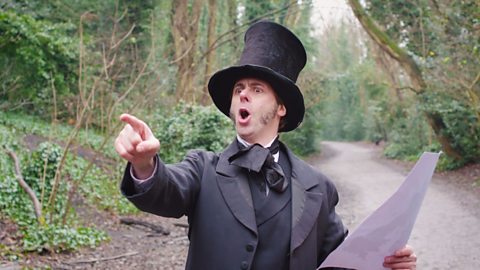
Isambard Kingdom Brunel – A total genius of engineering. video
A short film exploring the life and work of Isambard Kingdom Brunel, explaining who he was and what he did to build Victorian Britain.
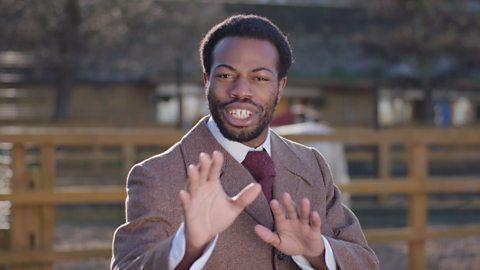
Pablo Fanque – The greatest Victorian showman. video
A short film about the life and work of Pablo Fanque, a famous equestrian performer from the Victorian era.
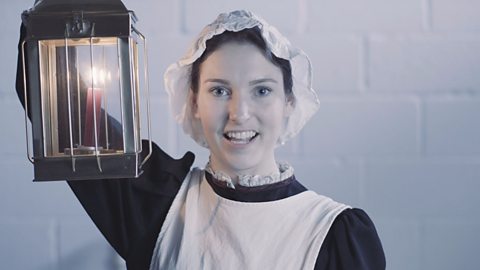
Florence Nightingale – The founder of modern nursing. video
A short film about Florence Nightingale and the work she did to transform nursing during the Victorian era.
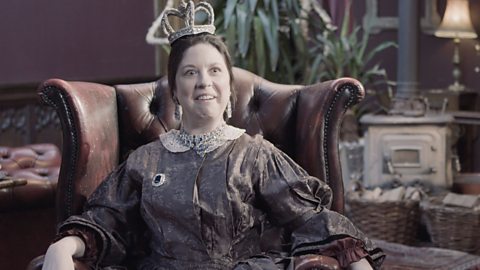
Queen Victoria – The ultimate Victorian. video
A short film about Queen Victoria, explaining the curiosities and inventions that arose during her reign as well as what made her a brilliant monarch.