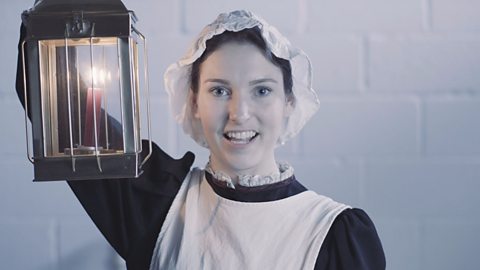
Scherrikar Bell:
Have you ever wondered how the Victorians got their name? There's one woman to thank for that. Well, one woman and her parents, they did name her after all. It's, Queen Victoria. The clue's in the name. This absolute powerhouse of a monarch reined from the 20th of June, 1837, to the 22nd of January, 1901, which was longer than any British king or queen had reined before. In fact, it wasn't until 2015 that Queen Liz overtook her. That's Her Majesty Queen Elizabeth the second to you. Queen Victoria: was all about change. She was the first monarch to live in Buckingham Palace. And, she was the first to become the Empress of India. But, she didn't just wake up one day and decide…
Queen Victoria:
From now on, people must call me the Empress of India.
Scherrikar Bell:
…there's more to the story than that. Even before Queen Victoria: was around, the British Empire had been expanding, taking land and resources all over the world, often by force, all in the name of trade. Queen Victoria: didn't have a huge amount to do with it, until one day, her pal, Prime Minister Benjamin Disraeli was like… "hang about, if Britain controls India and Vicky controls Britain, why doesn't Vicky control India?" So, Disraeli offered Victoria the title of Empress of India. And of course, she jumped at the chance. During the Victorian era, the British Empire became the largest empire the world had ever seen. It stretched west from Great Britain to Canada. South, across Africa, including Egypt, Nigeria, and South Africa. And even further south to Antarctica. East, the empire reached Australia and New Zealand, plus, a few other places. The Victorian era was full of growth, discovery, and inventions, like the humble photograph. These days, taking a photo is no big deal, but in early Victorian times, if you wanted a quick selfie, then you had to paint it. Luckily, photography was invented in 1839, and Victoria was like, "this blows my mind." Photography was the most accurate way to capture events in detail. For the first time, you could see what people really looked like. Vicky was hooked. So, with her husband Albert, she started collecting photographs. In 1851, Victoria and Albert's collection of images was displayed at the great exhibition in London. Six million people visited the great exhibition. That was nearly a third of the entire British population at the time. For many of them, it was the first time they'd ever seen a photograph. Even this guy went along to find out about the inventions and scientific advances. Having seen the power of photography at the exhibition, Victoria knew, "these photograph things are going to catch on." She continued to use photograph to get her image out there. She carefully controlled the way her pictures looked to get the right message across, and create official photographs to share with the people, just like the Royals do today. But Queen Victoria: didn't just keep an eye on what the public thought of her, she kept track of her own thoughts too. Victoria started a daily journal in 1832, and continued writing it until just ten days before her death, filling 121 volumes. It's estimated that she wrote over 2000 words a day, and that's about 60 million words in her lifetime, and she was quite the wordsmith. On her wedding day, Vicky penned this piece.
Queen Victoria:
I never, never spent such an evening, my dearest, dearest dear, Albert. His excessive love and affection gave me feelings of heavenly love and happiness I never could have hoped to have felt before. To be called by names of tenderness, I have never yet had used to me before was bliss beyond belief. Oh, this was the happiest day of my life.
Scherrikar Bell:
Today, we can use Queen Victoria: 's diaries to help us to understand what made her the total boss that she was. Queen Victoria: was an empire-ruling, photograph collecting, public image making, diary writing, total queen, who gave her name to an era of British history that saw more change than any other, and that's why she's the ultimate Victorian.
Video summary
Queen Victoria was the monarch who gave her name to an era of discovery, invention and change in Britain.
In this short film, we learn a little about her personal history as we delve into Queen Vic’s diaries.
Narrator Scherrikar Bell highlights some of the amazing things to have come from Queen Victoria’s reign, as well as some of the inventions that were created during her time as queen, including photography.
This short film explains how Queen Victoria was the second longest reigning monarch, after Queen Elizabeth II.
This short film is from the BBC series, The Victorians.
Teacher Notes
These films introduce a character that can be used as a jumping off point for cross-curricular learning. This can be applied to a variety of subjects across the Key Stage 2 curriculum.
This series of films is designed to introduce real historical figures in an engaging context that can be explored by both students and teachers to help understand a variety of subjects.
The format runs through a few key stories or elements from the lives of the historical figures and applies them to a subject that can be discussed or explored in the classroom. The films act as a catalyst to kick-start ideas and introduce students to a world that can cover all kinds of subjects.
Each film should offer you lots of opportunities to create activities and schemes of work that take an element of the film and expand on it in the classroom with a curriculum based learning objective in mind.
The films should leave the students feeling like they have both a basic knowledge of the Victorian character and that they are engaged with the fun personalities that the film portrays.
The aim is give students a context to understand a variety of subjects that co-exist in real scenarios.
Before Watching
Before getting started with the film, you could introduce your students to the Victorian era. Roughly when it took place historically, what it was like to live in that time and how it’s different from today.
Another useful approach would be to give the students a short introduction to the character, just sticking to the key points to peak their interest.
Before playing the film you should ask the children to keep an eye out for the different subjects, ideas, and objects that are spoken about in the film. At the end of the film you could ask the class to speak about what they’ve seen. This should bring up plenty of jumping off points for you to expand on.
To really bring the history to life you could set a themed day and ask students to wear costumes or adopt a special timetable to reflect the Victorian classroom.
You could ask the students what they already know about the character that features in the film to get a feel for their understanding. Then if the film mentions something they know and have mentioned they’ll feel affirmed in their knowledge and engaged with the film, but also any new information will help them to feel like their understanding has improved.
After watching
Following the film there should be activities lined up to take the learning in the film further. Introducing more detail to the stories and developing the understanding of the elements that have been touched up in the film.
These could be based around a subject. For example as the film talks about the British Empire, there is an opportunity to create other work that looks and the geographical location of other empires, or the historical reason that empires existed and the other leaders that drove them.
Also a lot of the history that is explored in these films still exists today in one form or another. It could be an idea to explore how different subjects have changed between the Victorian era and now.
Next Steps
The next step should be to take the understanding of the subject that is in the Victorian context in the film and develop it into a deeper understanding of the subject that is required by the curriculum.
This short film is suitable for teaching at Key Stage 2 in England, Wales and Northern Ireland and Curriculum for Excellence First and Second Level in Scotland.
Charles Darwin – The biggest name in Victorian science. video
A short film exploring the life and work of Charles Darwin and explaining his theory of evolution.
Isambard Kingdom Brunel – A total genius of engineering. video
A short film exploring the life and work of Isambard Kingdom Brunel, explaining who he was and what he did to build Victorian Britain.
Pablo Fanque – The greatest Victorian showman. video
A short film about the life and work of Pablo Fanque, a famous equestrian performer from the Victorian era.
Florence Nightingale – The founder of modern nursing. video
A short film about Florence Nightingale and the work she did to transform nursing during the Victorian era.