EMMA-LOUISE: With live streaming, you can share moments of your life instantly, document live events, and create a show out of activities like online gaming, that you would otherwise experience alone. Most of us are casual live streamers, posting the occasional video story, but some people have made careers out of it.
However you use it, it’s important to remember there are risks to live streaming which you should bear in mind to avoid any unintended consequences. For example, you could say something that you might regret later. It can be easy to forget that anyone could be watching or even recording.
So any casual remark you might regret or mistakes you might have made, could live on in the digital world, even if we take the video down. Mikey, used to be in a popular band that toured the UK. He spoke to us a bit about his experience of live streaming.
FRANKIE: At first, Mikey loved touring with his band, but eventually he grew tired of the constant travel and decided it was time to quit. After announcing he was leaving to spend more time at home with his family, he took questions from fans during a live stream. He answered honestly that he no longer enjoyed the band life because he was missing his family. But lots of people quoted him out of context and made it sound like he and his band mates had fallen out. It made him sound ungrateful and entitled.
EMMA-LOUISE: Mikey said this sort of thing happens all the time. Because you’re live, there’s often a pressure to be spontaneous and conversational. But he reminded us that when you're talking about a sensitive subject, it’s a good idea to take your time and think about your words. In fact, you don’t have to say anything at all if you don’t want. That’s true whether you’re making a casual post or you’re a professional live-streamer. Mikey also reminded us about the risks when people you don’t know start watching your live streams.
FRANKIE: People would invite Mikey to meet up during a live stream, or by messaging him afterwards on social media. Sometimes they even posted their location in the comments, which actually put themselves at risk. He’s also received nasty comments from followers online. And some of his friends have been bullied during and after live streams.
EMMA-LOUISE: You can report and block users who act inappropriately on most apps. So don’t hesitate to use this option if you feel uncomfortable. And whether you’re watching or streaming, never share your location. Remember, you can do this by accident, so be mindful of your surroundings. A street sign could tip viewers off to your location, and a famous landmark in the background could be a dead giveaway.
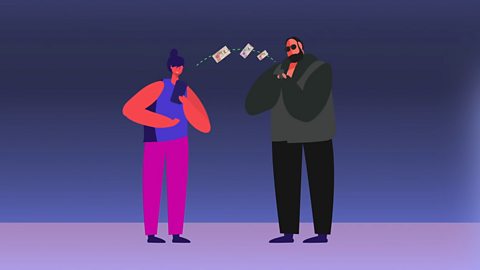
Finally, Mikey warned us about gifts. Many apps give users the option of giving gifts to streamers, but these cost real money. If anyone you don’t know watches your streams and offers to give you a gift be wary as they may follow this up by asking for a photo or to meet up. Even if they’ve given you a gift, you don’t owe them anything. And if anyone does anything to make you feel uncomfortable, tell a trusted adult straight away. Now, none of these risks mean we should never live stream. They just mean when we do, we should be aware of what can happen, and take sensible precautions.
Video summary
This short film explores live streaming and provides some useful pointers for young people.
It features a true story from someone who fell foul of live streaming.
There is also advice for young people about how to use live streaming safely and reminders about what to do if they are concerned.
The top tips section at the end should provide useful take-away points for students.
Teacher Notes
This short film could be used to help students to see the benefits and risks of online activities such as live streaming.
Prior to viewing, students could make a list of benefits and risks of live streaming.
They could then watch the film and add to their lists.
You could use this task as a way of checking prior knowledge and ensuring that your students have a good understanding of the pitfalls of live streaming and how to keep themselves safe.
Students could watch up to the top tips section and then make their own top five tips from what they have seen. They could then watch the last part of the film and compare their tips to the ones given in the video.
The film could also be used to highlight the story of Mikey and to elicit some of the emotions behind the issue.
Students could watch Mikey’s story and then prepare questions they could ask him. One person could play the role of Mikey and attempt to answer the questions.
Links to new statutory RSE and HE curriculum (secondary)
Pupils should be taught the rules and principles for keeping safe online. This will include how to recognise risks, harmful content and contact, and how and to whom to report issues.
Respectful relationships, including friendships: the characteristics of positive and healthy relationships (in all contexts, including online), about different types of bullying.
Online and media: rights, responsibilities and opportunities online, including that the same expectations of behaviour apply in all contexts, including online.
Online risks, including any material someone provides to another that has the potential to be shared online and the difficulty of removing potentially compromising material placed online.
Not to provide material to others that they would not want shared further.
Internet safety and harms: how to identify harmful behaviours online (including bullying, abuse or harassment) and how to report, or find support, if they have been affected by those behaviours.
Other subject areas
This short film could be used across other subject areas such as media studies, English and computing.
In media studies, students could use the top tips at the end of the film to make their own videos showing what to do and not to do when live streaming.
In computing, this film could form the basis of a lesson on e-safety. Students could use the example of live streaming to identify ways of making sure that they use online resources responsibly, respectfully and securely including looking more specifically at location sharing and gifting.
This short film touches on elements of PSHE, citizenship and computing at GCSE in England, Wales and Northern Ireland and National 4 and 5 in Scotland.
This short film addresses statutory content around internet safety, online behaviour and respectful relationships.
More Digital Literacy / Online Security:
Fake News. video
This short film explores the phenomenon of fake news and outlines why it is important to be able to distinguish it from real news.

Pornography. video
This short film explores some real-life experiences around pornography.
Self Image and Mental Wellbeing. video
Using a real life story, this short film looks at the negative effects that social media can have on our mental wellbeing.

Copyright and Ownership. video
Sanah Ahsan, a spoken word poet who frequently shares her work online, talks about the dos and don'ts of sharing content, as well as what is meant by intellectual property.

Sensitive Pictures. video
This short film uses a real life story to explore the legal and emotional consequences of sharing sensitive photos.
Online Gaming. video
Online gamer Pixlriffs talks about some potential dangers to look out for when gaming online, as well as the things you can do to protect yourself.
Trolling and Cyber-Bullying. video
This short film explores the consequences of online bullying, using a real life case study.
Digital Footprint. video
This short film demonstrates that what you post online can follow you in real life, via two real life cast studies.
Online Security. video
This short film offers advice on how to spot an online scam as well as tips on what you can do to protect yourself online.