EMMA-LOUISE: It’s great fun gaming online. But, as you probably already know, there are some dangers to be aware of. Because there are people who target online gamers, particularly young people who they perceive as being vulnerable.
Luckily we’ve got Pixlriffs here, a YouTuber and online gamer, who can tell us a bit more about the risks.
EMMA-LOUISE: So Pixlriffs, you play online games for a living?
PIXLRIFFS: I do, yes. I started uploading videos in 2014 and obviously it's super fun. But these days, it's also really social. You can play online with friends. Personally, I play a lot of Minecraft and Minecraft is a game that you can express yourself and share stuff that you've built with your friends. There are other games you can play, if you're not into Minecraft. You can play racing games, sports games, all kinds of stuff like that.
EMMA-LOUISE: But there's a darker side to online gaming too, isn't there?
PIXLRIFFS: Unfortunately, yes. So, that's why it's a really good idea to know who you're gaming with and what their deal is.
EMMA-LOUISE: Why is that? Why do we need to know that?
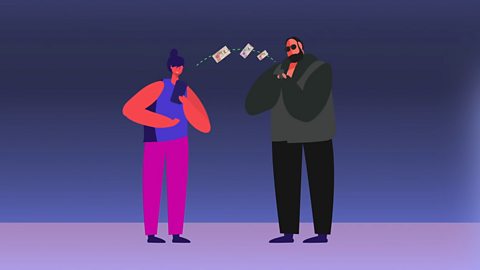
PIXLRIFFS: Because if you meet somebody online that you don't know then you don't know what their intentions are. So, potentially, they could be pressuring you to you know, share inappropriate images of yourself. They could trick you out of money or they could encourage you to do something illegal.
EMMA-LOUISE: That's really not okay.
PIXLRIFFS: No, it's not. So, that's why I always recommend making sure you keep your personal information safe. You shouldn't give it out to anybody you meet online. One of the most important things, of course, is if somebody suggests online that you should meet up with them in real life, to step away from that and tell a parent or a trusted adult right away. You can talk to them about the blocking and reporting features that might be in the software. Sometimes you can set it up so the only people you're allowed to join an online game with are people you're already friends with in real life.
EMMA-LOUISE: So, keep an eye on the privacy settings and you should be okay?
PIXLRIFFS: Pretty much, yeah.
EMMA-Louise: Great. I've also heard about a link between gaming and online gambling. Is that true?
PIXLRIFFS: There are obviously online games which look like traditional gambling. Things like online poker and blackjack, and those kind of things. But there are also online games which sell skins and other items for your player's character. And those are sold for money, but there are lottery websites that will resell rare items for really large amounts of money when the item itself is basically worthless.
EMMA-LOUISE: So, gamers are gambling with real money?
PIXLRIFFS: Basically, yes, and they're taking a loss every time.
EMMA-LOUISE: Any other dangers you've come across online?
PIXLRIFFS: Obviously there are some places where you can log into public servers where you might see somebody doing something inappropriate or maybe writing an inappropriate message on a sign or a wall, or something like that. At which point, it's okay to step away and talk to somebody you trust about that. Talk to a parent, talk to a trusted adult and make sure that you know about the blocking and reporting features that should be present in those games.
EMMA-LOUISE: That's all really helpful advice, thank you so much.
Here are my top five tips for online gaming:
Play with friends or if you’re playing with strangers, don't feel pressured to take part in voice chat.
Avoid giving out any personal information and don't ask for any personal information from anyone else.
Take note of the security features of the game you're playing.
Don't hesitate to report people who are out of line. Remember you can block users who aren't your friends from sending you private messages.
And before you add a friend, really think about whether or not that person is a friend.
And finally, if anything happens that concerns you or makes you feel uncomfortable, it's a good idea to tell a trusted adult straight away.
Be safe, and have fun gaming!
Video summary
Online gamer Pixlriffs talks about some potential dangers to look out for when gaming online, as well as the things you can do to protect yourself.
The issue of online gambling is also touched on and examples are given of the things that may not feel like gambling but can result in the loss of significant sums of money.
The top tips section at the end should provide useful take-away points for students.
Teacher Notes
One way of using this short film could be as part of a larger unit on the benefits and dangers of the internet.
Students could list benefits and risks prior to watching the film and then watch the film through, adding to their initial lists.
Students could use the top tips to write a story about a young person who gets into difficulties with online gaming and then manages to get out.
Alternatively, they could create a leaflet or poster designed for their age group or younger that can be put up in the school or even in local primary schools.
Students could identify the games they play themselves and any parts of the games that they think could have an element of risk.
This could be done both before and after watching the film to identify particular learning points.
Links to new statutory RSE and HE curriculum (secondary)
Pupils should be taught the rules and principles for keeping safe online.
This will include how to recognise risks, harmful content and contact, and how and to whom to report issues.
Internet safety and harms: pupils should know the risks related to online gambling including the accumulation of debt, how advertising and information is targeted at them and how to be a discerning consumer of information online
Other subject areas
This short film could be used across other subject areas such as media studies or computing.
In computing, students could design a game that highlights its risks to the players after they have watched the film. They could also rate different online games according to how much risk they carry.
In media studies this film could be linked to a topic on age classifications and the age rating of different games could be checked and assessed based on the information from the film.
This series touches on elements of PSHE, citizenship and computing at GCSE in England, Wales and Northern Ireland and National 4 and 5 in Scotland.
More Digital Literacy / Online Security:
Fake News. video
This short film explores the phenomenon of fake news and outlines why it is important to be able to distinguish it from real news.

Live Streaming. video
This short film explores live streaming and provides some useful pointers for young people.
Pornography. video
This short film explores some real-life experiences around pornography.
Self Image and Mental Wellbeing. video
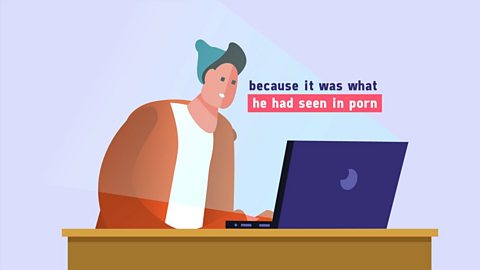
Using a real life story, this short film looks at the negative effects that social media can have on our mental wellbeing.

Copyright and Ownership. video
Sanah Ahsan, a spoken word poet who frequently shares her work online, talks about the dos and don'ts of sharing content, as well as what is meant by intellectual property.

Sensitive Pictures. video
This short film uses a real life story to explore the legal and emotional consequences of sharing sensitive photos.
Trolling and Cyber-Bullying. video
This short film explores the consequences of online bullying, using a real life case study.
Digital Footprint. video
This short film demonstrates that what you post online can follow you in real life, via two real life cast studies.
Online Security. video
This short film offers advice on how to spot an online scam as well as tips on what you can do to protect yourself online.