EMMA-LOUISE: Hi, can I ask you a question?
FEMALE: Erm, okay.
EMMA-LOUISE: What's your mother's maiden name?
FEMALE: Why do you want to know that?
EMMA-LOUISE: Never mind. Your pin number?
FEMALE: I'm not going to tell you that.
FRANKIE: Ooh, look. I just found this really cool quiz. Do you want to know which superhero you are?
FEMALE: Yeah, sure.
FRANKIE: Okay. Pick an animal: lizard, dog, cat or cockatoo?
FEMALE: Dog.
FRANKIE: Pie and mash, pizza, burger or curry?
FEMALE: Burger.
FRANKIE: Er, great, and your date of birth?
FEMALE: Er, 19th of January '93.
FRANKIE: And your mother's maiden name?
FEMALE: Wait a second… Are you with her?
FRANKIE: Erm… No?
EMMA-LOUISE: Our little scam might be kind of obvious in real life but it can be harder to spot online where an innocent quiz is actually scammers trying to learn more about us.
FRANKIE: If we're not careful, we can end up looking like mugs, or even worse, losing our hard earned cash.
EMMA-LOUISE: Let's hear from Mia, who got scammed first hand. We've changed her name and some details to protect her identity but her story is true.
MIA: So, shortly after some online shopping, I got a text from the company, saying I was owed a refund… at least I thought it was from the company. It used all the same colours, had their logo and everything. When I tapped the link, it took me to a site where I had to enter my details before they could transfer the refund. Afterward, I told my best mate about it and showed her the text. She immediately spotted a spelling mistake in the company's name! That's when I realised I'd been scammed.
I felt so stupid, and vulnerable.
Even after changing all my passwords, I was still worried. I'd given them loads of my personal information and I was scared what they could do with it.
FRANKIE: This is what's called a 'phishing scam'. There's usually some kind of bait, like the refund offer.
EMMA-LOUISE: And once they hook you with it, they steal your information which they can use to open accounts in your name or otherwise scam you.
FRANKIE: So, if a company or organisation contacts you out of the blue like this, leave that message alone and then contact the company yourself through official channels.
EMMA-LOUISE: That way, you know you're dealing with the real thing.
FRANKIE: Let's look at another common scam…
One increasingly popular scam starts with an email or message explaining how you can make huge sums of money quickly and easily. All you have to do is let someone send you money, then you send it back as a money order, but you get to keep 10% for yourself. Nice and easy. Unfortunately, this could land you in prison.
This scam is an illegal way for criminals to turn dirty money into untraceable cash, also known as 'money laundering'.
EMMA-LOUISE: Usually, they've got illegal access to bank accounts or credit cards but since this money is traceable, they need your help to get the cash in hand.
FRANKIE: And the trail stops with you. So, anyone investigating the crime will find you and not them.
EMMA-LOUISE: So, never accept money from people you don't know.
FRANKIE: And if you get a message that just doesn't sound right, remember that you can always speak to a trusted adult.
EMMA-LOUISE: They can help you work out if it's safe or not, and if it is dodgy, they can help you report it to the authorities.
FRANKIE: Minding your digital security isn't necessarily the most exciting thing ever.
EMMA-LOUISE: But getting scammed is the absolute worst.
FRANKIE: So remember, if anyone ever approaches you with something that just sounds too good to be true, it probably is.
Video summary
This short film offers advice on how to spot an online scam as well as tips on what you can do to protect yourself online.
The concept of phishing is introduced and a range of common scams are identified.
The film also reinforces the need to contact the authorities if students find themselves involved in any kind of scam.
The top tips section at the end should provide useful take-away points for students.
Teacher Notes
Before watching this short film students could do what seems like a normal quiz of the kind they might find online or in social media.
You could ask your students what they thought of the quiz, if they’ve done that kind of thing before and why they have done it.
Students can be asked if they think that there is any danger in doing a quiz like that.
You could then show the film and have the same discussion with the new information the students have.
Students could watch the film and then discuss the kinds of emails or contacts they have experienced that might have been phishing scams.
They could then make a list of red-flags that people need to look out for to help identify scams.
You could task students with writing their own phishing emails so that they are more aware of the kinds of things they should be on the look-out for.
Students could provide advice for the character of Mia or make a glossary of different key terms such as phishing and money laundering.
Links to new statutory RSE and HE curriculum (secondary)
Pupils should have a strong understanding of how data is generated, collected, shared and used online, for example, how personal data is captured on social media or understanding the way that businesses may exploit the data available to them.
Online and media: pupils should know about online risks, including that any material someone provides to another has the potential to be shared online and the difficulty of removing potentially compromising material placed online; not to provide material to others that they would not want shared further and not to share personal material which is sent to them; how information and data is generated, collected, shared and used online.
Other subject areas
This short film could be used across other subject areas such as citizenship or computing.
In computing this film could be linked to lessons on detecting and preventing cyber security threats, assessing the risk of different websites.
In citizenship students could use the film as a stimulus for researching other kinds of scams and what kinds of action people have been able to take.
This short film touches on elements of PSHE, citizenship and computing at GCSE in England, Wales and Northern Ireland and National 4 and 5 in Scotland.
More Digital Literacy / Online Security:
Fake News. video
This short film explores the phenomenon of fake news and outlines why it is important to be able to distinguish it from real news.

Live Streaming. video
This short film explores live streaming and provides some useful pointers for young people.
Pornography. video
This short film explores some real-life experiences around pornography.
Self Image and Mental Wellbeing. video
Using a real life story, this short film looks at the negative effects that social media can have on our mental wellbeing.
Copyright and Ownership. video
Sanah Ahsan, a spoken word poet who frequently shares her work online, talks about the dos and don'ts of sharing content, as well as what is meant by intellectual property.
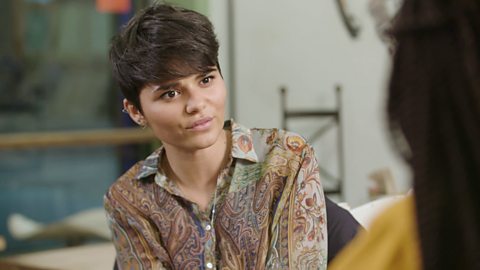
Sensitive Pictures. video
This short film uses a real life story to explore the legal and emotional consequences of sharing sensitive photos.
Online Gaming. video
Online gamer Pixlriffs talks about some potential dangers to look out for when gaming online, as well as the things you can do to protect yourself.
Trolling and Cyber-Bullying. video
This short film explores the consequences of online bullying, using a real life case study.
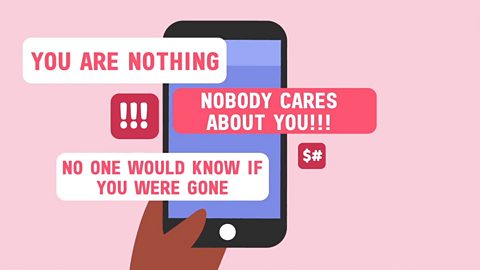
Digital Footprint. video
This short film demonstrates that what you post online can follow you in real life, via two real life cast studies.