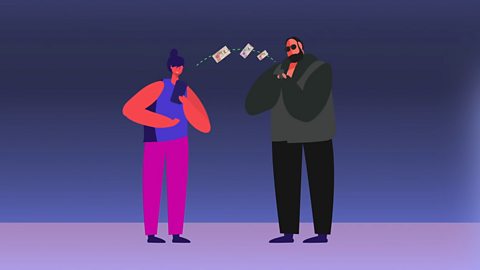
EMMA-LOUISE: You’ve probably seen headlines claiming things like Megan Markle is pretending to be pregnant.
FRANKIE: Or Barack Obama was born in Kenya.
EMMA-LOUISE: These are examples of fake news.
FRANKIE: Fake news is false information that is deliberately distributed, usually for political or commercial purposes. It’s often disguised as real news, and can spread really quickly over social media platforms.
EMMA-LOUISE: In recent years, people have been deceived by stories about cannibal killers, political candidates and even terrorist attacks.
FRANKIE: It's up to us to work together to stop things from getting out of hand.
EMMA-LOUISE: But it can be hard to spot the false stories from the real ones. So here are our top tips for spotting fake news.
FRANKIE: Start by asking who made it and why. The first reason people might create fake news stories is money. People get paid to write fake news and many sites make their money from advertising. So some are happy to post dishonest headlines to get more clicks. The second reason people might create fake news stories is to influence your opinion about someone or something. In an election, for example, one campaign might hire people to write fake stories about an opposing candidate to make them less popular.
Another reason people might create fake news stories is for satirical sites like The Onion or The Daily Mash, who create stories to make us laugh. Generally, websites like this are up front about stories being a joke, but taken out of context, you might miss that important detail.
Tip two: Check spelling and grammar. People creating fake news stories are often working very quickly or might be writing in a second language. Either way, a common red flag is sloppy spelling mistakes or poor grammar.
Tip three: Beware sensationalist language. Fake news stories often use emotional language and words related to sex, death and anxiety at unusually high rates. If something sounds too spectacular to be true, it probably is.
Tip four: Who’s quoted? Genuine news articles usually quote experts or people featured in the story, or include links to other sources. And they often include opposing points of view, but fake news stories tend to be very one-sided. If a post doesn’t quote anyone or if it only quotes questionable people, it could be fake.
Tip five: Check for other sources. When you research the claims in the story, do you find them reported by known reputable news sources? For example, Is the BBC talking about it? If the claim only seems to be coming from one source, or from dodgy sources, then you’re right to be sceptical.
EMMA-LOUISE: Algorithms, the computer programs that determine what posts appear on your social media feed, usually prioritise more popular posts.
FRANKIE: So the more you like and share fake news, the more you can expect these algorithms to turn up fake news on your feed. And the more likely others will see it too.
EMMA-LOUISE: So, remember: ask yourself who’s written this story and why? Mind the spelling. Beware dramatic language. Look for quotations. And always double check outrageous claims.
FRANKIE: In short, don’t believe something just because you've seen it on the internet.
Video summary
This short film explores the phenomenon of fake news and outlines why it is important to be able to distinguish it from real news.
The film also gives reasons for why people might create fake news and introduces the concept of algorithms.
The top tips section at the end should provide useful take-away points for students.
Teacher Notes
This short film could also be used in sections throughout a lesson.
Students could be asked to write their initial definition of fake news and then watch the first part of the film. They could then have a partner discussion of ways to spot fake news before watching the next part of the film, which provides top tips.
Students could also be asked to rank the top tips from one to five, giving reasons for why they think that some of the tips are more useful than others.
They could also come up with an acrostic or other method to remember the top tips so that they can use them in their daily lives.
The film could be used as an introduction in a PSHE lesson about digital literacy.
Students could watch the film and then use the advice to assess different news stories that you provide for them.
These stories could include some from reputable sources and joke sources, provided to the students without the source identified.
Links to new statutory RSE and HE curriculum (secondary)
Pupils should have a strong understanding of how data is generated, collected, shared and used online, for example, how personal data is captured on social media or understanding the way that businesses may exploit the data available to them.
Internet safety and harms: pupils should know how people curate a specific image…how advertising and information is targeted at them and how to be a discerning consumer of information online.
Other subject areas
This short film could be used across other subject areas such as citizenship, media studies, English or computing.
In computing, you could use the film to focus on what algorithms are and how they can impact on what you see and hear on the internet.
Students could try to explain how algorithms work to their partner, watch the film and then re-do their explanation.
In media studies or English students could use the film as a springboard to identify and discuss reputable, non-reputable and joke sources of information and how language and imagery are used differently in these media.
Students could then use the information to write about the same issue in different ways.
For citizenship, the film could be used to consider how fake news might impact on democracy and to strengthen critical thinking skills by focusing on how you weigh up evidence to support an argument or idea.
This short film touches on elements of PSHE, citizenship and computing at GCSE in England, Wales and Northern Ireland and National 4 and 5 in Scotland.
This short film addresses statutory content around internet safety, and can also help to fulfill the school’s duty to promote Fundamental British Values through its Spiritual, Moral, Social and Cultural provision.
This includes enabling students to distinguish right from wrong and equipping them with the skills of critical thinking.
This short film also helps young people to become more critical consumers of media.
More Digital Literacy / Online Security:
Live Streaming. video
This short film explores live streaming and provides some useful pointers for young people.
Pornography. video
This short film explores some real-life experiences around pornography.
Self Image and Mental Wellbeing. video
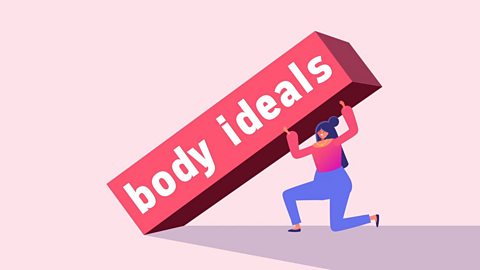
Using a real life story, this short film looks at the negative effects that social media can have on our mental wellbeing.
Copyright and Ownership. video
Sanah Ahsan, a spoken word poet who frequently shares her work online, talks about the dos and don'ts of sharing content, as well as what is meant by intellectual property.
Sensitive Pictures. video
This short film uses a real life story to explore the legal and emotional consequences of sharing sensitive photos.

Online Gaming. video
Online gamer Pixlriffs talks about some potential dangers to look out for when gaming online, as well as the things you can do to protect yourself.

Trolling and Cyber-Bullying. video
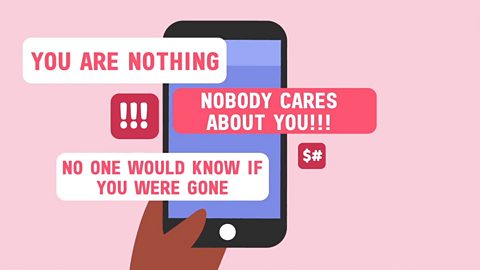
This short film explores the consequences of online bullying, using a real life case study.
Digital Footprint. video
This short film demonstrates that what you post online can follow you in real life, via two real life cast studies.
Online Security. video
This short film offers advice on how to spot an online scam as well as tips on what you can do to protect yourself online.