NARRATION:What is logical reasoning? Another word for logical is sensible. We can say an idea or an answer is logical if it follows sensible rules - rules that make sense. Another world for reasoning is thinking, coming up with ideas and answers to problems. So we could say that logical reasoning is just sensible thinking. It’s about knowing the rules and working out what will happen if you follow them.
Let’s look at an example. Suppose your friend says that they want to wear a spacesuit to school tomorrow. I know, stay with me. Your friend says no one will notice. Now, you know that the school rules say that you have to wear a school uniform, or you will be sent home to change. You also know that everyone else in school will be wearing the proper uniform and your friend will look very different from everyone else in their shiny spacesuit. It’s sensible to think that they will be noticed by the teachers and sent home to change. That’s sensible thinking, based on the rules. That’s logical reasoning.
Let’s look at another real-world problem. We all love a theme park don’t we? Well, I do. This rollercoaster has a set of rules in place… The computer controlling the entry gate is programmed to open if your height is greater than 1.5m. Close if your height is less than 1.5m. Let’s predict what will happen when these people try to go through the gate using our new friend logical reasoning.
Here’s Molly, she’s 1.4m tall. Will she get through? The rule says if the height is less than 1.5m the gate will close. We know Molly’s height is less than 1.5m, so that’s easy, the gate will close, right? Let’s watch…
Lucky for me, I’m 1.7m. So, logically the entry gate will open for me as I’m taller than 1.5m and the rule says the gate will open if the height is greater than 1.5m. Here goes… OK, stop now, stop now! That wasn’t me screaming by the way… anyway!
OK, now it’s Leon’s turn. He’s exactly 1.5m tall, he’s tall enough to safely go on the ride. What do you think the gate will do? Let’s look at the rules and use logical reasoning to predict what will happen. A flow chart will help. The program rule says: If height less than 1.5m gate will close. Leon is not less than 1.5m so the gate should open… But hang on, the other rule says the gate will open only if the height is greater than 1.5m. Leon is not greater than 1.5m, so the gate won’t open… I’m confused! The system has encountered a problem. Poor Leon, how can we get him through the gate?
We need to use our logical thinking skills to change the program rules so that people who are exactly 1.5m tall can ride. So our second rule is now: If the height is greater or equal to 1.5m then open the gate. The flow chart has changed. Let’s see if that works for Leon… Yay, Leon can ride the rollercoaster thanks to our excellent logical reasoning skills.
We should use logical reasoning when we create computer programs to make them have sensible rules and instructions built-in. These rules and instructions make them good at the jobs we want them to do. A large scale example of those types of computer control systems are in the skies above our heads. No, it’s not a bird, it’s a plane.
An autopilot program on an aeroplane needs to have thousands of rules built in to calculate the speed of the plane, the effect of wind on the wings, navigating through the sky to avoid other planes and to also reach the correct destination. But the most important rule, keeping the plane 30,000ft in the air! Luckily, computers are very good at following the rules in their programs and they can do it quickly and accurately, often better than a human can.
We can also use logical reasoning to solve problems, debug, what we notice in a computer-controlled device or system. We can look carefully at the rules, decide if they are logical, and make changes if we think that will solve the problems. In short, logical thinking is awesome!
Video summary
This short film outlines logical reasoning as ‘sensible thinking’ when following rules, and explains how a problem with a computer program can be solved using logical reasoning.
The film uses familiar, everyday examples such as wearing a school uniform or setting the rules for riding a rollercoaster in a theme park.
The film then looks at how a problem with the program that stops some people being able to ride the rollercoaster is solved using logical reasoning skills, to find the problem with the program rules.
This short film is from the BBC Teach series, Cracking Computing.
Teaching Notes
Pupils could explore the rules they have to follow at school and decide whether they are sensible and clear. Do they work in any situation? Are there ambiguous rules that might be difficult to follow? How can we make the rules more logical?
Simple games with unambiguous rules like noughts and crosses and checkers can help develop discussion around logical reasoning. You could ask pupils to explain why they have made a particular move, for example.
When pupils are starting to create algorithms and write their own computer programs they will need to use their understanding of rules to write successful code.
For example - I want the game to end when the player reaches 20 points so I need to have a program block that will display the 'winner' graphic and stop the game when the score variable reaches 20.
Other subjects
Maths: Logical reasoning and rules also plays an important part in maths when it comes to looking at different strategies to solve problems. For example, in this sequence of numbers the rule is add five each time so the next number will be 25…
Science: Logical reasoning also underpins scientific enquiry. Pupils need to use facts and ideas that they already understand to logically predict the outcome of new investigations and explain results using simple hypotheses. For example, I know that plants need light to photosynthesise so I think the plant won’t grow in the dark cupboard.
This short film is suitable for teaching:
- KS2 computing curriculum in England
- Technologies curriculum area at 2nd Level in Scotland
- KS2 digital competence framework in Wales
- KS2 using ICT cross-curricular skill in Northern Ireland
Algorithms. video
This short film for primary schools outlines how algorithms are sets of instructions to make something happen, before explaining further using a recipe analogy.
Computer networks. video
This short film explains computer networks. It looks at different types of computer network and the elements that make up a basic network including clients, servers, switches and hubs.

Creating with computing. video
This short film explores the many creative computing tools we have access to, with a focus on how they are used to create new creative content and media.
Debugging. video
This short film uses computer games to explain debugging, which is the process of finding and correcting errors in computer programs.

Decomposition. video
This short film explains how decomposition involves breaking one big problem down into smaller, more manageable problems that can be tackled step by step.
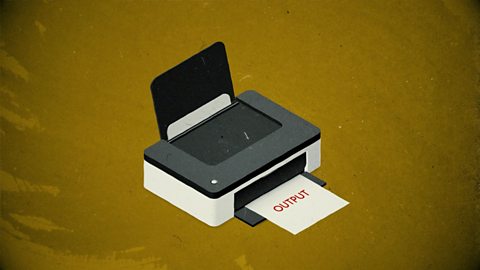
Input and output. video
This short film gives a brief history of input and output methods with examples, and brings us up to date with examples of familiar input and output devices that we use every day.
Repetition. video
This short film for primary schools explains how repetition within computing allows a command to be repeated to make a computer program more efficient.
Search technologies. video
This short film gives a brief history of the development of the internet and the invention of the world wide web by Sir Tim Berners-Lee, and explains the role of a search engine.

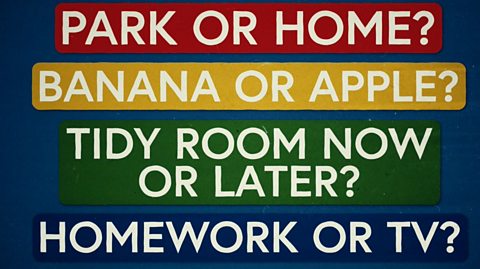
Selection. video
This short film covers the use of selection in simple computer programs, and shows how this idea of yes/no questions can allow computers to respond to external conditions and select different paths.
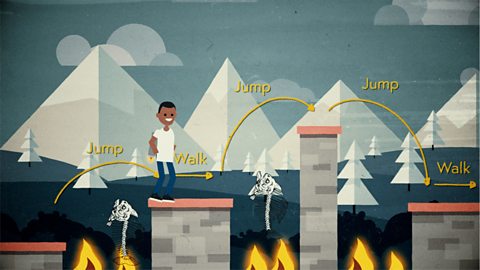
Sequencing. video
This short film covers the concept of sequencing, or making sure things are in the right order, and explores what might happen if things are done in the wrong order, or sequence.
Variables. video
This short film explores how computers use variables to store things that change, like names, numbers and scores.
Working with data. video
This short film explores how data is collected using digital devices in response to questions, and how it is organised into tables, records and fields on a computer system.